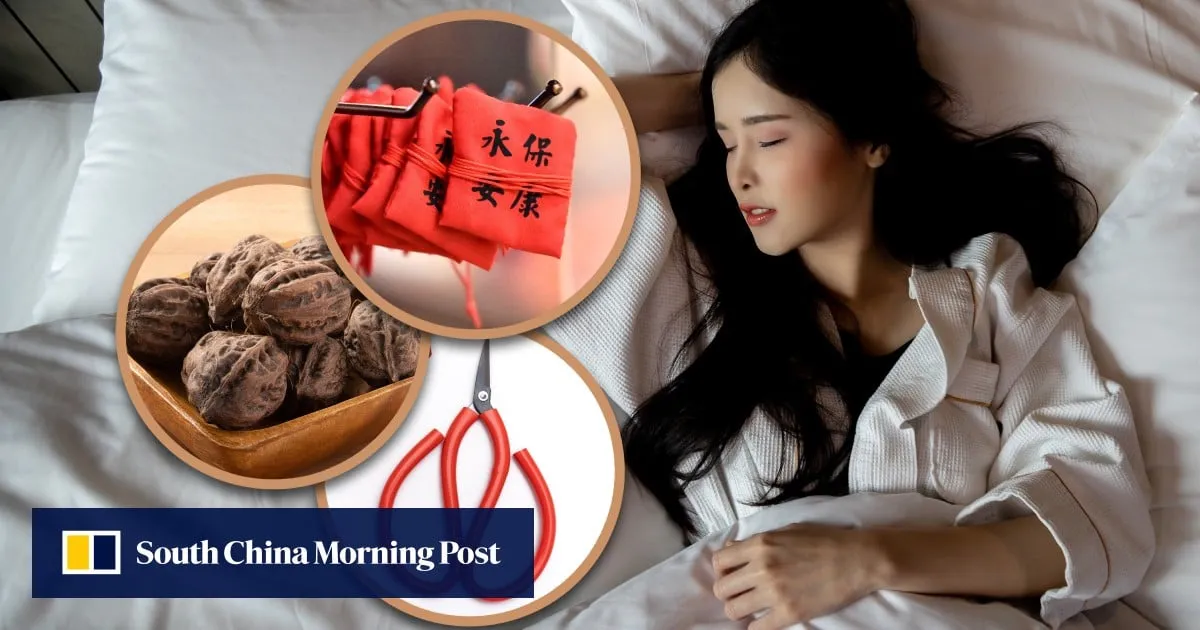
Getting a proper sleep has been a problem for people throughout history and the ancient Chinese set up some rules and methods that are still believed to be effective today.In Chinese culture, sleep time is believed to be an important period for the body to absorb and restore energy.Ancient people were meticulous about the number of hours’ sleep they got and in what position they did so.For example, it is deemed important to get sufficient sleep during the Zi hour, 11pm to 1pm, and the Wu hour, 11am to 1pm, because they are considered the periods of time when yin, darkness, and yang, light, exchange, when the body’s energy is the most unbalanced during the day.A tired out man sleeping on his tricycle cart in Beijing. Photo: ShutterstockThey consider sleeping as a way to avoid qi, or vital life energy, and blood being impaired. While it is difficult to ensure sufficient sleep at noon in modern times, Traditional Chinese Medicine (TCM) doctors still advise sleep during Zi hour to patients.There are also rules about sleeping postures.For example, in the Essential Formulas Worth a Thousand in Gold for Emergencies, written by Tang Dynasty (618–907) doctor Sun Simiao, it is recommended to sleep lying on your side.Sweet dreams: This woman is clearly at peace as she sleeps in her bed. Photo: ShutterstockIt is also believed that lying on your right side, with your head facing east during spring and summer, and west side during autumn and winter, is preferable.Sun did not recommend sleeping with the head facing north, as the north belongs to the water element and contains too much yin energy that will impair the body.There are also some superstitious beliefs when it comes to sleep.A Traditional Chinese Medicine vendor checks his stock of herbs. Photo: ShutterstockPeople with insomnia or restless sleep should place scissors, walnut or amulets under their pillow. This is believed to help ward off the evil spirits which cause their bad sleep.Further ReadingThe Chinese name for walnuts, he tao, is homophonic to the he that means “harmony”. Some people also buy pillows that have walnuts sewn into them.Scissors are believed to have the effect of “severing troubles and misfortune”.However, there were contesting theories allegedly from the Song dynasty (960–1279), which indicated that putting pointy items in the bedroom, including scissors, would disturb the yin and yang balance and startle a person in their dreams.The theory was later believed to be of scientific value, as it is dangerous to have sharp objects lying around the bedroom.While a mirror is an important item that affects a home’s feng shui, or the balance of energy, it is also believed that mirrors facing the bed will cause bad sleep.Western remedy: A woman reaches for some sleeping pills as she lies in her bed. Photo: ShutterstockOne explanation is that the mirror would capture a person’s spirit and disturb their dreams.Another theory is that the mirror would attract “dirty stuff”, a word people often use to describe ghosts, which will disrupt the home’s peace.In modern times, some people still put walnuts and scissors under their pillows to summon a peaceful sleep.Also, they will seek medical help, such as being prescribed melatonin or going to sleep departments in big hospitals.According to iiMedia Research, China’s sleep economy exceeded 500 billion yuan (US$75 billion) in 2024 and is expected to reach 660 billion yuan in 2027.
SRCSouth China Morning Post
LANGEN
LEANCenter-Right
WORDS560
ENT5
THU · 2026-05-14 · 10:00 GMTBRIEF NSR-2026-0514-76219
NSR-2026-0514-76219News Report·EN·Human Interest
China practices for sleep protection and better quality of rest include use of scissors, walnuts
Ancient Chinese practices for sleep protection and quality emphasized specific sleep times and postures. Traditional Chinese Medicine (TCM) doctors still recommend sleeping during the Zi hour (11 pm to 1 am) for energy restoration.
Fran LuSouth China Morning PostFiled 2026-05-14 · 10:00 GMTLean · Center-RightRead · 3 min
South China Morning PostFIG 01
Reading time
3min
Word count
560words
Sources cited
2cited
Entities identified
5entities
Quality score
100%
§ 01
Briefing Summary
AI-generatedNEWSAR · AI
Ancient Chinese practices for sleep protection and quality emphasized specific sleep times and postures. Traditional Chinese Medicine (TCM) doctors still recommend sleeping during the Zi hour (11 pm to 1 am) for energy restoration. Recommended sleeping postures include lying on one's side, with head orientation varying by season to balance yin and yang energies. Superstitious beliefs suggest placing scissors or walnuts under pillows to ward off spirits causing insomnia, with walnuts symbolizing harmony and scissors believed to "sever troubles." While some theories suggest pointy items could disrupt sleep balance, these ancient methods highlight the historical importance placed on achieving restful sleep.
Confidence 0.90Sources 2Claims 5Entities 5
§ 02
Article analysis
Model · rule-basedFraming
Human Interest
Public Health
Tone
Measured
AI-assessed
CalmNeutralAlarmist
Factuality
0.40 / 1.00
Mixed
LowHigh
Sources cited
2
Limited
FewMany
§ 03
Key claims
5 extracted01
Tang dynasty doctor Sun Simiao recommended sleeping on one's side, preferably the right side, with head east in spring/summer and west in autumn/winter.
factualSun Simiao
Confidence
0.90
02
Ancient Chinese believed sleep time is important for the body to absorb and restore energy.
factual
Confidence
0.90
03
Ancient Chinese considered sleeping during Zi hour (11pm-1am) and Wu hour (11am-1pm) important due to yin/yang exchange.
factual
Confidence
0.80
04
Contesting theories from the Song dynasty suggested pointy items like scissors disturb yin/yang balance and are dangerous.
factual
Confidence
0.70
05
Placing scissors or walnuts under the pillow is believed to ward off evil spirits causing bad sleep.
factual
Confidence
0.70
§ 04
Full report
3 min read · 560 words§ 05
Entities
5 identifiedKey playerOppositionContextPositiveNeutralNegative
Organizations1
§ 06
Keywords & salience
10 termstraditional chinese medicine
1.00
sleep protection
0.90
quality of rest
0.90
yin and yang
0.80
sleep postures
0.70
ancient chinese
0.60
insomnia
0.50
vital life energy
0.50
walnuts
0.40
scissors
0.40
§ 07
Topic connections
Interactive graph Network visualization showing 51 related topics
View Full Graph Person Organization Location Event|Click node to navigate|Edge numbers = shared articles