Kevin Warsh’s confirmation as the next chair of the United States Federal Reserve has fuelled debate over whether potential policy compromises with the administration of US President Donald Trump could undermine American financial credibility and inadvertently strengthen Chinese assets.The Senate confirmed Warsh as the 17th chair of the Fed on Wednesday in a 54-45 vote, mostly along bipartisan lines. He succeeds Jerome Powell, whose term expires on Friday, following a sustained pressure campaign by the Trump administration on the central bank to lower interest rates.Analysts are divided over what Warsh’s leadership could mean for China and for global financial markets more broadly. While some expect him to intensify competition with China, others warned that any perception of political interference in the central bank could accelerate a global capital shift away from US assets.Lu Ting, chief China economist at Nomura, said that a Warsh-led Fed would amount to a “policy experiment of a scale not to be underestimated”, centred on whether the central bank could maintain US dollar dominance and price stability while pursuing institutional streamlining, deregulation and greater technological openness.“The reforms are underpinned by Warsh’s distinctly competitive view towards China – he sees China as the primary challenger to US economic dominance in both institutional and technological terms,” Lu wrote in an article published on the China-chief-economists-forum" class="entity-link entity-organization" data-entity-id="127008" data-entity-type="organization">China Chief Economists Forum’s (CCEF) social media account on Wednesday.“[He] advocates strengthening America’s position in long-term competition with China through ... AI-driven productivity gains, a leaner and more efficient Federal Reserve, a stable and credible US dollar and flexible trade and monetary policies.”The success of Warsh’s strategy would ultimately depend on precise policy execution and the evolving trajectory of US-China rivalry, with the outcome still “to be tested over time”, Lu added.
SRCSouth China Morning Post
LANGEN
LEANCenter-Right
WORDS288
ENT9
THU · 2026-05-14 · 15:00 GMTBRIEF NSR-2026-0514-76262
NSR-2026-0514-76262Analysis·EN·Economic Impact
Is China set to benefit from new US Fed chair Kevin Warsh’s policy vision?
Kevin Warsh has been confirmed as the new chair of the US Federal Reserve, succeeding Jerome Powell. His appointment has sparked debate about whether potential policy compromises with the Trump administration could impact American financial credibility and potentially benefit China.
Sylvia MaSouth China Morning PostFiled 2026-05-14 · 15:00 GMTLean · Center-RightRead · 2 min
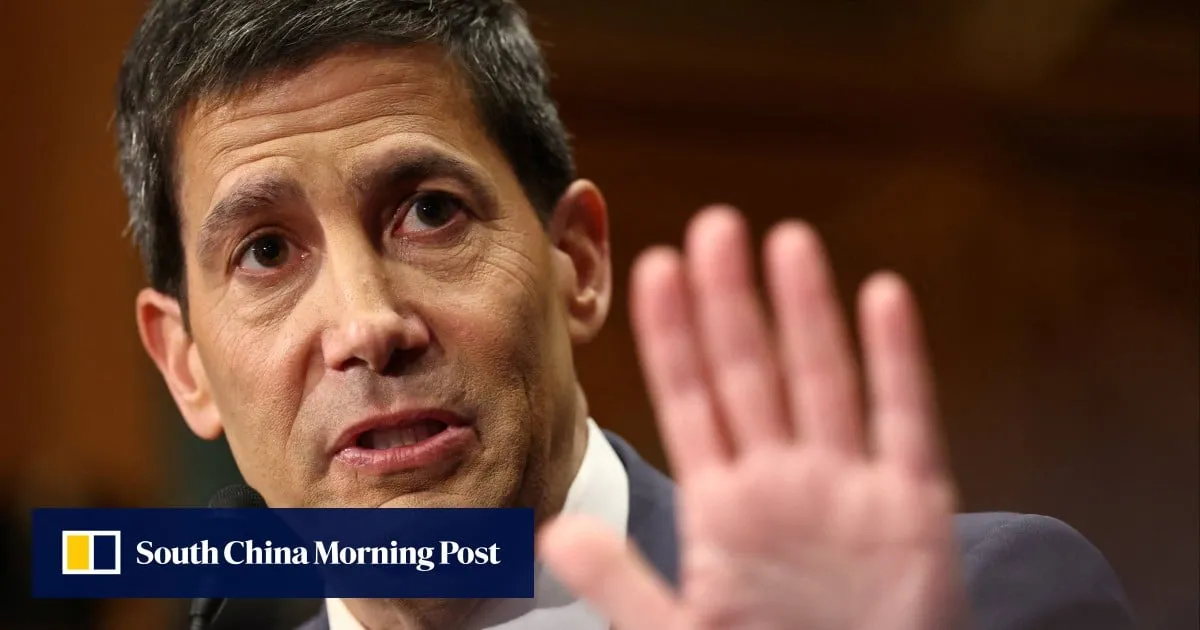
South China Morning PostFIG 01
Reading time
2min
Word count
288words
Sources cited
1cited
Entities identified
9entities
Quality score
100%
§ 01
Briefing Summary
AI-generatedNEWSAR · AI
Kevin Warsh has been confirmed as the new chair of the US Federal Reserve, succeeding Jerome Powell. His appointment has sparked debate about whether potential policy compromises with the Trump administration could impact American financial credibility and potentially benefit China. Analysts are divided, with some anticipating intensified competition with China under Warsh's leadership. Others, however, warn that perceived political interference in the Fed could lead to a global capital shift away from US assets. Warsh's policy vision reportedly centers on strengthening US economic dominance through technological advancements and a more efficient Federal Reserve, while maintaining a stable US dollar and flexible monetary policies, all within the context of long-term competition with China. The ultimate success of his strategy remains to be seen.
Confidence 0.90Sources 1Claims 5Entities 9
§ 02
Article analysis
Model · rule-basedFraming
Economic Impact
Political Strategy
Tone
Measured
AI-assessed
CalmNeutralAlarmist
Factuality
0.40 / 1.00
Mixed
LowHigh
Sources cited
1
Limited
FewMany
§ 03
Key claims
5 extracted01
The success of Warsh's strategy depends on policy execution and the evolving US-China rivalry, with outcomes to be tested over time.
quoteLu Ting
Confidence
1.00
02
Warsh advocates strengthening US economic dominance through AI, a leaner Fed, a stable dollar, and flexible trade/monetary policies, viewing China as the primary challenger.
quoteLu Ting
Confidence
1.00
03
Lu Ting (Nomura) views a Warsh-led Fed as a significant 'policy experiment' testing US dollar dominance and price stability amid reforms.
quoteLu Ting
Confidence
1.00
04
Kevin Warsh's confirmation as Fed chair fuels debate on policy compromises potentially undermining US financial credibility and strengthening Chinese assets.
factual
Confidence
0.90
05
Analysts are divided on whether Warsh's leadership will intensify competition with China or accelerate a capital shift away from US assets due to perceived political interference.
factual
Confidence
0.80
§ 04
Full report
2 min read · 288 words§ 05
Entities
9 identifiedKey playerOppositionContextPositiveNeutralNegative
People4
Organizations3
§ 06
Keywords & salience
10 termsus-china rivalry
1.00
us fed chair
1.00
monetary policy
0.90
financial credibility
0.80
global financial markets
0.70
us dollar dominance
0.70
economic dominance
0.60
deregulation
0.50
capital shift
0.40
institutional streamlining
0.40
§ 07
Topic connections
Interactive graph Network visualization showing 21 related topics
View Full Graph Person Organization Location Event|Click node to navigate|Edge numbers = shared articles