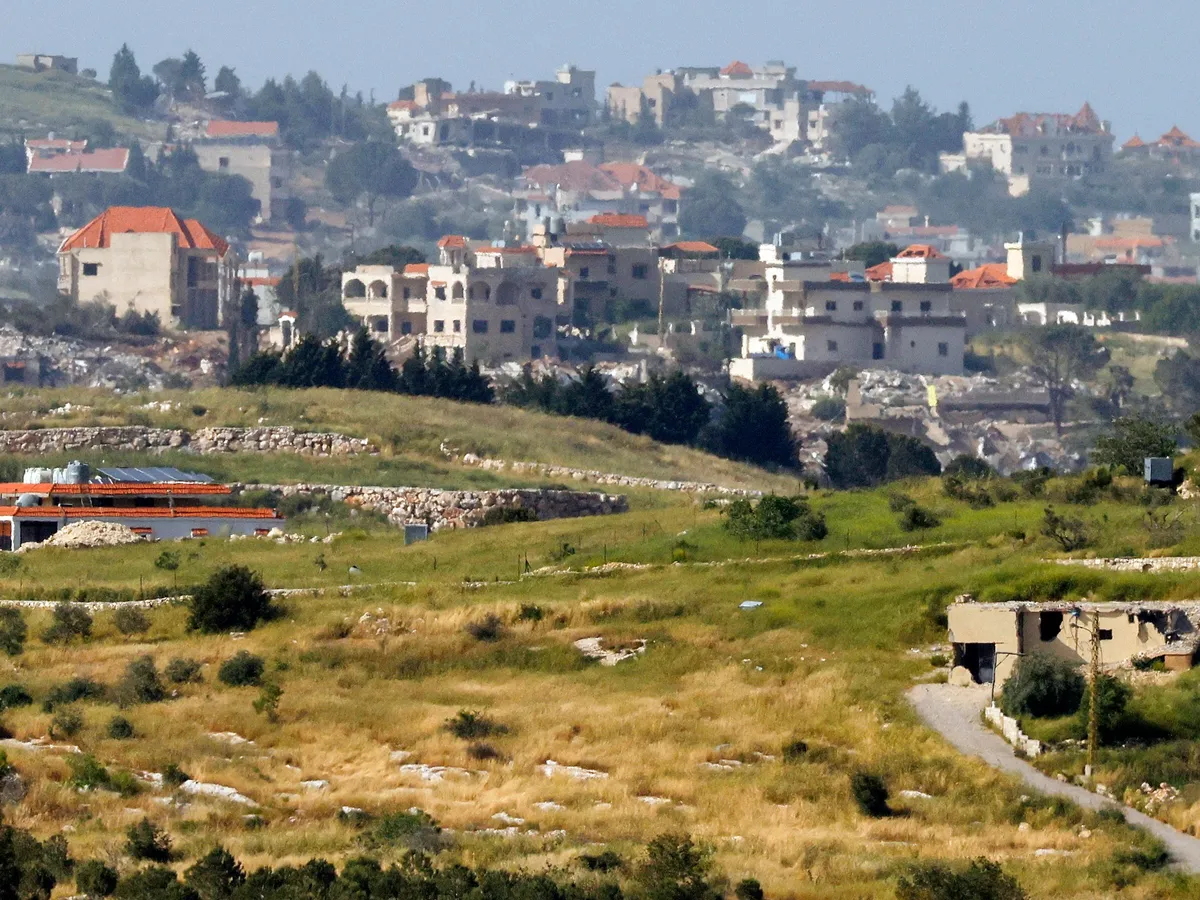
Lebanese officials are hoping that two-day ambassador-level negotiations in the US will yield a new ceasefire deal.Destroyed buildings are pictured in the village of Bint Jbeil in southern Lebanon as seen from across the border in the Upper Galilee region of northern Israel [File: AFP]Published On 14 May 2026A third round of direct talks between Israel and Lebanon has kicked off in Washington, DC, days before the expiration of a “ceasefire” that hardly halted Israeli attacks and Hezbollah’s response to them.The talks, which began on Thursday, represent a step towards more serious negotiations, with higher-level envoys from Lebanon and Israel taking part after the initial preparatory sessions were headed by the ambassadors of the two countries to Washington.Recommended Stories list of 3 itemslist 1 of 3What does the US hope to achieve from Lebanon-Israel talks?list 2 of 312 killed by a series of Israeli strikes on cars in Lebanonlist 3 of 3Iran war day 76: Vance says progress made in talks; Israel pounds Lebanonend of listLebanese officials are hoping that the two-day negotiations will yield a new ceasefire deal and pave the way for tackling a series of thorny issues, including the withdrawal of Israeli forces from southern Lebanon and the disarmament of Hezbollah.US Secretary of State Marco Rubio, who attended the first Israel-Lebanon meetings in Washington in April, was with US President Donald Trump on a visit to China and did not attend Thursday’s session.Lebanon’s envoy heading up Thursday’s talks, Simon Karam, is an attorney and well-connected former Lebanese ambassador to the United States who recently represented Lebanon in indirect talks with Israel over implementation of the ceasefire that preceded the latest outbreak of war between Israel and Hezbollah.On the Israeli side, Deputy National Security Adviser Yossi Draznin was set to attend.“We do not want to downplay the significance of these talks, but they are ambassador-level talks, excluding top leadership from Israel, Lebanon and the US,” said Al Jazeera’s Manuel Rapalo, reporting from Washington, DC, adding that there is no diplomatic relationship between Lebanon and Israel.Trump has publicly called for a meeting between Lebanese President Joseph Aoun and Israeli Prime Minister Benjamin Netanyahu, while Aoun has declined to meet or speak directly with Netanyahu at this stage – a move that would likely generate blowback in Lebanon.Hezbollah, meanwhile, is not part of the talks and has been vocally opposed to Lebanon engaging in direct negotiations with Israel.A lawmaker from the Iran-backed group, Ali Ammar, on Thursday reiterated his group’s rejection of the direct talks, saying they amounted to “free concessions” to Israel.Still, “there is optimism”, said Al Jazeera’s Rapalo.“The cessation of hostilities agreement is due to expire on Sunday, so there is an expectation that this will be front and centre in discussions,” he said.“Of course, the immediate objective is to prevent the situation along the border from escalating into a broader regional conflict.”Cautious optimismThe United Nations earlier on Thursday expressed hope for the new round of direct negotiations.“We hope that the latest round of direct talks between Lebanon and Israel in Washington, planned for today and tomorrow, will contribute to an effective and durable ceasefire and open a path towards lasting peace,” deputy spokesman Farhan Haq told the reporters.Haq said the UN Interim Force in Lebanon (UNIFIL) continues to observe “significant” aerial and military activity across its area of operations, including multiple air strikes on Wednesday by Israel.“We reiterate our call on all the parties to exercise maximum restraint, ensure the protection of civilians and humanitarian personnel and fully respect their obligations under international humanitarian law,” he added.In Lebanon, people also hope for an end to violence as the diplomatic efforts continue.“I think people here in southern Lebanon are cautiously optimistic about the possible results from these meetings,” said Al Jazeera’s Obaida Hitto, reporting from Tyre, Lebanon.“Everyone understands that Lebanon is not ready for normalisation, legally speaking. There is a part of the constitution that prevents Lebanon from actually having normalisation with Israel. People realise this might be a huge obstacle to move forward and find a way to live in peace with Israel.”Still, the Lebanese population wants the violence to stop, said Hitto.“It’s been more than two months of ongoing Israeli strikes, artillery strikes, air strikes, drone strikes, coordinated, systematic demolitions of entire towns and villages,” he said.The Israeli army continues daily strikes in Lebanon despite a ceasefire that was announced on April 17 and later extended until May 17.Three people were killed in Israeli strikes in southern Lebanon on Thursday, Lebanese media reported.Since March 2, Israeli attacks in Lebanon have killed at least 2,896 people, injured over 8,824, and displaced more than 1.6 million, about one-fifth of the country’s population, according to Lebanese officials. In that time, at least 200 children in Lebanon have been killed in Israeli attacks, the UN Children’s Fund (UNICEF) said on Thursday.
SRCAl Jazeera
LANGEN
LEANCenter
WORDS801
ENT12
THU · 2026-05-14 · 20:25 GMTBRIEF NSR-2026-0514-76354
NSR-2026-0514-76354News Report·EN·Diplomatic
Cautious optimism in Lebanon as direct talks with Israel progress
Lebanon and Israel are engaged in a third round of direct, ambassador-level talks in Washington D.C. aimed at securing a new ceasefire agreement.
Al Jazeera StaffAl JazeeraFiled 2026-05-14 · 20:25 GMTLean · CenterRead · 4 min
Al JazeeraFIG 01
Reading time
4min
Word count
801words
Sources cited
4cited
Entities identified
12entities
Quality score
100%
§ 01
Briefing Summary
AI-generatedNEWSAR · AI
Lebanon and Israel are engaged in a third round of direct, ambassador-level talks in Washington D.C. aimed at securing a new ceasefire agreement. These negotiations, occurring just before the expiration of a fragile existing truce, are seen as a step towards more substantive discussions on issues like Israeli troop withdrawal from southern Lebanon and Hezbollah's disarmament. Lebanese officials express cautious optimism for a breakthrough, though US Secretary of State Marco Rubio was absent. The talks are being led by high-level envoys, with Lebanese attorney Simon Karam representing Lebanon and Deputy National Security Adviser Yossi Draznin for Israel. Despite US President Trump's call for direct leadership meetings, Lebanese President Aoun has declined, and Hezbollah is not participating in the current negotiations.
Confidence 0.90Sources 4Claims 5Entities 12
§ 02
Article analysis
Model · rule-basedFraming
Diplomatic
Conflict
Tone
Measured
AI-assessed
CalmNeutralAlarmist
Factuality
0.70 / 1.00
Factual
LowHigh
Sources cited
4
Well sourced
FewMany
§ 03
Key claims
5 extracted01
Trump has publicly called for a meeting between Lebanese President Joseph Aoun and Israeli Prime Minister Benjamin Netanyahu.
factualTrump
Confidence
1.00
02
The cessation of hostilities agreement is due to expire on Sunday.
factual
Confidence
1.00
03
Hezbollah is not part of the talks and has been vocally opposed to Lebanon engaging in direct negotiations with Israel.
factual
Confidence
1.00
04
A third round of direct talks between Israel and Lebanon has kicked off in Washington, DC.
factual
Confidence
1.00
05
Lebanese officials are hoping that two-day ambassador-level negotiations in the US will yield a new ceasefire deal.
predictionLebanese officials
Confidence
0.60
§ 04
Full report
4 min read · 801 words§ 05
Entities
12 identifiedKey playerOppositionContextPositiveNeutralNegative
People5
Organizations1
§ 06
Keywords & salience
8 termslebanon-israel talks
1.00
ceasefire deal
0.90
hezbollah
0.80
israeli withdrawal
0.70
disarmament
0.60
us involvement
0.50
diplomatic negotiations
0.50
ambassador-level talks
0.40
§ 07
Topic connections
Interactive graph Network visualization showing 51 related topics
View Full Graph Person Organization Location Event|Click node to navigate|Edge numbers = shared articles