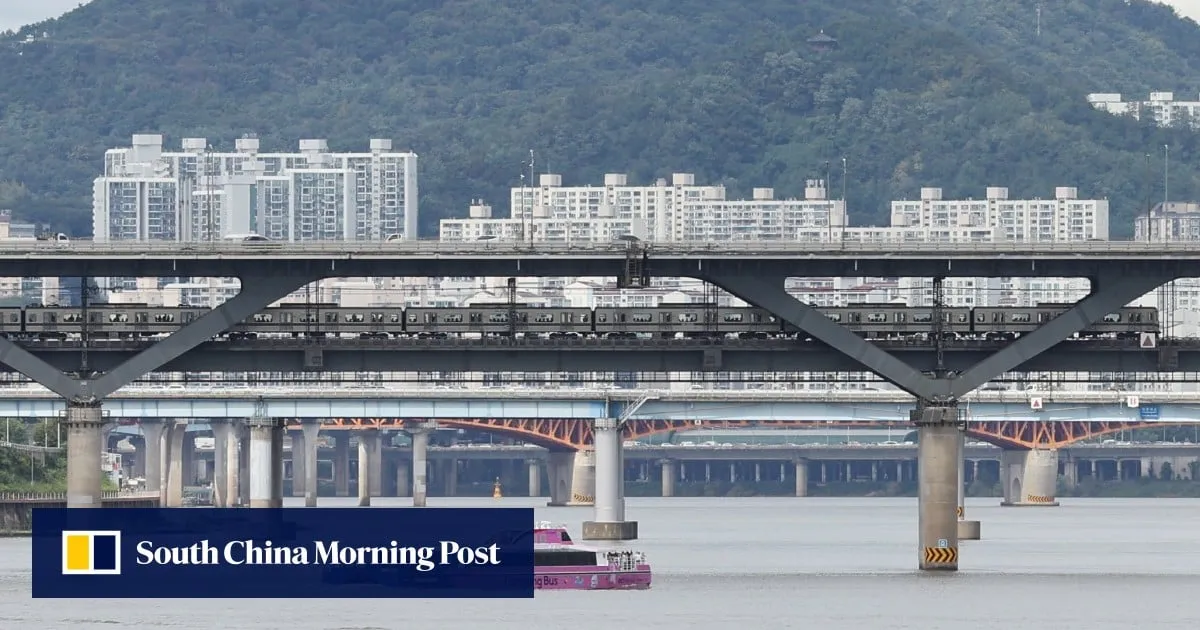
For most residents of South Korea’s capital, the Han River is a place for evening strolls, picnics and a brief respite from city life.But for Kim Jun-young, chief of the Hangang Bridge CCTV Integrated Control Centre in Seoul’s Gwangjin district, it is where his team pulls people back from the edge every day.Established in 2021, the centre uses AI for comprehensive emergency response, monitoring 900 CCTV cameras across 17 of the 21 pedestrian-accessible Han River bridges. Beyond suicide prevention, its most frequent task, the centre also handles criminal tracking, traffic accidents and drug enforcement.“We get three to four suspected suicide attempts that result in a dispatch call every day,” Kim said in an interview. “Most of them go with officers without protest, which means they were determined to end their lives.”The intervention record reflects the scale of the crisis as well as the effectiveness of the response.An elderly woman walks on a path under a highway that runs along the Han River in Seoul. Photo: AFPAccording to city data, suicide attempts on Han River bridges have surpassed 1,000 for four consecutive years since 2022, reaching 1,270 dispatch calls last year alone. Of those, 10 resulted in deaths, a survival rate of 99 per cent.Much of that credit goes to AI, which triggers an alarm if an object identified as a person remains for more than 300 seconds in a bridge’s “loitering zones”, sections where people are able to stand for extended periods.When a person of interest is flagged, human operators zoom in to determine whether someone is simply out to enjoy the river or contemplating suicide, looking for signs like whether they are crying or smiling. Even small details matter: a bottle of soju, slippers worn in the middle of winter or a chair being hauled onto the bridge.Once danger is confirmed, speed is everything. For most bridges, rescue units arrive within four minutes, and every second counts before someone goes over the edge.“Han River bridges average 30 meters (100 fet) in height and for an adult weighing around 70kg (150lbs), hitting the water from there carries the same force as being struck by a car at 60km/h (40 mph),” Kim explained, adding that was why intervening before a jump was key.The centre also works in close coordination with 119 water rescue units. When operators spot a person in distress on a bridge, both teams monitor the live feed together, with the rescue unit ready to deploy.Tracking movementIts reach extends beyond rescue. The system supports filtered searches by gender, age and clothing type — a search for “April 29, male, Mapo”, for example, pulls up footage of every adult male who crossed Mapo Bridge that day, helping police map the movement routes of suspects.Further ReadingAll data is strictly managed under the Personal Information Protection Act and deleted after one month.Before AI, operators monitored footage manually, a system a 2017 city audit found falling far short. A subsequent study found a person could monitor a maximum of 12 screens at once.The Banpo Bridge Rainbow Fountain over the Han River in Seoul is lit up in purple on June 12, 2023, to celebrate the 10th anniversary of global K-pop sensation BTS’ debut. Photo: Yonhap/EPA-EFEWith 422 cameras at the time, full manual coverage would require about 86 staff. Using AI as a first filter, just 11 operators need to be on duty.Still, the technology has its weaknesses. Kim said the system carries a hallucination rate of about 15 per cent, including instances where it misidentifies an object as a person, which is why human judgment remains the final call.For Kim, the most rewarding moments come when a life is saved — news that arrives at any hour, day or night. “Whenever a rescue comes through, I tell my staff ‘good work’. That’s when I feel most proud,” he said.Kim never claims to fully understand the suffering of those who come to the Han River thinking of ending their lives. But even a chance to reconsider, he believes, can make all the difference.“Because death cannot be undone, it may simply be a mistake made in the moment,” he said, adding that the real credit belonged to the firefighters and police.If you have suicidal thoughts or know someone who is experiencing them, help is available. In Hong Kong, you can dial 18111 for the government-run Mental Health Support Hotline. You can also call +852 2896 0000 for The Samaritans or +852 2382 0000 for suicide prevention Services. For a list of other nations’ helplines, see this page.
SRCSouth China Morning Post
LANGEN
LEANCenter-Right
WORDS752
ENT10
SAT · 2026-05-16 · 02:56 GMTBRIEF NSR-2026-0516-76679
NSR-2026-0516-76679News Report·EN·Public Health
AI helps South Korea stop 99% of suicide attempts on Han River bridges in Seoul
Seoul's Hangang Bridge CCTV Integrated Control Centre, established in 2021, utilizes AI to monitor 900 cameras across 17 Han River bridges, significantly reducing suicide attempts. The AI system flags individuals remaining in designated "loitering zones" for over 300 seconds, triggering human operators to assess the situation.
The Korea TimesSouth China Morning PostFiled 2026-05-16 · 02:56 GMTLean · Center-RightRead · 4 min
South China Morning PostFIG 01
Reading time
4min
Word count
752words
Sources cited
2cited
Entities identified
10entities
Quality score
100%
§ 01
Briefing Summary
AI-generatedNEWSAR · AI
Seoul's Hangang Bridge CCTV Integrated Control Centre, established in 2021, utilizes AI to monitor 900 cameras across 17 Han River bridges, significantly reducing suicide attempts. The AI system flags individuals remaining in designated "loitering zones" for over 300 seconds, triggering human operators to assess the situation. This intervention system has achieved a 99% survival rate for suicide attempts on these bridges, with rescue units arriving within four minutes. Beyond suicide prevention, the center also assists in criminal tracking and traffic accident response. While AI acts as a first filter, human judgment remains crucial, with the system having a 15% hallucination rate.
Confidence 0.90Sources 2Claims 5Entities 10
§ 02
Article analysis
Model · rule-basedFraming
Public Health
Technology
Tone
Mixed Tone
AI-assessed
CalmNeutralAlarmist
Factuality
0.80 / 1.00
Factual
LowHigh
Sources cited
2
Limited
FewMany
§ 03
Key claims
5 extracted01
AI triggers an alarm if a person remains in a bridge's 'loitering zones' for more than 300 seconds.
factualHangang Bridge CCTV Integrated Control Centre
Confidence
0.95
02
The centre uses AI to monitor 900 CCTV cameras across 17 Han River bridges.
factualHangang Bridge CCTV Integrated Control Centre
Confidence
0.95
03
Rescue units arrive within four minutes for most bridges.
factualHangang Bridge CCTV Integrated Control Centre
Confidence
0.90
04
Suicide attempts on Han River bridges surpassed 1,000 for four consecutive years since 2022, reaching 1,270 dispatch calls last year.
statisticcity data
Confidence
0.90
05
AI helps South Korea stop 99% of suicide attempts on Han River bridges in Seoul.
statisticHangang Bridge CCTV Integrated Control Centre
Confidence
0.90
§ 04
Full report
4 min read · 752 words§ 05
Entities
10 identifiedKey playerOppositionContextPositiveNeutralNegative
Organizations2
§ 06
Keywords & salience
9 termsai suicide prevention
1.00
han river bridges
0.90
seoul
0.80
cctv monitoring
0.70
suicide attempts
0.60
emergency response
0.60
loitering zones
0.50
survival rate
0.50
water rescue units
0.40
§ 07
Topic connections
Interactive graph No topic relationship data available yet. This graph will appear once topic relationships have been computed.