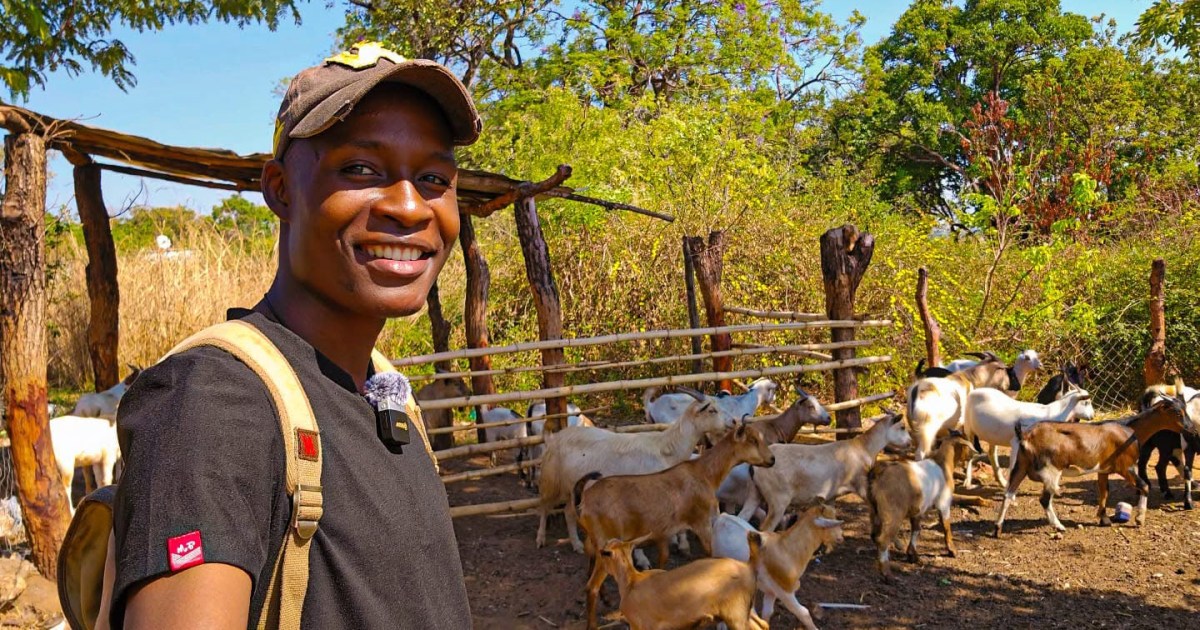
Zimbabwe’s diaspora reshapes real estate and farming investment trendsZimbabwean digital influencers appear to influence diaspora investment decisions through social mediaKelvin Birioti built his platform around real estate, rural development and farming projects [Al Jazeera]Published On 16 May 2026Harare, Zimbabwe – Zimbabwe’s real estate and farming sectors are seeing a surge in diaspora-driven investment, with two young content creators quietly emerging as unexpected influencers shaping the trend.Kundai Chitima, 31, and Kelvin Birioti, 20, each running their own social media channel, have built followings that seem to influence a growing number of Zimbabweans abroad considering return or investment.On YouTube and Instagram, they share short videos and posts highlighting opportunities in Zimbabwe. Their popular content ranges from property tours and agricultural tips to market trend analysis.For some in the diaspora, decisions about returning or investing increasingly appear to be shaped less by official narratives and more by social media content offering on-the-ground perspectives of life in Zimbabwe.One of those influenced is Catherine Mutisi, who spent 17 years living in the United Kingdom working as an accountant. During that time, she had already begun investing in Zimbabwe, building two houses, buying a small plot and starting a business.She said her thinking shifted after coming across Birioti’s content during construction.“Gradually, my mind and plans shifted from just visiting Zimbabwe towards wanting to permanently relocate,” she said.Mutisi said earlier narratives about Zimbabwe had made her cautious, but online content presented a different perspective.“Previously, I was just building my houses for my family to get some money. But after watching the videos, my eyes opened,” she told Al Jazeera.Her experience is not isolated. Both Chitima and Birioti say they hear similar accounts from the Zimbabwean diaspora reassessing their long-term plans.UK-based Zimbabwean Nyashadzashe Nguwo, an Africa market entry and global expansion adviser, said many people like Mutisi are relocating to Zimbabwe due to what he described as a combination of emotional and lifestyle-driven factors.“There’s a strong desire among many in the diaspora to reconnect with their roots and contribute meaningfully to national development. For some, the lower cost of living and the opportunity to build something impactful at home outweigh concerns about economic instability,” Nguwo told Al Jazeera.Two influencersAfter growing up in Chinhoyi, a town in northern Zimbabwe about 120km (75 miles) northwest of the capital, Harare, Birioti sought a new start and enrolled at Zimbabwe Ezekiel Guti University (ZEGU) in Bindura. He dropped out, however, due to financial challenges and decided to move to Harare.There, he met Chitima and began learning content creation. From the outset, he said he avoided entertainment-style content, instead focusing on what he saw as an information gap.“I saw a gap: the diaspora community was being scammed.”He built his platform about real estate, rural development and farming projects, often working with diaspora Zimbabweans who granted access to their properties for documentation.Kundai Chitima worked as a teacher in South Africa before returning to Zimbabwe in 2015 [Al Jazeera]On the other hand, Chitima worked as a teacher in South Africa before returning to Zimbabwe in 2015.He said workplace inequality influenced his choice: “We were earning lower than my South African colleagues. I thought of my dignity and made a decision to return home.”Chitima returned to Zimbabwe with limited resources and a pregnant wife, entering a very different economic environment from the one he had left.Before his time in South Africa, he had worked as a civil servant. After returning, he gradually moved into content creation, beginning in 2015 and later training younger creators who went on to build large audiences.Today, he reflects on his platform as both educational and protective for diaspora audiences.“I receive calls from people crying … they have been scammed.”He says his content aims to replace uncertainty with grounded information about the realities and opportunities in Zimbabwe.Economic pressure and unemploymentWhile no official figures are publicly available on the exact number of Zimbabweans leaving the country or their reasons for doing so, reports from the International Organization for Migration and independent migration studies indicate consistent migration.The Zimbabwe National Statistics Agency (Zimstat) reported a 21.8 percent unemployment rate in the third quarter of 2024, based on strict International Labour Organization definitions.Between 76 percent and 80 percent of workers are in the informal sector, relying on subsistence or unregulated employment. Youth unemployment is particularly acute: a 2025 World Bank report estimates it at 76.8 percent.For many young people, stable employment is increasingly difficult to secure.Susan Sibanda, 26, describes moving between short-term and informal work.“I have been switching from one casual job to the next,” Sibanda said.Her experience reflects a wider labour market where formal employment continues to shrink. In recent years, several big retailers, including Choppies, Truworths, OK Zimbabwe, and N Richards, have downsized or closed operations.Emigration pressures remain strongAgainst that backdrop, migration still features heavily in the decisions of young Zimbabweans.Sibanda said she now considers that “leaving Zimbabwe is in my best interest”.Economist Tashinga Kajiva said the story of emigration from Zimbabwe has largely remained high, driven by a combination of push and pull factors that encourage people to seek what they see as greener pastures.“Zimbabwe’s economy is marked by complex and, some would say, difficult dynamics. For ordinary citizens, disposable income remains low while the cost of living continues to rise. The marginal propensity to save among working-class citizens is also low, as many are living hand to mouth,” he told Al Jazeera.Zimbabwe’s diaspora is concentrated in South Africa, the United Kingdom, Australia, Canada, New Zealand and the United States, according to government figures.Keeping ties alive from abroadThe economic link between Zimbabwe and its diaspora remains strong.According to real estate agents, diaspora buyers now account for a significant shareThey state that up to 50 percent of high-end residential properties sold were purchased by Zimbabweans living abroad in recent years. In some regions, land prices have risen by 20–30 percent year-on-year, a surge partly attributed to diaspora buyers.diaspora investment is also noticeable in agriculture. Reports from the Zimbabwe Farmers Union indicate that about 10-15 percent of new farm leases over the past two to three years involve diaspora investors, with activity concentrated in Mashonaland Central and Matabeleland regions.Remittances reached $1.7bn in 2023 and continue to rise. In 2025, Zimbabweans abroad sent $2.45bn home, with the UK and South Africa the largest sources, according to government data. A significant portion of these funds is reportedly invested in real estate, agriculture, and small businesses.This reflects both practical necessity and emotional attachment to home, as well as a preference for investing in familiar environments, according to economists.Still, return seems to generate mixed reactions.Some diaspora Zimbabweans appear cautious, citing political developments and recent protests abroad over governance concerns.For them, financial ties to Zimbabwe are still strong, but physical return remains uncertain.With social media reshaping perceptions of life in Zimbabwe, many in the diaspora remain caught between investment opportunities and the country’s economic realities.As content creators like Chitima and Birioti reshape how some see opportunity in Zimbabwe, domestic economic pressures appear to be pushing others away, leaving the country’s relationship with its diaspora open-ended and still evolving.“For many Zimbabweans living abroad, investing back home is not just about profit – it’s about staying connected to their roots and shaping the future of their communities,” said Chitima.
SRCAl Jazeera
LANGEN
LEANCenter
WORDS1 197
ENT11
SAT · 2026-05-16 · 13:09 GMTBRIEF NSR-2026-0516-76774
NSR-2026-0516-76774News Report·EN·Human Interest
Zimbabwe’s diaspora reshapes real estate and farming investment trends
Zimbabwean digital influencers Kundai Chitima and Kelvin Birioti are shaping diaspora investment trends in real estate and farming through their social media content. These young creators provide on-the-ground perspectives on opportunities and realities in Zimbabwe, influencing decisions for many abroad considering return or investment.
Calvin ManikaAl JazeeraFiled 2026-05-16 · 13:09 GMTLean · CenterRead · 5 min
Al JazeeraFIG 01
Reading time
5min
Word count
1 197words
Sources cited
3cited
Entities identified
11entities
Quality score
100%
§ 01
Briefing Summary
AI-generatedNEWSAR · AI
Zimbabwean digital influencers Kundai Chitima and Kelvin Birioti are shaping diaspora investment trends in real estate and farming through their social media content. These young creators provide on-the-ground perspectives on opportunities and realities in Zimbabwe, influencing decisions for many abroad considering return or investment. Their platforms offer property tours, agricultural advice, and market analysis, aiming to combat scams and provide grounded information. This shift in influence is leading some diaspora members, like Catherine Mutisi, to re-evaluate their long-term plans and consider permanent relocation due to a combination of emotional, lifestyle, and developmental factors, alongside perceived lower living costs.
Confidence 0.90Sources 3Claims 4Entities 11
§ 02
Article analysis
Model · rule-basedFraming
Human Interest
Economic Impact
Tone
Measured
AI-assessed
CalmNeutralAlarmist
Factuality
0.60 / 1.00
Mixed
LowHigh
Sources cited
3
Well sourced
FewMany
§ 03
Key claims
4 extracted01
Catherine Mutisi's investment and relocation plans shifted after viewing Kelvin Birioti's content.
quoteCatherine Mutisi
Confidence
1.00
02
Emotional and lifestyle-driven factors, including reconnecting with roots and lower cost of living, are motivating diaspora relocation.
quoteNyashadzashe Nguwo
Confidence
0.90
03
Zimbabwe's real estate and farming sectors are experiencing a surge in investment driven by the diaspora.
factual
Confidence
0.90
04
Digital influencers Kundai Chitima and Kelvin Birioti are shaping diaspora investment decisions through social media.
factual
Confidence
0.80
§ 04
Full report
5 min read · 1 197 words§ 05
Entities
11 identifiedKey playerOppositionContextPositiveNeutralNegative
People4
§ 06
Keywords & salience
10 termsdiaspora investment
1.00
real estate trends
0.90
farming investment
0.90
social media influence
0.80
content creators
0.70
zimbabwe
0.70
return migration
0.60
on-the-ground perspectives
0.50
national development
0.40
cost of living
0.40
§ 07
Topic connections
Interactive graph Network visualization showing 25 related topics
View Full Graph Person Organization Location Event|Click node to navigate|Edge numbers = shared articles