Speed has become more important than armour if you want to survive inside the "kill-zone" - a wide and desolate area dominated by drones that hunt down anything that moves.This is a grey zone along the front line within the range of drones piloted remotely from both sides."Every time when we had to come out of our positions, we prayed we would come back alive," said Kenya. "At night, we had to put on anti-drone cloaks to protect us against thermal cameras, but they would last for 20 minutes at the most."drones cannot seize positions; they cannot control heights and crossings. So, even in the age of robots and remotely operated weapons, the old rule of war is still true: without boots on the ground, an army cannot hold territory.That is why Ukraine keeps soldiers like Kenya in small foxholes and dugouts inside the kill-zone, where they can do little more than stay and mark that territory.Their biggest fear is being detected by the Russians. That's what happened to Khani, who spent 122 days at the front. He came to Ukraine as a Palestinian student in the 1990s and stayed.Khani's position was in the basement of a two-storey house, when it was turned into rubble by Russian drones and artillery.When the Russians tried to enter the basement, he and his fellow soldiers opened fire, revealing their positions."Once they knew we were there, they first dropped explosives from drones, then kamikaze drones attacked us," he recalls.93rd brigade, UAFKhani just after he left the front line A drone attached to fibre-optic cables managed to fly inside the basement, but it became tangled up in its wires at the entrance and started spinning, so Khani shot at the cable reel and the drone lost connection with the pilot operating it.At this point two Russian soldiers stormed his position. "They detonated anti-tank mines outside and destroyed the entrance, burying it under debris. They thought we were dead."They survived thanks to a hidden exit they had dug just in case.Granata, who recently left the front after 110 days, says the soldier he was with was badly wounded when Russian forces dropped an explosive containing gas in an attempt to force them to abandon their positions.All supply routes in the Donbas kill-zone are now cut off, so food and ammunition has to be delivered to forward posts by aerial drones. But even they are unreliable: they often get destroyed or jammed, so supply deliveries have been intermittent.Kenya said his meagre food supplies would often end up being eaten by mice. "They gnaw everything except metal. Because of the mice, we had to eat all food products except canned food quickly, or else the mice would destroy them all."When asked what they lacked most in their foxholes, the soldiers all said it was water."The most memorable moment for me was when it rained," said Kenya. "I got undressed and went outside to wash myself."During the winter, temperatures dropped to -25C, so old, worn-out sleepings bags were of little use when they slept on the frozen ground or a cold concrete floor.Khani's partner fell ill and "one day he just didn't wake up," he said. He died of hypothermia.Ukraine's military says Russian forces are regrouping along the front line, ahead of a possible summer offensive.To counter that, the Ukrainians say they have increased attacks on Russian military logistics and supply routes.This too may have slowed down the Russian advance. According to the US-based Institute for the Study of War, last month Moscow lost more territory in Ukraine than it managed to gain.
SRCBBC News - World
LANGEN
LEANCenter
WORDS594
ENT11
SUN · 2026-05-17 · 23:02 GMTBRIEF NSR-2026-0518-77069
NSR-2026-0518-77069News Report·EN·Conflict
Inside the 'kill-zone' on Ukraine's front line, where new weapons have transformed war
The article describes the "kill-zone" on Ukraine's front line, a drone-dominated area where speed is crucial for survival. While new weapons like drones are prevalent, soldiers remain essential for holding territory.
BBC News - WorldFiled 2026-05-17 · 23:02 GMTLean · CenterRead · 3 min
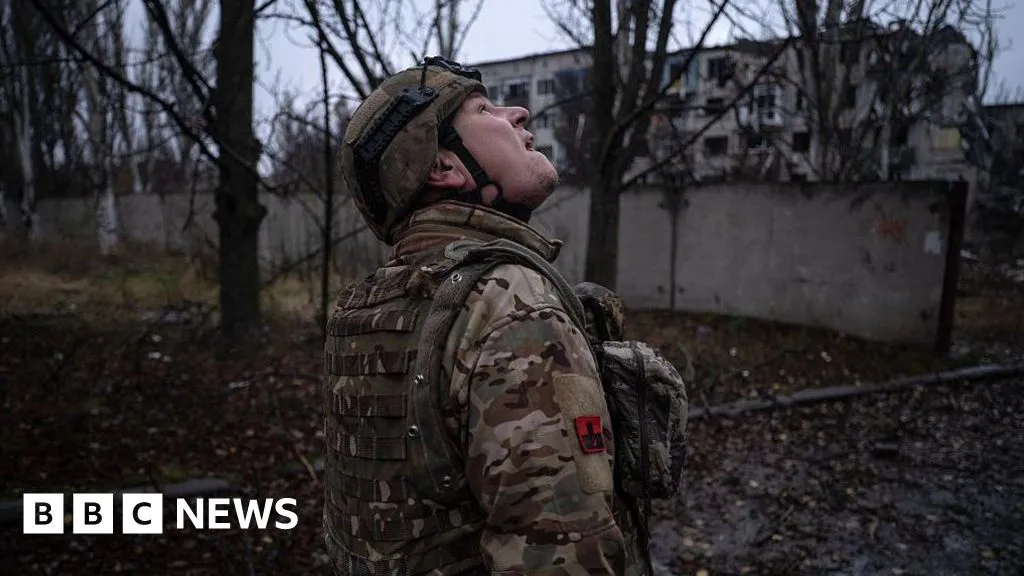
BBC News - WorldFIG 01
Reading time
3min
Word count
594words
Sources cited
3cited
Entities identified
11entities
Quality score
100%
§ 01
Briefing Summary
AI-generatedNEWSAR · AI
The article describes the "kill-zone" on Ukraine's front line, a drone-dominated area where speed is crucial for survival. While new weapons like drones are prevalent, soldiers remain essential for holding territory. Ukrainian troops are stationed in foxholes and dugouts, facing constant threats from Russian drones and artillery, as exemplified by the experiences of soldiers like Kenya and Khani. Supply lines are severely disrupted, with food and ammunition often delivered by unreliable drones, and soldiers endure harsh conditions, including extreme cold and lack of water. Ukraine is increasing attacks on Russian logistics to counter a potential summer offensive, and recent reports indicate Russia lost more territory than it gained last month.
Confidence 0.90Sources 3Claims 5Entities 11
§ 02
Article analysis
Model · rule-basedFraming
Conflict
Technology
Tone
Sensational
AI-assessed
CalmNeutralAlarmist
Factuality
0.60 / 1.00
Mixed
LowHigh
Sources cited
3
Well sourced
FewMany
§ 03
Key claims
5 extracted01
Soldiers in the kill-zone face constant fear of detection by Russians, leading to attacks by drones and artillery.
factual
Confidence
0.90
02
Drones cannot seize positions or control heights, so boots on the ground are still necessary to hold territory.
factual
Confidence
0.90
03
The 'kill-zone' is a desolate area dominated by drones that hunt down anything that moves.
factual
Confidence
0.90
04
Soldiers in the kill-zone lack basic necessities like water and adequate food supplies, with mice being a significant nuisance.
factual
Confidence
0.80
05
Supply routes in the Donbas kill-zone are cut off, forcing reliance on aerial drones for food and ammunition, which are unreliable.
factual
Confidence
0.80
§ 04
Full report
3 min read · 594 words§ 05
Entities
11 identifiedKey playerOppositionContextPositiveNeutralNegative
Organizations3
Locations4
Topics1
§ 06
Keywords & salience
9 termskill-zone
1.00
drones
1.00
ukraine war
0.90
front line
0.80
new weapons
0.70
remotely operated weapons
0.60
territory control
0.50
supply routes
0.40
thermal cameras
0.40
§ 07
Topic connections
Interactive graph Network visualization showing 51 related topics
View Full Graph Person Organization Location Event|Click node to navigate|Edge numbers = shared articles