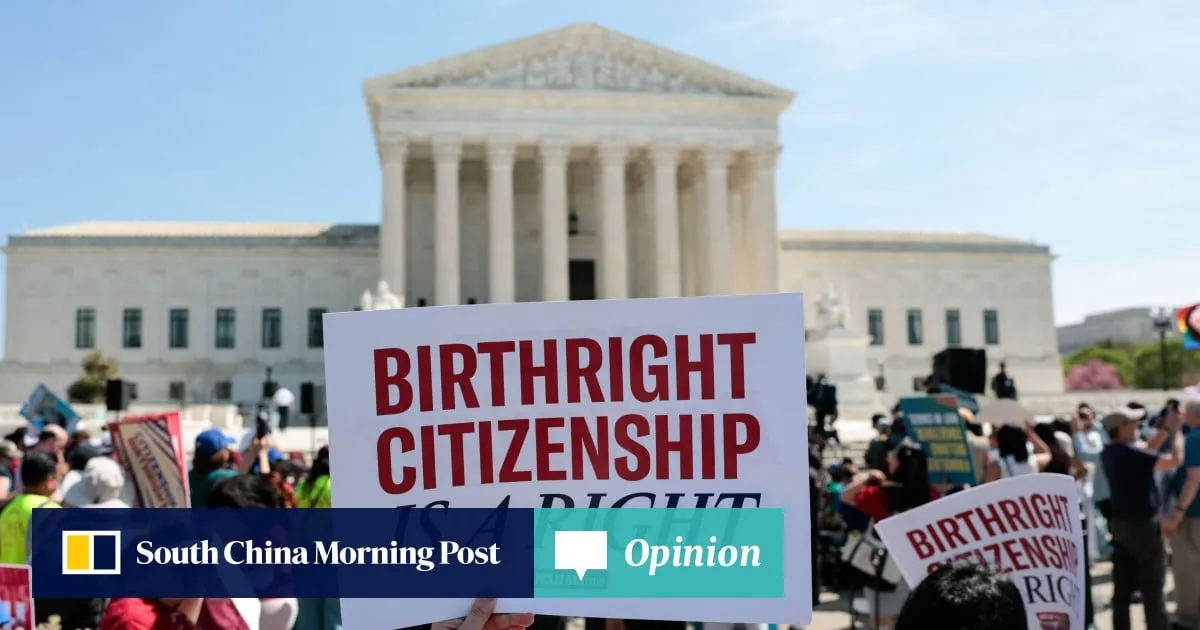
Birthright citizenship has long been considered a settled issue in the United States. It became the law of the land in 1868 with the 14th Amendment to the Constitution that guaranteed citizenship, due process and equal protection to anyone born in the US.Originally designed to ensure citizenship for slaves brought from Africa, its application was extended to Chinese and other groups in the aftermath of the Chinese Exclusion Act of 1882. It was further solidified by the case that Wong Kim Ark brought to the Supreme Court in 1898. Born in San Francisco to parents from China, he was stopped from re-entering the US and appealed to the Supreme Court, which ruled in his favour, thereby reinforcing birthright citizenship.Why is this issue again at the centre of deliberations in the US Supreme Court in 2026? In part, this is driven by today’s heated debates over immigration and voting rights, but something deeper is involved as well: American cultural DNA and mental habits.
SRCSouth China Morning Post
LANGEN
LEANCenter-Right
WORDS162
ENT6
MON · 2026-05-18 · 12:30 GMTBRIEF NSR-2026-0518-77205
NSR-2026-0518-77205Analysis·EN·Legal & Judicial
Birthright citizenship fight shows US identity debate is far from settled
Birthright citizenship, established by the 14th Amendment in 1868, has historically been considered settled law in the United States, guaranteeing citizenship to all born within the country. Initially intended to grant citizenship to formerly enslaved people, its application was later extended to Chinese immigrants and others following the Chinese Exclusion Act of 1882.
James V. WertschSouth China Morning PostFiled 2026-05-18 · 12:30 GMTLean · Center-RightRead · 1 min
South China Morning PostFIG 01
Reading time
1min
Word count
162words
Sources cited
0cited
Entities identified
6entities
Quality score
100%
§ 01
Briefing Summary
AI-generatedNEWSAR · AI
Birthright citizenship, established by the 14th Amendment in 1868, has historically been considered settled law in the United States, guaranteeing citizenship to all born within the country. Initially intended to grant citizenship to formerly enslaved people, its application was later extended to Chinese immigrants and others following the Chinese Exclusion Act of 1882. The Supreme Court case of Wong Kim Ark in 1898 further solidified this principle when it ruled in favor of a U.S.-born son of Chinese parents, allowing his re-entry. Despite its long-standing legal foundation, the issue is again a subject of deliberation, fueled by contemporary debates on immigration and voting rights, and reflecting deeper discussions about American identity.
Confidence 0.85Claims 4Entities 6
§ 02
Article analysis
Model · rule-basedFraming
Legal & Judicial
Social Justice
Tone
Measured
AI-assessed
CalmNeutralAlarmist
Factuality
0.70 / 1.00
Factual
LowHigh
Sources cited
0
No named sources
FewMany
§ 03
Key claims
4 extracted01
The Supreme Court ruled in favor of Wong Kim Ark in 1898, reinforcing birthright citizenship.
factual
Confidence
1.00
02
The 14th Amendment guaranteed citizenship, due process, and equal protection to anyone born in the US.
factual
Confidence
1.00
03
Birthright citizenship became law with the 14th Amendment in 1868.
factual
Confidence
1.00
04
Heated debates over immigration and voting rights are driving the current focus on birthright citizenship.
factual
Confidence
0.90
§ 04
Full report
1 min read · 162 words§ 05
Entities
6 identifiedKey playerOppositionContextPositiveNeutralNegative
Organizations1
§ 06
Keywords & salience
9 termsbirthright citizenship
1.00
14th amendment
0.90
us identity debate
0.80
immigration
0.70
voting rights
0.60
american cultural dna
0.50
due process
0.40
equal protection
0.40
wong kim ark
0.40
§ 07
Topic connections
Interactive graph Network visualization showing 51 related topics
View Full Graph Person Organization Location Event|Click node to navigate|Edge numbers = shared articles