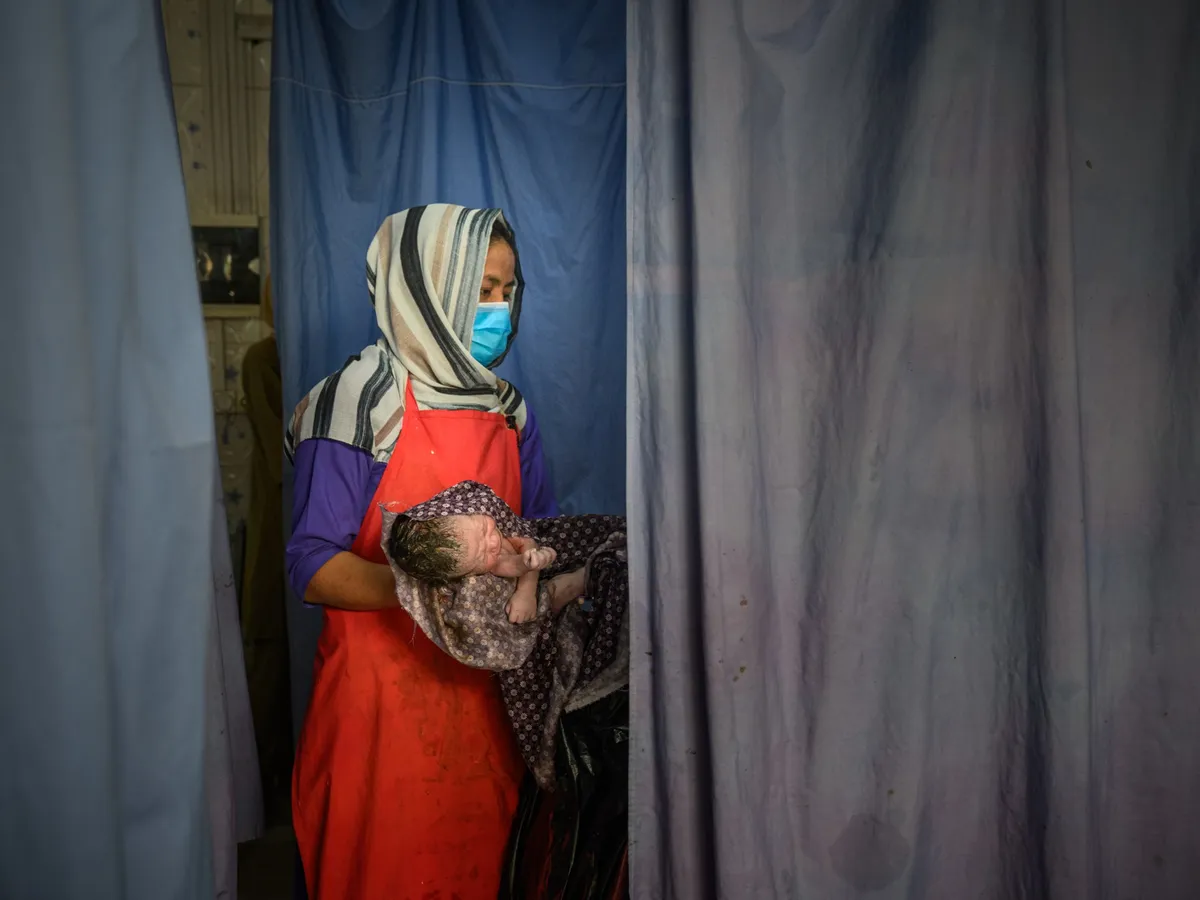
aid cuts, debt and conflict are pushing maternal and child health to breaking point. The cost of inaction is far higher than the cost of acting now.Published On 18 May 2026A midwife holds a newborn after a delivery at the provincial hospital's maternity unit on August 27, 2025, in Ghazni, Afghanistan [Elise Blanchard/Getty Images]In too many parts of the world, giving birth still comes with more fear than hope: a clinic without electricity, a nurse without supplies, a mother who knows that giving life may cost her own. These fears are not merely emotional, they are borne out by the facts. Every two minutes worldwide, a woman dies while giving life. Every year, nearly five million children do not live to see their fifth birthday. A toll that will rise if aid cuts continue. The Lancet medical journal estimates that by 2030, more than 14 million additional people could die, including 4.5 million children under five – the equivalent of erasing a city the size of Abuja, Brasilia or Rome.The true measure of global progress is not found in financial markets or summit declarations. It is found in whether a woman survives pregnancy and childbirth, whether a child is vaccinated and nourished, and whether an adolescent can grow up healthy, safe and hopeful. When women, children and adolescents thrive, societies are stronger, economies are more resilient, and nations are better prepared for the future. When they are failed, the costs are measured not only in preventable deaths and suffering, but in lost human potential on a massive scale.This is why investing in women’s, children’s and adolescents’ health is one of the most important investments any government can make. The evidence is overwhelming. Closing the gap in women’s health alone could add at least $1 trillion to the global economy every year by 2040. Every dollar invested in childhood vaccination or adolescent mental health returns about $20 over a lifetime – in healthcare savings, in productivity, in lives that go on to build something. Healthy women anchor families and economies. Healthy children grow into workers and citizens. Healthy children and adolescents are better equipped to participate in society, build livelihoods and shape more stable, prosperous futures.Yet health systems around the world are being pushed to breaking point by aid cuts, debt, conflict and shrinking fiscal space. In 2025, official development assistance fell by 23 percent – the largest annual drop in history. In more than 50 countries, health workers are losing their jobs and training pipelines are breaking down. In some places, maternal care, vaccination and emergency response have been cut by 70 percent. At the same time, sexual and reproductive health rights are under intensifying political attack, putting hard-won progress at risk.Women and girls bear the heaviest burden. In 2023, six in 10 maternal deaths worldwide were in countries in conflict or fragility. In fact, a woman living in a conflict-affected country is five times more likely to die from pregnancy-related causes than her counterpart in a stable country. Too many women still lack access to quality maternal healthcare, contraception and essential reproductive services. Too many girls face violence, discrimination and barriers to healthcare that limit not only their well-being, but their freedom and future. When budgets tighten, women and children are too often the first to feel the cuts and the last to be protected.This is not inevitable. It is a matter of political choice.In South Africa, we are working to strengthen primary healthcare, expanding equitable access to quality services, investing in the health workforce and building a more inclusive health system that reaches those most in need. We understand that progress in health is inseparable from progress in equality and development. A society cannot prosper if women are denied care, if children are left unprotected, or if adolescents are excluded from the services and opportunities they need to thrive.In Spain, a public national health service has delivered universal coverage and one of the world’s lowest maternal and infant mortality rates. We believe – with vision, determination and solidarity – that what we have achieved at home can be achieved globally. This is why Spain’s Global Health Strategy 2025–2030 places equity, resilient health systems and sexual and reproductive health rights at the centre of our international action, and why we are working to raise the global ambition on sustainable development financing and to defend gender equality as a democratic and development imperative.At the Fourth International Conference on Financing for Development in Sevilla last year, through the Sevilla Commitment and the Sevilla Platform for Action, we helped focus international attention on debt distress, sustainable investment and reform of the global financing architecture.These issues may appear technical, but their consequences are deeply human. They determine whether health systems can recruit and retain workers, whether medicines reach clinics, whether women can access care safely, and whether children and adolescents are given a fair chance at life.We must also be unequivocal in defending sexual and reproductive health and rights. These rights are not secondary, and they are not negotiable. They are central to dignity, equality and public health. No woman or girl should be denied access to life-saving care because of politics, poverty or discrimination. No society can claim to value justice while tolerating persistent gender-based violence or the systematic erosion of women’s autonomy and rights.The question before the international community is therefore not whether we can afford to invest in women, children and adolescents. It is whether we can afford not to. The answer is clear. The long-term costs of inaction – greater instability, deeper inequality, weaker economies and millions of preventable deaths – are far higher than the cost of acting now. Higher than the cost of keeping the lights on in that clinic.This is the spirit in which Spain is joining the Global Leaders Network, which brings together 12 heads of state and government committed to advancing the health and rights of women, children and adolescents. But this effort must not stop with us. The challenges are too large, and the stakes are too high, for leadership to remain limited to a few countries.We need more governments to step forward, to protect essential health services, invest in frontline health workers, defend sexual and reproductive health and rights, and ensure that financing reforms deliver for the people who need them most. We need more leaders to recognise that women, children and adolescents are not a peripheral concern of global policy. They are its clearest test.This is a moment for political courage. A moment to choose investment over retreat, solidarity over indifference, and action over complacency. Above all, it is a moment to recognise a simple truth: if women, children and adolescents are not at the centre of our decisions, then the future will not be fair, stable or sustainable. But if they are, then a better future remains within reach.The views expressed in this article are the author’s own and do not necessarily reflect Al Jazeera’s editorial stance.
SRCAl Jazeera
LANGEN
LEANCenter
WORDS1 157
ENT12
MON · 2026-05-18 · 14:00 GMTBRIEF NSR-2026-0518-77232
NSR-2026-0518-77232News Report·EN·Public Health
The world cannot afford to fail women, children and adolescents
Aid cuts, debt, and conflict are severely impacting maternal and child health globally, pushing health systems to a breaking point. This inaction carries a high cost, with estimates suggesting millions of additional deaths by 2030 if current trends continue.
Cyril Ramaphosa,Pedro SánchezAl JazeeraFiled 2026-05-18 · 14:00 GMTLean · CenterRead · 5 min
Al JazeeraFIG 01
Reading time
5min
Word count
1 157words
Sources cited
1cited
Entities identified
12entities
Quality score
100%
§ 01
Briefing Summary
AI-generatedNEWSAR · AI
Aid cuts, debt, and conflict are severely impacting maternal and child health globally, pushing health systems to a breaking point. This inaction carries a high cost, with estimates suggesting millions of additional deaths by 2030 if current trends continue. Investing in the health of women, children, and adolescents is crucial for societal strength and economic resilience, offering significant returns. However, official development assistance for health has seen a historic drop, leading to job losses for health workers and drastic cuts in essential services like maternal care and vaccinations. Women and girls, particularly in conflict-affected regions, bear the brunt of these crises, facing increased risks and limited access to care. This situation is a result of political choices, not inevitability, and requires a commitment to equitable access, strong health systems, and the defense of sexual and reproductive health rights.
Confidence 0.90Sources 1Claims 5Entities 12
§ 02
Article analysis
Model · rule-basedFraming
Public Health
Economic Impact
Tone
Mixed Tone
AI-assessed
CalmNeutralAlarmist
Factuality
0.70 / 1.00
Factual
LowHigh
Sources cited
1
Limited
FewMany
§ 03
Key claims
5 extracted01
In 2025, official development assistance fell by 23 percent.
statistic
Confidence
1.00
02
Nearly five million children do not live to see their fifth birthday annually.
statistic
Confidence
1.00
03
Every two minutes worldwide, a woman dies while giving life.
statistic
Confidence
1.00
04
By 2030, more than 14 million additional people could die, including 4.5 million children under five, due to aid cuts.
predictionThe Lancet medical journal
Confidence
0.90
05
Closing the gap in women's health could add at least $1 trillion to the global economy every year by 2040.
prediction
Confidence
0.80
§ 04
Full report
5 min read · 1 157 words§ 05
Entities
12 identifiedKey playerOppositionContextPositiveNeutralNegative
Organizations1
Locations5
§ 06
Keywords & salience
10 termsmaternal and child health
1.00
aid cuts
0.90
global health
0.80
women's health
0.80
adolescent health
0.70
conflict
0.60
preventable deaths
0.50
debt
0.50
human potential
0.40
official development assistance
0.40
§ 07
Topic connections
Interactive graph No topic relationship data available yet. This graph will appear once topic relationships have been computed.