Europe is facing a fresh China-shock" class="entity-link entity-topic" data-entity-id="129836" data-entity-type="topic">China shock that threatens to cannibalise local factories, leading to job losses and de facto colonisation of industry by Beijing, trade analysts and representatives have said.They fear the plunging exchange rate and support for Chinese “zombie firms” has echoes of the crisis in the US 25 years ago when the term “China-shock" class="entity-link entity-topic" data-entity-id="129836" data-entity-type="topic">China shock” was coined. It referred to the impact of China bursting on to the global trade stage after becoming a member of the World Trade Organization, with soaring imports displacing local industries and causing the loss of up to 2.5m jobs.Jens Eskelund, the president of the European Chamber of Commerce in Beijing and a seasoned China watcher, said: “When people think of China imports, they think of finished goods like EVs [Electric Vehicles] but that is not where the problem is. It is the sheer volume of components being imported from China. If anything, Europe is getting more dependent on China.”As China components are embedded deeper and deeper into the EU’s industrial bloodstream, the EU is facing stark choices. According to a report in the Financial Times this week, the bloc is considering forcing European companies to buy critical components from at least three different suppliers.European commissioners will meet on 29 May for urgent talks on what measures they can take. Oliver Richtberg, the head of foreign trade at VDMA, the trade organisation for the machinery and equipment manufacturing industry in Europe and Germany, commended Brussels, but not Berlin, for its high level of engagement, saying it was “always looking for the data and for our views”.State subsidies that would be unfeasible in Europe were one factor making Chinese products cheaper, Richtberg said. But the bigger worry is changes in the exchange rate over the past five years, which Jürgen Matthes, a German economist, said could have left the yuan 40% undervalued against the euro, leaving procurement bosses with little choice on a day-to-day business level.Richtberg said: “If you are thinking about what products to make and if you see a supplier in China that makes something at 95% of the quality of the European product and it is 30-50% cheaper, that is a rational choice, I would say. This is what is also hurting us. We cannot accept this any more because it is just unfair.“It [the reliance on China] is hurting and we should be worried. We are losing market share, our industry is under significant pressure. We lost 22,000 jobs alone in Germany in the machinery industry in the last year.”Soapbox, a China trade watch website written by a trade consultant in conjunction with the Mercator Institute for China Studies, a German thinktank, said last week the data confirmed the prospect of cannibalisation of industries. The data it found was “more worrying than expected”, it said.Take amino acids, used extensively as flavour enhancers and in pharmaceuticals. By value, EU imports 52% of the ingredients from China, but by volume it soars to 88%.The data on polyhydric alcohols, used in plastics, cosmetics, paint and antifreeze, among other products, is even more worrying, Soapbox said. About 96% of EU imports by volume come from China.The site’s author, a trade consultant who blogs anonymously but to whom the Guardian has spoken, said: “This is the less visible part of the China trade story. The risk is not simply that the EU buys cheap inputs from China. The risk is that low-priced supply gradually makes EU production uneconomic, leaving the union dependent on the very source that displaced it.”Trade figures show China’s surplus with the EU is ballooning. Some say the impact of the 2024 EU tariffs of up to 35% on Chinese Electric Vehicles was totally wiped out by the exchange rate.Andrew Small, the director of the Asia programme at the European Council on Foreign Relations and a former China adviser in the European Commission, said: “All of the China-shock" class="entity-link entity-topic" data-entity-id="129836" data-entity-type="topic">China shock dynamics are holding – the tools used so far by the EU are not commensurate with the import levels.”China is now Germany’s top trading partner, having overtaken the US. China’s surplus with Germany doubled from $12bn to $25bn between 2024 and 2025 as imports from the world’s second largest economy to Europe’s largest hit $118bn while exports dipped to $93bn, according to Chinese customs data.An estimated 250,000 industrial jobs have been lost in Germany since 2019, with the sharpest fall in car manufacturing where about 51,000 jobs were lost between 2024 and 2025.Eskelund said the growing reliance on China was an existential worry. “In our last business confidence survey, 26% of our members were increasing their onshore presence in China,” he said. “If it continues at this level it will be very significant. There is already deindustrialisation as we speak – Germany losing something like 10,000 to 15,000 jobs a month. At some point this could go beyond being an economic issue but become a security issue for Germany.”Small said: “China is still massively underweight in the debate about what is happening in European industry.”The EU has come up with two legislative proposals to try to safeguard industry: the Industrial Accelerator Act, nicknamed the “made in EU” law, and an update of the Cyber Security Act of 2019 that would allow companies to stop buying Chinese on security grounds. But these will not be in force until 2027 and beyond, leaving Brussels under pressure to come up with immediate lifelines for EU industry.Small said: “The question is where are the member states on all of this,” adding tariffs were a nonstarter. “A huge amount of political energy went into getting tariffs. They were always going to fall short of what was needed to adequately correct the imbalance in trade. A lot of politicians did a lot of heavy lifting on this. I don’t think that is something people want to repeat.”While anything the EU decides will be carefully calibrated against the inevitable hostile reaction from China, Beijing is seen as in the driving seat. Small said: “China doesn’t need to stop all the new countermeasures the EU has at its disposal, it just needs to snarl up the process with the aim of keeping their exports flowing.”
SRCThe Guardian - World News
LANGEN
LEANCenter-Left
WORDS1 025
ENT12
TUE · 2026-05-19 · 06:00 GMTBRIEF NSR-2026-0519-77425
NSR-2026-0519-77425News Report·EN·Economic Impact
Fears of new China shock as EU industry’s reliance on imports grows
European industry faces a potential "China shock" due to increasing reliance on imported components, raising fears of job losses and the displacement of local manufacturing. Trade analysts warn that a combination of China's plunging exchange rate and state support for its firms makes Chinese products significantly cheaper, even for components.
Lisa O’CarrollThe Guardian - World NewsFiled 2026-05-19 · 06:00 GMTLean · Center-LeftRead · 5 min
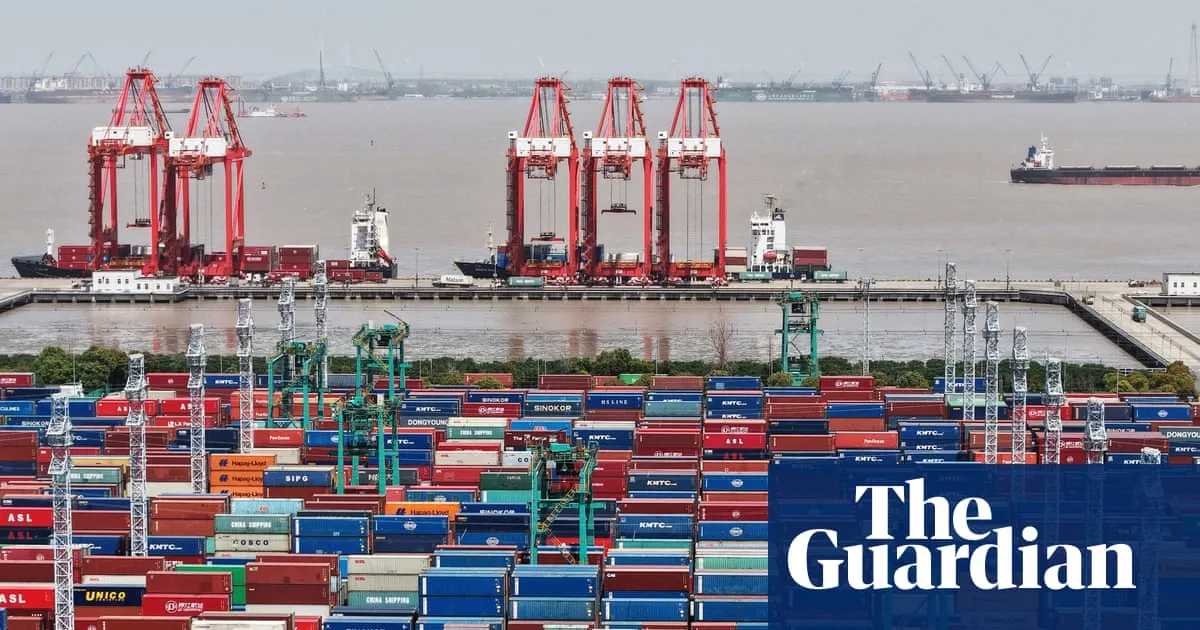
The Guardian - World NewsFIG 01
Reading time
5min
Word count
1 025words
Sources cited
4cited
Entities identified
12entities
Quality score
100%
§ 01
Briefing Summary
AI-generatedNEWSAR · AI
European industry faces a potential "China shock" due to increasing reliance on imported components, raising fears of job losses and the displacement of local manufacturing. Trade analysts warn that a combination of China's plunging exchange rate and state support for its firms makes Chinese products significantly cheaper, even for components. This trend is leading to a growing trade surplus for China with the EU and Germany, with significant job losses reported in the German machinery and automotive sectors. The EU is considering measures, such as requiring companies to diversify suppliers, to address this growing dependence, as the volume of imported components, particularly in sectors like amino acids and polyhydric alcohols, is alarmingly high.
Confidence 0.90Sources 4Claims 5Entities 12
§ 02
Article analysis
Model · rule-basedFraming
Economic Impact
Political Strategy
Tone
Sensational
AI-assessed
CalmNeutralAlarmist
Factuality
0.60 / 1.00
Mixed
LowHigh
Sources cited
4
Well sourced
FewMany
§ 03
Key claims
5 extracted01
Germany's machinery industry lost 22,000 jobs in the last year due to competitive pressure.
statisticOliver Richtberg
Confidence
0.90
02
Europe faces a new 'China shock' threatening local factories, job losses, and de facto industrial colonization by Beijing.
quotetrade analysts and representatives
Confidence
0.90
03
By volume, the EU imports 88% of amino acids from China, despite only 52% by value.
statisticSoapbox
Confidence
0.80
04
The EU is considering forcing European companies to buy critical components from at least three different suppliers.
factualFinancial Times
Confidence
0.80
05
The yuan may be 40% undervalued against the euro, making Chinese components significantly cheaper.
statisticJürgen Matthes
Confidence
0.70
§ 04
Full report
5 min read · 1 025 words§ 05
Entities
12 identifiedKey playerOppositionContextPositiveNeutralNegative
Organizations5
§ 06
Keywords & salience
10 termschina shock
1.00
eu industry
0.90
import reliance
0.80
components imports
0.70
job losses
0.60
state subsidies
0.50
exchange rate
0.50
market share
0.40
wto
0.40
undervalued yuan
0.40
§ 07
Topic connections
Interactive graph Network visualization showing 51 related topics
View Full Graph Person Organization Location Event|Click node to navigate|Edge numbers = shared articles