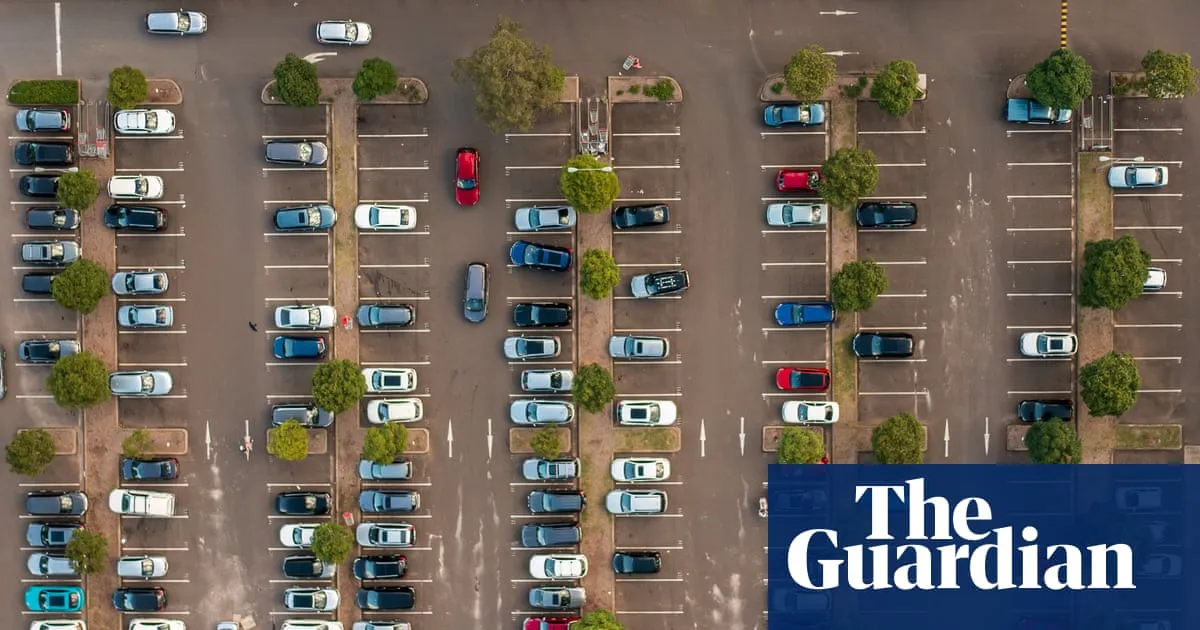
Australia risks wasting $5.2bn by building 86,000 new unwanted car parking spaces in the next five years under strict planning rules, Grattan Institute research finds. Photograph: Harlz/Getty Images/iStockphoto View image in fullscreen Australia risks wasting $5.2bn by building 86,000 new unwanted car parking spaces in the next five years under strict planning rules, Grattan Institute research finds. Photograph: Harlz/Getty Images/iStockphoto Scrapping 86,000 new car parking spaces could save $5.2bn and drive down rents, Grattan report finds About 40% of parking spaces under apartments in Australia sit empty, yet strict planning rules mean more unwanted spots continue to be built Get our breaking news email, free app or daily news podcast Australia risks squandering $5.2bn by building 86,000 unwanted car parking spaces in the next five years, according to research by the Grattan Institute. The report recommends urgent reform to planning rules, including scrapping a requirement for a minimum number of car parking spaces per bedroom for new builds. For instance, in Sydney, a new one-bedroom apartment is required to come with an average of 0.6 car spaces. But about 40% of Australian households in a studio or one-bedroom apartment don’t have a car. Dominic Behrens, one of the authors of the report, said Australia already had far too much off-street parkingbecause of state and local requirements for new developments. “We’ve required too many parking spaces for a long time, and as a result, we’ve got a lot more than we want, need, or use, particularly under apartment buildings,” said Behrens, a housing researcher. That means hundreds of thousands of people are paying for more parking than they need, with about 40% of the parking spaces under apartment buildings in Australia sitting empty every night, he said. Grattan estimated that the rules add $70,000 to the cost of building a typical two-bedroom apartment in Sydney, $62,000 in Melbourne, $113,000 in Brisbane, $137,000 in Perth and $95,000 in Adelaide. Behren said that makes it more difficult for developers to make a profit on building new homes, which both reduces supply and increases rents as costs are passed on. “If we got rid of these rules and built more housing, it’s rents at the lower end of the spectrum that would go down the most, and so really the biggest burden of these rules falls on the people who have the least capacity to pay,” he said. Though some councils have made moves to shrink parking minimums, particularly in suburbs near good quality public transport, the report recommends simply getting rid of them entirely. Grattan estimates the change would cut thousands of dollars from the cost of new homes, reduce construction time, and save Australia $5.2bn by not constructing more than 86,000 unwanted car spaces over the next five years. The report also recommends local government better manage demand for on-street parking through policies like parking permit schemes, time limits, and user charges in high-demand areas, ensuring people don’t over park the street. Originally imposed in the 1950s, academics have criticised parking minimums for decades, but they remain common nationwide, typically embedded in local council planning rules. Author of Rethinking Parking, David Mepham, said councils were often unwilling to roll them back for fear of public backlash. “Emotionally we’ve got this very deep connection to driving and what we can see as being a right to park,” he said. “It makes it very difficult for politicians to make rational decisions about parking, if once you start talking about reducing parking the next thing you know everyone’s on talkback radio having a meltdown about it. “[Residents will] get on the phone to the councillor, and traders will give their councillor a rev. Everyone wants more parking, but no one wants to pay for it”. Grattan recommends state governments intervene to take away councils’ power to impose parking requirements. Behrens pointed to New Zealand doing so in 2020. Mepham said part of the solution was to make the cost of parking more transparent, “unbundling” the price so it wasn’t hidden in the overall cost of renting or paying a mortgage. That’s already happening thanks to apps that allow people to rent out their unused space, he said. The Grattan report encouraged state and local governments to go further, facilitating unbundling of car parking rights, so that parking spaces can be bought or leased independently of the overall property. Behrens said that may require changes to strata bylaws, which sometimes prohibit or heavily restrict leasing out parking, for instance, by preventing cutting a new key to enter a locked garage. He said the latest research adds to last year’s Grattan report which recommended a wholesale reform to zoning rules in Australia’s capital cities to permit three-story apartments on all residential land. Both reports criticise a broad “instinct” in what he called Australia’s “legacy planning systems” to “micromanage” our cities. “[Planners think they] know exactly what the best outcome is, and if we set the rules, we’ll get that desired outcome, and everything will be great,” he said. “I think we’re starting to see that that’s not correct, and it’s really the individual who knows best what they need. We’re now starting to unwind some of the damage that imposing these rules has done.” Explore more on these topics Transport Housing news Share Reuse this content
SRCThe Guardian - World News
LANGEN
LEANCenter-Left
WORDS879
ENT11
TUE · 2026-05-19 · 15:00 GMTBRIEF NSR-2026-0519-77564
NSR-2026-0519-77564News Report·EN·Economic Impact
Scrapping 86,000 new car parking spaces could save $5.2bn and drive down rents, Grattan report finds
A Grattan Institute report finds Australia risks wasting $5.2 billion by building 86,000 unwanted car parking spaces in the next five years due to strict planning rules. The report highlights that approximately 40% of apartment parking spaces are empty, yet minimum parking requirements per bedroom persist.
Andrew MessengerThe Guardian - World NewsFiled 2026-05-19 · 15:00 GMTLean · Center-LeftRead · 4 min
The Guardian - World NewsFIG 01
Reading time
4min
Word count
879words
Sources cited
2cited
Entities identified
11entities
Quality score
100%
§ 01
Briefing Summary
AI-generatedNEWSAR · AI
A Grattan Institute report finds Australia risks wasting $5.2 billion by building 86,000 unwanted car parking spaces in the next five years due to strict planning rules. The report highlights that approximately 40% of apartment parking spaces are empty, yet minimum parking requirements per bedroom persist. Researchers recommend scrapping these rules entirely, arguing it could reduce new home construction costs by tens of thousands of dollars, potentially lowering rents, especially for lower-income individuals. The report also suggests local governments better manage on-street parking and that state governments intervene to remove councils' power to impose parking requirements, citing New Zealand's similar reform in 2020.
Confidence 0.90Sources 2Claims 5Entities 11
§ 02
Article analysis
Model · rule-basedFraming
Economic Impact
Social Justice
Tone
Measured
AI-assessed
CalmNeutralAlarmist
Factuality
0.70 / 1.00
Factual
LowHigh
Sources cited
2
Limited
FewMany
§ 03
Key claims
5 extracted01
The rules add $70,000 to the cost of building a typical two-bedroom apartment in Sydney.
statisticGrattan Institute
Confidence
1.00
02
About 40% of parking spaces under apartments in Australia sit empty.
statisticGrattan Institute
Confidence
1.00
03
Australia risks wasting $5.2bn by building 86,000 unwanted car parking spaces in the next five years.
statisticGrattan Institute
Confidence
1.00
04
Rents at the lower end of the spectrum would go down the most if parking rules were removed.
predictionDominic Behrens (Grattan Institute)
Confidence
0.90
05
Scrapping minimum parking space requirements could save $5.2bn and drive down rents.
predictionGrattan Institute
Confidence
0.90
§ 04
Full report
4 min read · 879 words§ 05
Entities
11 identifiedKey playerOppositionContextPositiveNeutralNegative
Organizations1
Locations6
§ 06
Keywords & salience
9 termscar parking spaces
1.00
planning rules
0.90
grattan institute
0.80
housing supply
0.70
rental costs
0.70
development costs
0.60
minimum parking requirements
0.50
unwanted parking
0.50
apartment buildings
0.40
§ 07
Topic connections
Interactive graph Network visualization showing 51 related topics
View Full Graph Person Organization Location Event|Click node to navigate|Edge numbers = shared articles