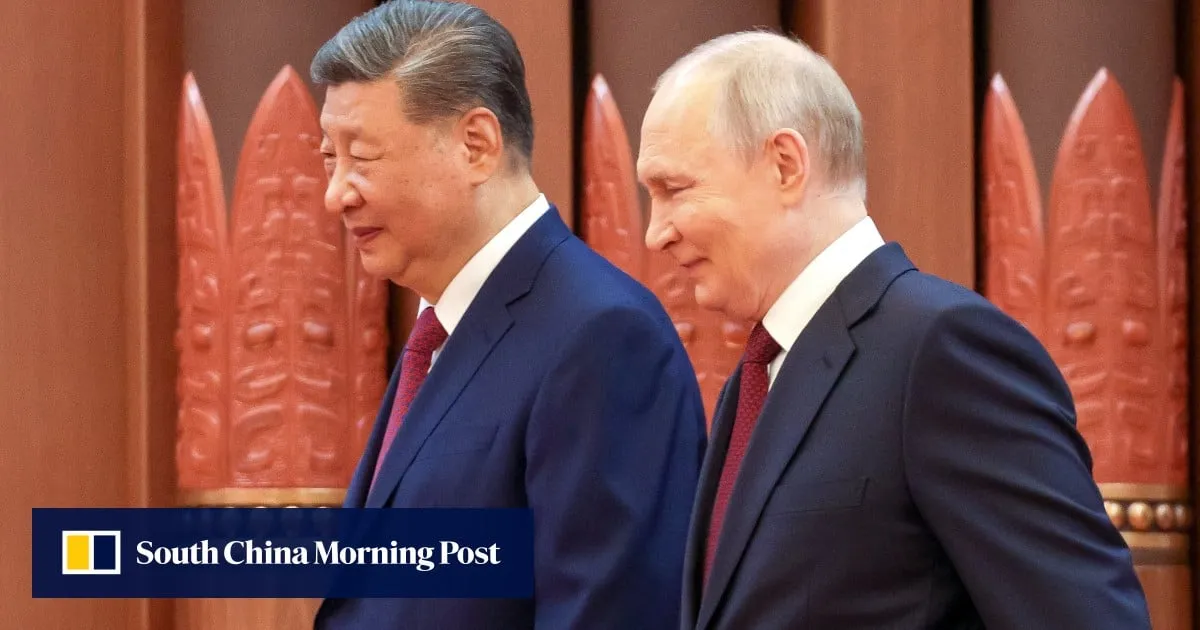
Cooperation between China and Russia on science and technology could help stop US isolation and allow the international science community to “return to normalcy” amid geopolitical tensions, according to experts in the US and Russia.It could also offer the world an alternative model of scientific collaboration and signal a shift in the scientific “centre of gravity” from the West to the East.As the leaders of China and Russia met in Beijing, experts said they hoped the summit would provide institutional support and a “structural backbone” for more scientific cooperation.
SRCSouth China Morning Post
LANGEN
LEANCenter-Right
WORDS89
ENT7
WED · 2026-05-20 · 10:11 GMTBRIEF NSR-2026-0520-77813
NSR-2026-0520-77813Analysis·EN·Diplomatic
How China and Russia could team up to shift global science ‘centre of gravity’
Experts in the US and Russia believe that increased science and technology cooperation between China and Russia could counter US isolation and help the international scientific community return to normalcy amidst geopolitical tensions. This collaboration could present an alternative model for scientific partnerships globally.
Victoria BelaSouth China Morning PostFiled 2026-05-20 · 10:11 GMTLean · Center-RightRead · 1 min
South China Morning PostFIG 01
Reading time
1min
Word count
89words
Sources cited
2cited
Entities identified
7entities
Quality score
100%
§ 01
Briefing Summary
AI-generatedNEWSAR · AI
Experts in the US and Russia believe that increased science and technology cooperation between China and Russia could counter US isolation and help the international scientific community return to normalcy amidst geopolitical tensions. This collaboration could present an alternative model for scientific partnerships globally. During a meeting between the leaders of China and Russia in Beijing, experts expressed hope that the summit would establish institutional support and a structural framework for enhanced scientific cooperation. Such a shift could potentially move the global scientific "centre of gravity" from the West towards the East.
Confidence 0.85Sources 2Claims 4Entities 7
§ 02
Article analysis
Model · rule-basedFraming
Diplomatic
Technology
Tone
Measured
AI-assessed
CalmNeutralAlarmist
Factuality
0.40 / 1.00
Mixed
LowHigh
Sources cited
2
Limited
FewMany
§ 03
Key claims
4 extracted01
Experts hoped the summit would provide institutional support and a “structural backbone” for more scientific cooperation between China and Russia.
quoteexperts
Confidence
0.70
02
Cooperation between China and Russia on science and technology could help stop US isolation and allow the international science community to “return to normalcy”.
quoteexperts in the US and Russia
Confidence
0.70
03
A shift in the scientific “centre of gravity” from the West to the East is possible due to China-Russia cooperation.
predictionexperts
Confidence
0.60
04
China-Russia scientific cooperation could offer the world an alternative model of scientific collaboration.
factualexperts
Confidence
0.60
§ 04
Full report
1 min read · 89 words§ 05
Entities
7 identifiedKey playerOppositionContextPositiveNeutralNegative
Locations4
§ 06
Keywords & salience
8 termschina russia cooperation
1.00
global science
0.90
scientific collaboration
0.80
us isolation
0.70
geopolitical tensions
0.60
centre of gravity
0.50
alternative model
0.40
institutional support
0.40
§ 07
Topic connections
Interactive graph Network visualization showing 51 related topics
View Full Graph Person Organization Location Event|Click node to navigate|Edge numbers = shared articles