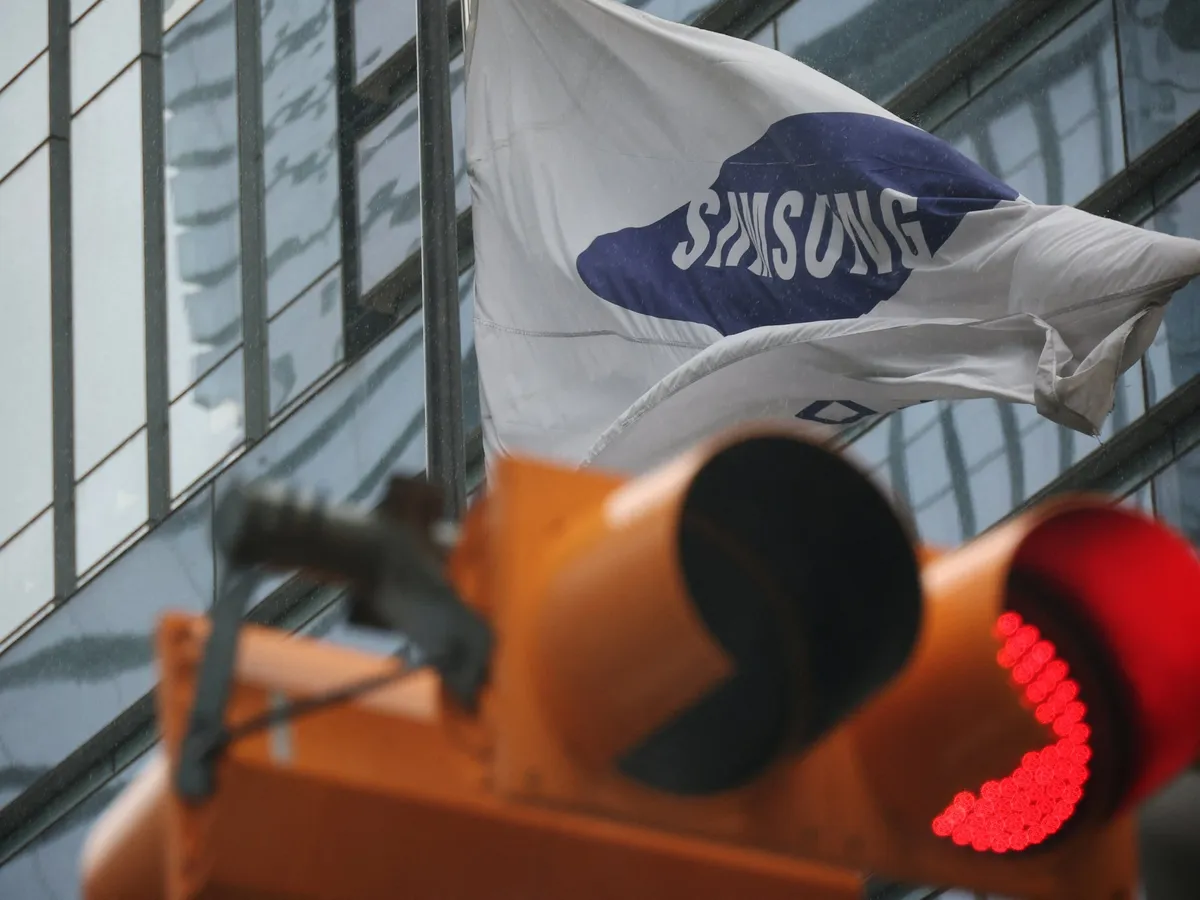
EXPLAINERWorkers’ union says protest over bonuses will continue for 18 days.A flag bearing the logo of Samsung Electronics flutters outside the company's office building in Seoul, South Korea [Kim Hong-Ji/Reuters]Published On 20 May 2026South Korean chipmaker Samsung Electronics is facing one of the most serious workers’ strikes in its history, with a protest which could affect the overall economy and the group’s global supply of semiconductors.The company’s workers’ union has announced that more than 48,000 workers will stop work on Thursday to protest for 18 days over their bonus payments.Recommended Stories list of 3 itemslist 1 of 3South Koreans gear up to roar on football team from rival Northlist 2 of 3South Korea says it is investigating an incident on May 4 when two unidentilist 3 of 3Starbucks Korea CEO fired over promotion that evoked military crackdownend of listThe electronics giant is a major engine in South Korea’s economy, producing revenues equal to about 12.5 percent of the country’s gross domestic product (GDP).What has led to the strike and why is it a cause for concern?Here’s what we know:What is the dispute between Samsung and its union about?Samsung Electronics’ Union has demanded that the company abolish a cap on bonuses that currently stands at 50 percent of annual salary and instead allocate 15 percent of the company’s annual operating profit to bonuses.According to local media reports, the union has highlighted other, smaller companies such as SK Hynix, a Samsung rival, which pays its workers higher bonuses.Samsung Electronics has defended its pay scheme.In a media statement, it said the union had made “unacceptable demands” which included the size of bonuses for loss-making units.The two sides held talks mediated by the government on Wednesday but were unable to reach a consensus.On Wednesday, union leader Choi Seung-ho said the union had accepted a final proposal presented by a government mediator, but the 18-day strike would go ahead as management had not come around on one remaining sticking point, Reuters reported.“I would like to apologise to the public for not being able to produce a good result despite making as many concessions as possible,” he said.“We will not cease our efforts to reach a deal even during the strike.”Samsung Electronics said that “accepting the labour union’s excessive demands would undermine the fundamental principles of company management”.Worker strikes at Samsung were rare until recently. In June 2024, it faced its first-ever industrial action following months of negotiations over pay, when some workers went on strike for one day and held a protest in Seoul, chanting: “Respect labour! We are not wanting a 6.5 percent raise or a 200 percent bonus!”The company had offered a 5.1 percent pay rise for the year, but the union was demanding a 5.6 percent rise, an additional day of annual leave, as well as transparent, performance-based bonuses.Then, on July 8, 2024, thousands of workers went on strike, initially for three days but eventually going on until August 1, when it largely petered out. Additional strikes have taken place since then.Why is the protest a cause for concern?With talks collapsing, about 48,000 employees of Samsung Electronics are planning to strike for 18 days from Thursday. This amounts to 38 percent of the company’s workforce, with the majority in the company’s chip division.Samsung is the world’s largest producer of memory chips, which are used in electronic devices like laptops and computers, as well as in data centres.The strike threatens to disrupt the production of these chips and the government fears this could affect South Korea’s economy. The tech giant’s revenues are equal to about 12.5 percent of the country’s GDP.Bank of Korea, the country’s central bank, estimated this week that a general strike at Samsung Electronics could cut 0.5 percentage points off Korea’s economic growth this year. In a report, the bank estimated that losses from the strike would be about 30 trillion won ($20bn) and said it would take weeks to restore production in the company’s memory chip line, if it came to a complete halt.On Sunday, Prime Minister Kim Min-seok also warned that if the strike went ahead, “the economic damage we would face would be unimaginable”.On Monday, South Korea’s Yonhap news agency reported that a court had partially granted Samsung’s request for an injunction to block the strike. According to the report, the Suwon District Court said staffing levels for some essential production units should be maintained and also barred the union from taking over company facilities.Gary Tan, a portfolio manager at Allspring Global Investments, told Reuters that the impact on supply chains should remain limited unless the strike is prolonged, however.“The bigger effect is on market sentiment and longer-term memory industry pricing structure, reinforcing cost pressures,” said Tan, whose fund holds Samsung shares.What is the government doing?In South Korea, the government has the power to invoke an emergency arbitration order, which could stop the strike from taking place for about 30 days. However, that would require labour unions and companies to restart now-collapsed talks being mediated by the government’s National Labor Relations Commission.The government can resort to such an order if it considers a strike would result in “significant injury to the national economy”.If the commission considers that mediation has failed, the next step is an arbitration process under a separate panel that hears from both parties before making a binding decision.Anyone refusing to comply with the ruling of the panel faces up to two years in prison or a 20 million won ($13,300) fine.The last time the measure was invoked was in 2005, when Korean Air pilots walked off the job but agreed to a compromise pay rise after four days.Yonhap reported on Wednesday that a spokesperson for the country’s labour ministry has said it is too early to invoke such an order.“There is still time left for dialogue between labour and management,” Hong Kyung-ui, a ministry spokesperson, told journalists at the government complex in the central administrative city of Sejong when asked about the possibility of the order.“It is still too early to specifically speak of that,” he added.
SRCAl Jazeera
LANGEN
LEANCenter
WORDS1 003
ENT10
WED · 2026-05-20 · 11:40 GMTBRIEF NSR-2026-0520-77826
NSR-2026-0520-77826News Report·EN·Economic Impact
Why are nearly 50,000 Samsung workers about to strike in South Korea?
Nearly 50,000 Samsung Electronics workers in South Korea are set to strike for 18 days starting Thursday over a dispute concerning bonus payments. The workers' union is demanding the abolition of a bonus cap and instead wants 15 percent of the company's annual operating profit allocated to bonuses, citing higher bonuses at rival companies.
Priyanka ShankarAl JazeeraFiled 2026-05-20 · 11:40 GMTLean · CenterRead · 5 min
Al JazeeraFIG 01
Reading time
5min
Word count
1 003words
Sources cited
2cited
Entities identified
10entities
Quality score
100%
§ 01
Briefing Summary
AI-generatedNEWSAR · AI
Nearly 50,000 Samsung Electronics workers in South Korea are set to strike for 18 days starting Thursday over a dispute concerning bonus payments. The workers' union is demanding the abolition of a bonus cap and instead wants 15 percent of the company's annual operating profit allocated to bonuses, citing higher bonuses at rival companies. Samsung Electronics has called these demands "unacceptable," stating they would undermine management principles. Talks mediated by the government have failed to reach a consensus. This strike is a significant concern due to Samsung's substantial contribution to South Korea's GDP, with potential economic growth impacts estimated at 0.5 percentage points and losses of approximately 30 trillion won. A court has partially granted Samsung's request for an injunction, requiring essential production units to maintain staffing levels and barring the union from occupying company facilities.
Confidence 0.90Sources 2Claims 5Entities 10
§ 02
Article analysis
Model · rule-basedFraming
Economic Impact
Conflict
Tone
Mixed Tone
AI-assessed
CalmNeutralAlarmist
Factuality
0.70 / 1.00
Factual
LowHigh
Sources cited
2
Limited
FewMany
§ 03
Key claims
5 extracted01
Samsung Electronics stated the union's demands are 'unacceptable' and would undermine company management principles.
quoteSamsung Electronics
Confidence
0.95
02
Samsung faced its first-ever industrial action in June 2024 over pay negotiations.
factual
Confidence
0.90
03
The union demands the abolition of a 50% salary cap on bonuses and allocation of 15% of annual operating profit to bonuses.
factualSamsung Electronics’ Union
Confidence
0.90
04
Nearly 50,000 Samsung workers in South Korea are set to strike for 18 days over bonus payments.
factual
Confidence
0.90
05
Samsung Electronics' revenues represent about 12.5 percent of South Korea's gross domestic product (GDP).
statistic
Confidence
0.85
§ 04
Full report
5 min read · 1 003 words§ 05
Entities
10 identifiedKey playerOppositionContextPositiveNeutralNegative
People1
Organizations4
§ 06
Keywords & salience
9 termssamsung workers strike
1.00
south korea
0.90
bonus payments
0.80
semiconductor supply
0.70
labor union
0.60
samsung electronics
0.50
economic impact
0.50
gdp
0.40
sk hynix
0.40
§ 07
Topic connections
Interactive graph Network visualization showing 51 related topics
View Full Graph Person Organization Location Event|Click node to navigate|Edge numbers = shared articles