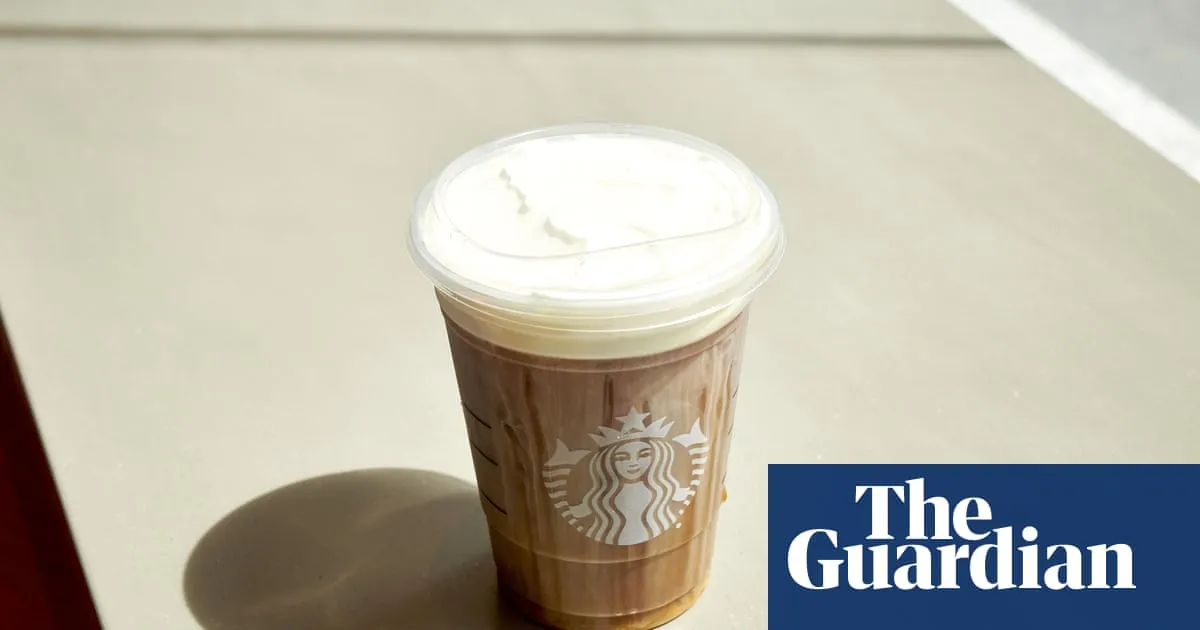
If you attach a GPS tracker to a “widely recyclable” plastic Starbucks cup and drop it in an in-store recycling bin, you might expect it to end up in a recycling plant, but the environmental watchdog organization Beyond Plastics says that’s not the case in a new report.Starbucks announced that their plastic cups were now considered “widely recyclable” earlier this year, according to How2Recycle, a group affiliated with the consumer packaging industry that helps private companies label their packaging with recycling options. The coffee giant touted the achievement as a “big milestone, with huge impact”.In response, researchers and volunteers with Beyond Plastics, whose mission is to “end plastic pollution everywhere”, conducted an investigation between January and March 2026 to determine whether the plastic Starbucks to-go cups for cold drinks were actually being recycled.“I used Bluetooth-enabled trackers,” said study lead Susan Keefe. “And I glued them into the cups using Gorilla Glue and dropped them into the actual custom-labeled recycling bins in the Starbucks stores. And then you can follow them on your phone.”Keefe and a group of volunteers tracked 53 polypropylene plastic cups starting in recycling bins at Starbucks locations across nine states and Washington DC. Each recycling bin had signs clearly indicating these specific cups could be recycled. The results were stunning: not one cup ended up at a recycling facility.Of the 36 trackers that reached a final destination intact, none were located at a recycling facility.Instead, Beyond Plastics said 16 trackers pinged from landfills, nine from incinerators, eight at waste-transfer stations (a stop on the way to a landfill or incinerator), and three to a materials recovery facility (which bales but does not recycle plastics). The plastic cup with the longest journey traveled from a Williamsburg, Brooklyn, location all the way to a landfill in Amsterdam, Ohio.“To come out and just say: ‘Oh, these cups are widely recyclable,’ is really deceptive,” said Keefe. “We have to accept the fact these materials are not being recycled. They just aren’t.”In a statement, a Starbucks spokesperson told The Guardian: “Our cups are designed to be recyclable, and the ‘widely accepted for recycling’ designation reflects that. Obviously, recycling in practice also requires local community infrastructure. That’s why we work closely with others, including the recycling companies, to help expand access and help improve the system.”Starbucks later said they “take issue with the methodology” in this study.“Studies that place electronic trackers inside cups do not reflect how recycling systems operate in practice. Those materials are not accepted in recycling streams and can introduce contamination, which may change how materials are handled or where they are routed,” the company said.“Recycling outcomes depend on the broader system – including local infrastructure, contamination levels and consumer participation – factors that extend beyond any single company. We are focused on what’s within our control: improving access to recycling, investing in innovation to strengthen recovery systems, and advancing reusable and alternative packaging solutions to reduce waste.”Polypropylene, the material used for single-use plastic cups at Starbucks and other fast-food restaurants, can theoretically be recycled into other plastic products ranging from more consumer good packaging to toys. However, very few recycling facilities are equipped to recycle this type of plastic. In fact, a Greenpeace report from late 2025 found only two commercially operating facilities in the country, one in Alabama and one in Missouri.“I have to imagine that Starbucks is aware of the number of facilities that actually reprocess the waste,” says Keefe. “Starbucks is telling people that these items are actually recyclable. Well, that doesn’t actually mean that recycling is happening.”Judith Enck, president of Beyond Plastics and a former EPA regional administrator, emphasized that “accepting a plastic item for recycling is not the same as actually recycling it, and the company knows the difference”.“It’s time for Starbucks to stop making misleading recycling claims and start prioritizing plastic-free, preferably reusable, alternatives for its customers,” she said.Beyond Plastics recommends Starbucks switch all plastic cups nationwide to fiber-based to-go cups and lids, and encourage more reusable cup use, but at the very least remove misleading labeling on in-store recycling bins.“I think we need to stop talking about plastic recyclability and really focus on moving away from single-use plastic, at least for food and beverage packaging,” said Keefe. “Not to mention the fact that that plastic has chemicals in it and all kinds of other things that are affecting our health.”Peer-reviewed studies have repeatedly found that plastic waste can be toxic to humans and lead to health effects including respiratory illnesses, endocrine disruption and cancer.“I really believe that companies, when they make claims, especially claims that are about sustainability and setting goals, that they should be held accountable to those goals,” Keefe said. “Starbucks in particular, I mean, they’re the largest coffee chain in the world. So what they say matters.”
SRCThe Guardian - World News
LANGEN
LEANCenter-Left
WORDS798
ENT12
WED · 2026-05-20 · 17:04 GMTBRIEF NSR-2026-0520-77906
NSR-2026-0520-77906News Report·EN·Environmental
Starbucks does not recycle plastic cups it claims are ‘widely recyclable’, report says
A report by environmental watchdog group Beyond Plastics found that Starbucks' plastic cups, labeled as "widely recyclable," did not end up at recycling facilities. Researchers attached GPS trackers to 53 cups placed in in-store recycling bins across nine states and Washington D.C.
Nora NeusThe Guardian - World NewsFiled 2026-05-20 · 17:04 GMTLean · Center-LeftRead · 4 min
The Guardian - World NewsFIG 01
Reading time
4min
Word count
798words
Sources cited
2cited
Entities identified
12entities
Quality score
100%
§ 01
Briefing Summary
AI-generatedNEWSAR · AI
A report by environmental watchdog group Beyond Plastics found that Starbucks' plastic cups, labeled as "widely recyclable," did not end up at recycling facilities. Researchers attached GPS trackers to 53 cups placed in in-store recycling bins across nine states and Washington D.C. between January and March 2026. Of the trackers that reached a final destination, none were at recycling plants; instead, they were found in landfills, incinerators, or waste-transfer stations. Beyond Plastics argues this indicates Starbucks' claims are deceptive and urges the company to prioritize plastic-free or reusable alternatives. Starbucks stated their cups are designed for recyclability and that recycling outcomes depend on local infrastructure and community participation, questioning the study's methodology.
Confidence 0.90Sources 2Claims 5Entities 12
§ 02
Article analysis
Model · rule-basedFraming
Environmental
Human Interest
Tone
Mixed Tone
AI-assessed
CalmNeutralAlarmist
Factuality
0.70 / 1.00
Factual
LowHigh
Sources cited
2
Limited
FewMany
§ 03
Key claims
5 extracted01
Starbucks questions the study's methodology, stating trackers do not reflect real recycling operations and can cause contamination.
quoteStarbucks
Confidence
1.00
02
Starbucks states their cups are designed to be recyclable and the 'widely accepted for recycling' designation reflects this.
quoteStarbucks spokesperson
Confidence
1.00
03
Of 36 trackers reaching a destination, none were at recycling facilities; 16 were in landfills, 9 incinerators, 8 transfer stations, 3 material recovery facilities.
statisticBeyond Plastics
Confidence
0.90
04
A study tracked 53 Starbucks cups with GPS trackers placed in in-store recycling bins across nine states and DC.
factualBeyond Plastics
Confidence
0.90
05
Beyond Plastics report claims Starbucks plastic cups, labeled 'widely recyclable', were not recycled in a study.
factualBeyond Plastics
Confidence
0.90
§ 04
Full report
4 min read · 798 words§ 05
Entities
12 identifiedKey playerOppositionContextPositiveNeutralNegative
People1
Organizations5
Locations4
§ 06
Keywords & salience
9 termsplastic cup recycling
1.00
widely recyclable
0.90
beyond plastics
0.80
starbucks
0.80
plastic pollution
0.70
recycling infrastructure
0.60
waste management
0.50
deceptive claims
0.50
how2recycle
0.40
§ 07
Topic connections
Interactive graph Network visualization showing 4 related topics
View Full Graph Person Organization Location Event|Click node to navigate|Edge numbers = shared articles