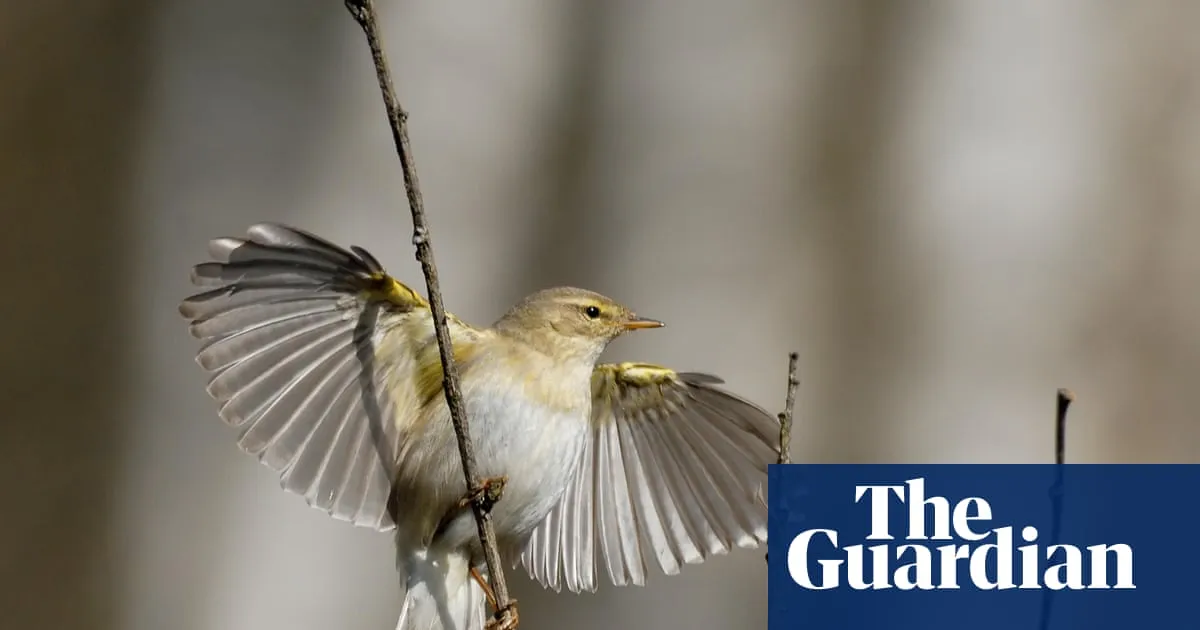
After a mild, wet and stormy winter in the UK, spring 2025 was one of the warmest and driest ever, while the summer was the hottest since records began, most particularly in England and Wales.Good news, you might think, for migratory birds – especially for eight species of warblers that travel here from their winter quarters in Africa. Yet according to data from bird ringers, collated by the British Trust for Ornithology (BTO), last year’s breeding season was pretty disastrous.Four species – willow warbler, blackcap, garden warbler and common whitethroat – showed significant falls. Three others – sedge and reed warblers and lesser whitethroat – also declined, though less seriously. Only the chiffchaff, which winters closer to home in Africa" class="entity-link entity-location" data-entity-id="11233" data-entity-type="location">North Africa and Iberia, with some staying put in southern Britain, showed a rise in numbers.The BTO’s other major annual study, the breeding bird survey, revealed similarly mixed fortunes, notably for pigeons and doves. While woodpigeon and stock dove numbers continued to rise, the two smaller species, collared and turtle doves, continued their rapid decline.Care needs to be taken when ascribing rises or falls in bird populations to the weather conditions in any particular year, because many other factors, including habitat loss at home and abroad, may be involved. But with the Climate Crisis leading to more extreme weather events, vigilance is required. Hence the crucial importance of the work of BTO staff and volunteers.
SRCThe Guardian - World News
LANGEN
LEANCenter-Left
WORDS234
ENT7
THU · 2026-05-21 · 05:00 GMTBRIEF NSR-2026-0521-78000
NSR-2026-0521-78000News Report·EN·Environmental
Migratory bird numbers fall in Britain despite last year’s warm spring
Despite a warm and dry spring in Britain in 2025, migratory bird numbers, particularly for several warbler species, experienced a disastrous breeding season. Data from bird ringers, compiled by the British Trust for Ornithology (BTO), revealed significant declines in willow warbler, blackcap, garden warbler, and common whitethroat populations.
Stephen MossThe Guardian - World NewsFiled 2026-05-21 · 05:00 GMTLean · Center-LeftRead · 1 min
The Guardian - World NewsFIG 01
Reading time
1min
Word count
234words
Sources cited
1cited
Entities identified
7entities
Quality score
100%
§ 01
Briefing Summary
AI-generatedNEWSAR · AI
Despite a warm and dry spring in Britain in 2025, migratory bird numbers, particularly for several warbler species, experienced a disastrous breeding season. Data from bird ringers, compiled by the British Trust for Ornithology (BTO), revealed significant declines in willow warbler, blackcap, garden warbler, and common whitethroat populations. Other warbler species also saw less serious declines, with only the chiffchaff showing an increase. The BTO's breeding bird survey indicated mixed fortunes for other species, with collared and turtle doves continuing their rapid decline. While weather is a factor, the article notes that habitat loss and the climate crisis with extreme weather events also contribute to these population changes, highlighting the importance of BTO's work.
Confidence 0.90Sources 1Claims 5Entities 7
§ 02
Article analysis
Model · rule-basedFraming
Environmental
Human Interest
Tone
Measured
AI-assessed
CalmNeutralAlarmist
Factuality
0.80 / 1.00
Factual
LowHigh
Sources cited
1
Limited
FewMany
§ 03
Key claims
5 extracted01
Woodpigeon and stock dove numbers continued to rise, while collared and turtle doves declined rapidly.
statisticBritish Trust for Ornithology (BTO)
Confidence
1.00
02
Chiffchaff numbers showed a rise in the UK, unlike other migratory warbler species.
statisticBritish Trust for Ornithology (BTO)
Confidence
1.00
03
Four species of warblers (willow warbler, blackcap, garden warbler, common whitethroat) showed significant population falls in the UK's last breeding season.
statisticBritish Trust for Ornithology (BTO)
Confidence
1.00
04
Spring 2025 in the UK was one of the warmest and driest ever, with summer being the hottest since records began.
factual
Confidence
1.00
05
Habitat loss and climate crisis leading to extreme weather events are potential factors affecting bird populations.
factual
Confidence
0.90
§ 04
Full report
1 min read · 234 words§ 05
Entities
7 identifiedKey playerOppositionContextPositiveNeutralNegative
Locations4
§ 06
Keywords & salience
9 termsmigratory birds
1.00
climate crisis
0.90
extreme weather
0.80
bird populations
0.80
breeding season
0.70
british trust for ornithology
0.60
habitat loss
0.50
warm spring
0.40
bird ringers
0.40
§ 07
Topic connections
Interactive graph No topic relationship data available yet. This graph will appear once topic relationships have been computed.