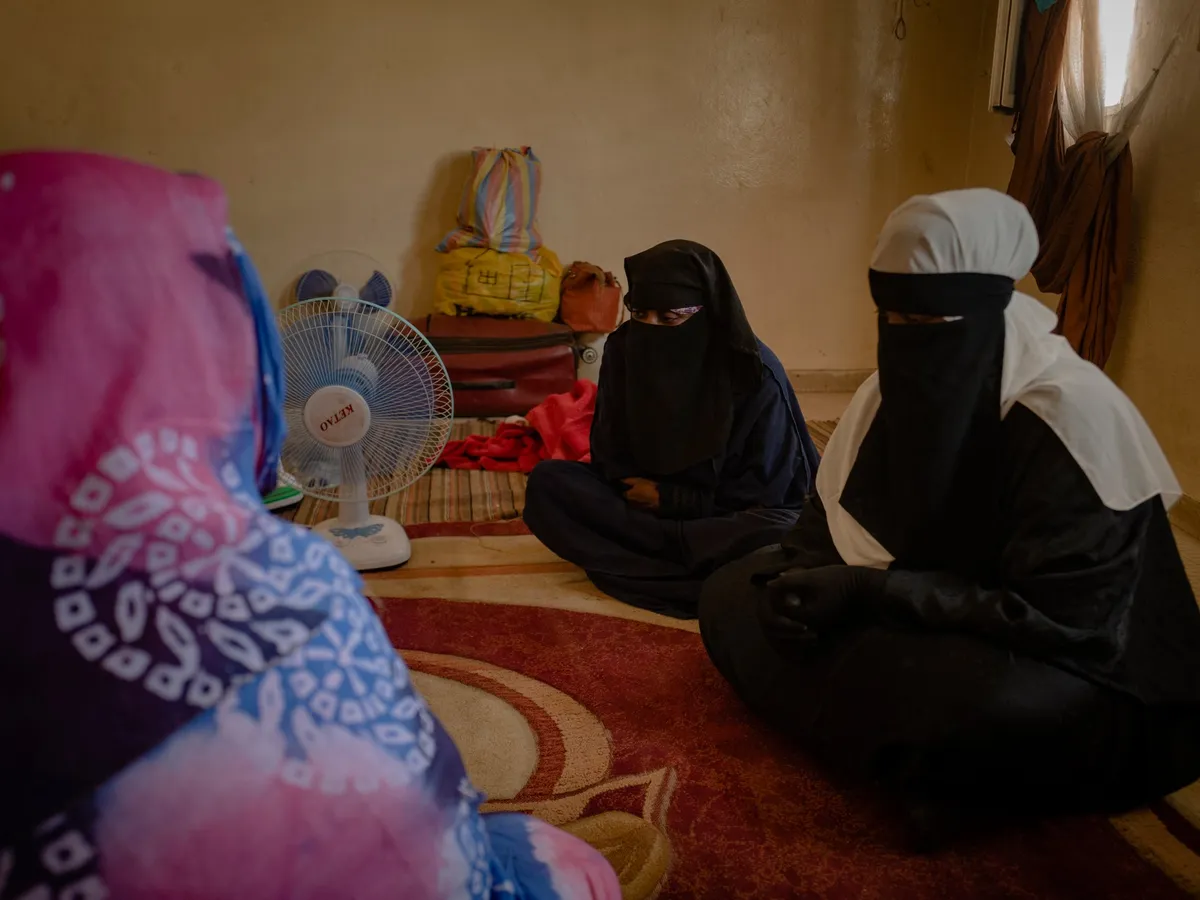
The fight against radicalisation in Mauritania advances through faith and community outreach by female Islamic guides.Mauritania's mourchidates programme is a case study on investing in conditions that make radicalisation less likely [Michelle Cattani/AFP]Published On 21 May 2026Nouakchott, Mauritania – Across a vast stretch of the Sahel and West Africa, armed groups are expanding their reach, military governments are replacing fragile democracies, and “counterterrorism” efforts continue to contend with armed violence, often rooted in poverty and challenging living conditions.While the Sahel has become synonymous with instability, tucked between the region and the Atlantic coast sits Mauritania, a country that has somehow managed to douse the flame. The explanation for this resilience often begins with a woman in a headscarf sitting across from a young man or a woman in a prison cell, talking about God.Mauritania’s mourchidates are female Islamic spiritual guides, trained, certified, and deployed by the state under the Ministry of Islamic Affairs since 2021. They are not a new phenomenon, as the programme has its roots in Morocco.Morocco’s mourchidates were introduced after the 2003 Casablanca bombings, a series of coordinated attacks in the Moroccan city that killed dozens and injured hundreds, as part of a broader religious reform.Youssra Biare, a Moroccan researcher, states: “Morocco’s mourchidates offer one of the most established examples of women’s religious leadership as a tool for peace-building and preventing violent ‘extremism’.”Since the programme’s launch in 2006, Morocco’s mourchidates have received formal theological and social training, which enables them to provide religious guidance and family counselling.“Beyond their role in countering extremist narratives, they address the social and emotional factors that can make young people vulnerable to radicalisation,” Biare told Al Jazeera.“For countries such as Mauritania, the Moroccan model demonstrates how investing in well-trained female religious leaders can strengthen community trust, promote moderate religious discourse, and create culturally grounded approaches to youth de-radicalisation and social cohesion.”The mourchidates operate across schools, youth centres, mosques, hospitals, and, critically, prisons. They provide religious counsel grounded in mainstream Islamic scholarship, challenge the theological justifications that armed groups use, and offer a credible alternative to their narratives.What makes the programme distinctive is the involvement of women with dedicated religious scholarship. More than social workers with a passing familiarity with Islamic texts, the mourchidates are trained in Quranic interpretation, Islamic jurisprudence, and the history of theological thought.When they sit with detainees convinced that violence is a religious obligation, they can engage on their own terms and dismantle those arguments point by point.Prison as a battleground for ideasPrisons have long been recognised globally as sites of radicalisation, where recruitment networks operate. Mauritania, however, has pursued a different approach. Inside its prisons, mourchidates engage detainees linked to armed groups operating in the Sahel region, including those convicted of planning or participating in attacks across Mauritania, as well as those joining radicalised groups in neighbouring countries.Their work goes beyond pastoral care to critically engage prison populations on an ideological level. They sit with these people over extended periods, building trust and addressing the theological arguments that justified violence, such as the belief that attacks on civilians could be sanctioned in the name of religion.By patiently challenging these interpretations and offering alternative readings of Islamic texts, the mourchidates gradually open space for detainees to reconsider their choices.De-radicalisation, when it works, tends to be built on relationships. The mourchidates, through their close ties to communities, are often well-placed to build these relationships in ways that male guards, military officials, or even male religious scholars are not always able to.Mauritania stands out as a rare island of stability in West Africa’s fight against radicalism due to its use of female Islamic guides [Michelle Cattani/AFP]A significant portion of what mourchidates do is preventive, operating in community spaces to reach young people before they become vulnerable to recruitment. Armed groups exploit unemployment, marginalisation, and legitimate grievances to draw young men and women to their cause, often using the language of faith.Countering this radicalisation requires a coherent narrative more than a militaristic approach, and that is precisely what the mourchidates provide.“One of the strengths of the Mauritanian model is that it understood early on that violent extremism cannot be addressed through security responses alone,” Aminata Dia, a Mauritanian founding member of Elles Du Sahel Network and the executive director of the nonprofit Malaama, told Al Jazeera.“The country invested in prevention, religious dialogue and community trust-building, particularly through the mourchidates programme,” she said.Yahia Elhoussein, a scholar who runs a maourchidate school in Nouakchott, told Al Jazeera that this approach works due to its credibility.“The mourchidates were deployed by the Ministry of Islamic Affairs to different parts of the country, where they educated young people on the true teachings of Islam, such as tolerance, charity, and accountability, playing an important role in de-radicalisation without any use of force,” Elhoussein said.Why Mauritania stands apartThe results, while difficult to quantify, are reflected in Mauritania’s regional trajectory. The country has not been immune to threats from armed groups, enduring attacks in the mid-to-late 2000s that pushed it to reassess its approach.What followed was a comprehensive strategy combining intelligence, community engagement, religious reform, and programmes like the mourchidates. Since then, Mauritania has largely avoided the scale of attacks that have devastated its neighbours, such as Mali and Burkina Faso.Security analysts point to Mauritania as a case study for a preventive model, investing in conditions that make radicalisation less likely rather than responding solely to violence. The mourchidates are central to that model.Trained women volunteers travel throughout the country to homes, markets, mosques, prisons, and schools to raise awareness among the most vulnerable [Michelle Cattani/AFP]None of this suggests that Mauritania has solved the problem, or that its approach is without limitations. The country faces governance challenges, while the broader Sahel region continues to experience expanding armed violence, poverty, displacement, and weak state presence, pressures that no single programme can fully address.Critics note that the reach of the mourchidates, while meaningful, remains constrained by resources and scale.There are also questions about how replicable this model is elsewhere. Morocco’s version has been partially adapted in other Muslim-majority countries, but conditions in Mauritania, a deeply religious society, such as respected female scholarship, credible state authority, and political will, make it unique.In Burkina Faso, Mali, and Niger, replicating this model would require rebuilding trust between the state and the community, which appears to have eroded.At a time when international counterterrorism policy in the Sahel is dominated by military presence, drone strikes, and external interventions, Mauritania’s experience offers a different lesson. Some of the most effective tools for preventing violent activism are not found in special forces and military operations but in trained women, armed with knowledge and patience.“Mauritania’s mourchidates prove that community-based approaches can be more effective than any other approach,” said Elhoussein.
SRCAl Jazeera
LANGEN
LEANCenter
WORDS1 120
ENT11
THU · 2026-05-21 · 12:27 GMTBRIEF NSR-2026-0521-78123
NSR-2026-0521-78123News Report·EN·National Security
Mauritania’s female Islamic guides: Leading the fight against ‘extremism’
Mauritania is employing female Islamic spiritual guides, known as mourchidates, as a key strategy to combat radicalization and promote stability in the Sahel region. Trained and deployed by the state since 2021, these guides, modeled after a Moroccan program, provide religious counsel and challenge extremist narratives in schools, community centers, and prisons.
By Mubarak AliyuAl JazeeraFiled 2026-05-21 · 12:27 GMTLean · CenterRead · 5 min
Al JazeeraFIG 01
Reading time
5min
Word count
1 120words
Sources cited
2cited
Entities identified
11entities
Quality score
100%
§ 01
Briefing Summary
AI-generatedNEWSAR · AI
Mauritania is employing female Islamic spiritual guides, known as mourchidates, as a key strategy to combat radicalization and promote stability in the Sahel region. Trained and deployed by the state since 2021, these guides, modeled after a Moroccan program, provide religious counsel and challenge extremist narratives in schools, community centers, and prisons. Their work focuses on de-radicalizing individuals, particularly detainees linked to armed groups, by engaging them on an ideological level and offering alternative interpretations of Islamic texts. This approach aims to address the social and emotional factors that make youth vulnerable to radicalization, demonstrating that effective counter-extremism requires more than just security responses. The mourchidates' deep community ties enable them to build trust and foster moderate discourse, contributing to Mauritania's relative stability.
Confidence 0.90Sources 2Claims 5Entities 11
§ 02
Article analysis
Model · rule-basedFraming
National Security
Social Justice
Tone
Measured
AI-assessed
CalmNeutralAlarmist
Factuality
0.70 / 1.00
Factual
LowHigh
Sources cited
2
Limited
FewMany
§ 03
Key claims
5 extracted01
The mourchidates are trained in Quranic interpretation, Islamic jurisprudence, and the history of theological thought, enabling them to counter extremist arguments.
factual
Confidence
1.00
02
Female Islamic guides provide religious counsel, challenge extremist theological justifications, and offer alternative narratives in schools, youth centres, mosques, hospitals, and prisons.
factual
Confidence
1.00
03
Moroccan researcher Youssra Biare states that Morocco's mourchidates are an established example of women's religious leadership for peace-building and preventing violent extremism.
quoteYoussra Biare
Confidence
1.00
04
The mourchidates programme in Mauritania is modeled after a similar initiative in Morocco, which began after the 2003 Casablanca bombings.
factual
Confidence
1.00
05
Mauritania's mourchidates are female Islamic spiritual guides trained and deployed by the state since 2021 to combat radicalization.
factual
Confidence
1.00
§ 04
Full report
5 min read · 1 120 words§ 05
Entities
11 identifiedKey playerOppositionContextPositiveNeutralNegative
People1
Locations4
§ 06
Keywords & salience
10 termsfemale islamic guides
1.00
countering extremism
0.90
radicalisation
0.80
mourchidates programme
0.70
peace-building
0.60
youth de-radicalisation
0.50
community outreach
0.50
religious reform
0.50
sahel
0.40
social cohesion
0.40
§ 07
Topic connections
Interactive graph No topic relationship data available yet. This graph will appear once topic relationships have been computed.