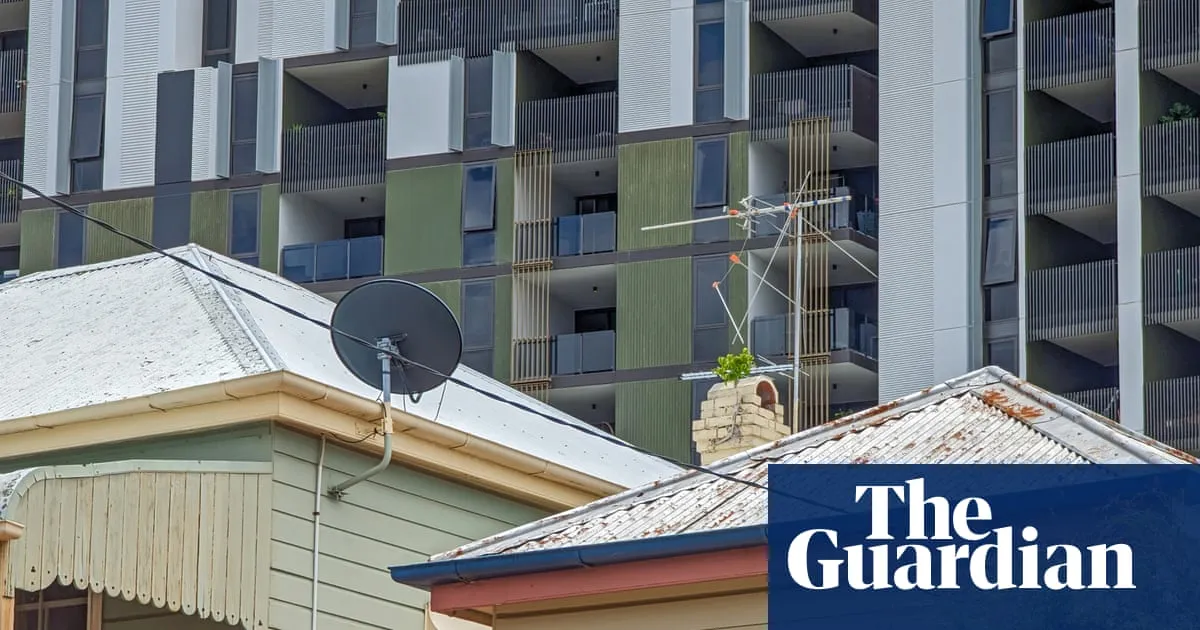
A coalition of housing and community groups is calling on politicians to back Labor’s changes to negative hearing and capital gains tax. Photograph: Andrew Merry/Getty Images View image in fullscreen A coalition of housing and community groups is calling on politicians to back Labor’s changes to negative hearing and capital gains tax. Photograph: Andrew Merry/Getty Images MPs urged to ignore fearmongering and pass Labor’s ‘long overdue’ negative gearing and CGT changes Exclusive: Any attempt to use the budget measures as an excuse to raise rent is opportunistic profiteering, housing advocates say Get our breaking news email, free app or daily news podcast Australia’s peak community and housing groups have urged federal parliament to quickly pass Labor’s changes to negative gearing and capital gains tax, saying the reforms would improve fairness for renters and young homebuyers. The government may introduce its negative gearing and CGT changes into parliament as soon as the coming sitting fortnight, with hopes of passing the legislation soon after with the support of The Greens. The changes include limiting new negative gearing to new-builds and grandfathering existing properties, and changing how CGT is calculated: both reforms were billed by Labor as ways to rebalance the housing market toward first home buyers instead of property investors. Maiy Azize, of housing advocacy group Everybody’s Home, said there was “no excuse for landlords to hike rents because of these changes”. “Existing landlords get to keep these tax perks. Any attempt to use these reforms as a justification for raising rents is opportunistic profiteering,” she said. “We urge all politicians to see through the fearmongering and back these long overdue changes.” In a joint statement, the Australian Council of Social Service (Acoss), Everybody’s Home, Better Renting and National Shelter said the changes would “improve fairness and level the playing field”. The social and housing groups predicted the changes would improve housing stability for renters by encouraging long-term investment in housing, over short-term gains. It echoes arguments from the housing minister, Clare O’Neil, that limiting new negative gearing to newly built properties would help control rent prices. Treasury modelling in the budget forecasts 35,000 fewer homes will be built over the next 10 years as investors put their money elsewhere, but the impact on rents is estimated to be an extra $2 weekly for the median renter. The Acoss policy director, Jacqueline Phillips, said negative gearing and CGT had “supercharged inequality, driven up housing prices, and added little to rental supply”. “We call on all politicians to back the reforms that are clearly in the national interest,” she said. But concerns have been raised by some economists, who believe home values are set for their first national slump since 2022, as well as some in the property lobby. The shadow treasurer Tim Wilson, has pointed to modelling from SQM Research claiming Sydney rents could increase by $160 weekly, and Melbourne $130 weekly. Labor sources said that modelling does not reflect the government’s policy, which allows homes currently negatively geared to keep using that tax treatment, and restricts new negatively geared properties to new-builds. Treasury modelling in the budget estimates the changes would see an additional 75,000 first home buyers, and changes to regulations would support another 30,000 new homes being built, over the next decade. Azize, from Everybody’s Home, said it was “dishonest for the property lobby to run a scare campaign and spread misinformation about reforms that will not even affect existing landlords”. O’Neil also pointed to the government’s increases to commonwealth rent assistance in the 2023 and 2024 budgets as assisting renters. Explore more on these topics Housing Clare O'Neil Australian politics Australian economy Australian budget 2026 news Share Reuse this content
SRCThe Guardian - World News
LANGEN
LEANCenter-Left
WORDS612
ENT12
THU · 2026-05-21 · 15:00 GMTBRIEF NSR-2026-0521-78163
NSR-2026-0521-78163News Report·EN·Social Justice
MPs urged to ignore fearmongering and pass Labor’s ‘long overdue’ negative gearing and CGT changes
Australia's peak community and housing groups are urging federal parliament to pass Labor's proposed changes to negative gearing and capital gains tax. These reforms, which would limit new negative gearing to new-builds and adjust CGT calculations, aim to improve fairness for renters and young homebuyers by rebalancing the housing market away from investors.
Josh ButlerThe Guardian - World NewsFiled 2026-05-21 · 15:00 GMTLean · Center-LeftRead · 3 min
The Guardian - World NewsFIG 01
Reading time
3min
Word count
612words
Sources cited
4cited
Entities identified
12entities
Quality score
100%
§ 01
Briefing Summary
AI-generatedNEWSAR · AI
Australia's peak community and housing groups are urging federal parliament to pass Labor's proposed changes to negative gearing and capital gains tax. These reforms, which would limit new negative gearing to new-builds and adjust CGT calculations, aim to improve fairness for renters and young homebuyers by rebalancing the housing market away from investors. Housing advocates assert that any rent increases attributed to these changes would be opportunistic profiteering, as existing landlords are grandfathered. While Treasury modelling suggests a minimal impact on rents, some economists and the property lobby have raised concerns about potential rent hikes. Labor sources state that opposing modelling does not accurately reflect the policy's provisions.
Confidence 0.90Sources 4Claims 5Entities 12
§ 02
Article analysis
Model · rule-basedFraming
Social Justice
Economic Impact
Tone
Mixed Tone
AI-assessed
CalmNeutralAlarmist
Factuality
0.60 / 1.00
Mixed
LowHigh
Sources cited
4
Well sourced
FewMany
§ 03
Key claims
5 extracted01
Any attempt to use these reforms as a justification for raising rents is opportunistic profiteering.
quoteMaiy Azize, Everybody's Home
Confidence
0.95
02
Negative gearing and CGT have supercharged inequality, driven up housing prices, and added little to rental supply.
quoteJacqueline Phillips, Acoss
Confidence
0.90
03
Labor's changes to negative gearing and CGT would improve fairness for renters and young homebuyers.
quotecoalition of housing and community groups
Confidence
0.90
04
The impact on rents is estimated to be an extra $2 weekly for the median renter.
statisticTreasury modelling
Confidence
0.80
05
Treasury modelling forecasts 35,000 fewer homes will be built over the next 10 years.
statisticTreasury modelling
Confidence
0.80
§ 04
Full report
3 min read · 612 words§ 05
Entities
12 identifiedKey playerOppositionContextPositiveNeutralNegative
Organizations7
Locations1
§ 06
Keywords & salience
10 termscapital gains tax
1.00
negative gearing
1.00
housing market
0.90
renters
0.80
homebuyers
0.70
property investors
0.70
housing advocates
0.60
rent prices
0.50
labor
0.50
fearmongering
0.40
§ 07
Topic connections
Interactive graph Network visualization showing 3 related topics
View Full Graph Person Organization Location Event|Click node to navigate|Edge numbers = shared articles