The Congolese government says the migrants' stay in the country is temporary and that their care and support is being paid for by the US.The BBC has asked the US State Department for comment.The migrants and asylum seekers interviewed by BBC-mundo" class="entity-link entity-organization" data-entity-id="11865" data-entity-type="organization">BBC Mundo say the conditions are unacceptable, with frequent power cuts and a lack of drinking water."We have fever, vomiting and diarrhoea. They tell us it's normal and our bodies are just adapting to Africa," Cubillos told the BBC shortly after arriving.They have now been in the same hotel for a month but say little has changed and they are still getting sick."We have not been given any information about how long we will be here or when we will be leaving. We're constantly ill and don't want to eat the food provided, as it makes us feel worse. Our health is deteriorating. We're receiving medical assistance, but it isn't enough," Cubillos says.The mid-range apartment hotel where they are staying is on the outskirts of Kinshasa, near the international airport in the Mikindo district, one of the poorest in the city.However, the deportees can make use of its football pitch, tennis court and an Olympic-sized swimming pool. At least two police officers stand guard outside and the BBC was denied permission to enter.Emery Makumeno / BBCThe US authorities are paying for the deportees' stay, according to DR CongoOne member of staff told the BBC they have sometimes played football with the deportees."I was worried about them being criminals. But, with time, I have come to understand that they are just like our own citizens, also trying make a living outside the country.""They are all good people and they have started picking up a few words in Lingala [the main language in Kinshasa]," they said.Pressed by the BBC about the swimming pool and other facilities at the hotel, Cubillos said that although from the outside it might look like they are living pretty well, that was not the case. "We've only used the pool once, on a really hot day. Most of the time, we're stuck in our rooms."He added that, stuck in an unfamiliar country, thousands of miles from home, where the main languages are French and Lingala and few people speak English or Spanish, there is just "nothing to do"."We spend our days shut in, alone with our thoughts, our problems, and the constant worry about what's going to happen to us."Despite being told they were free to leave the premises, the Latin American deportees say that is not the reality, and even if they could, there is "nowhere to go anyway".The group says they have been allowed out just a few times, accompanied by security guards, to see parts of the city or to go shopping.All of those sent to DR Congo deny committing any crimes in the US.Marta - whose name has been changed for fear of reprisals - says the "lack of information" and not knowing what is going to happen, is also affecting them "emotionally and psychologically".She tells BBC-mundo" class="entity-link entity-organization" data-entity-id="11865" data-entity-type="organization">BBC Mundo she was detained less than two months after she was released under a supervision order in February, after a long legal battle during which she spent 14 months in detention. She says she has never been accused of anything other than contravening immigration laws.When US Immigration and Customs Enforcement (ICE) agents showed up at her Texas home to verify her address and take her to an immigration office to be fitted with a GPS monitor, she did not suspect anything - until they put handcuffs on her.Marta describes being held in solitary confinement for almost two days at one point."They locked me in a room. They didn't give me food or water. It was very cold," she says, adding that her family didn't know where she was.And after being vaccinated against yellow fever and transferred to Louisiana, she was told she had a flight to DR Congo the next day.According to the DHS, Rodelo had been issued with a "final order of removal for violating the terms of his parole" in February, the month he says he was granted CAT protection. "[The] Trump administration is utilising all lawful options to carry out the largest deportation operation in history, just as President Trump promised," the statement said. "Anyone who has been deported received full due process."Getty ImagesKinshasa is one of the most populous cities in Africa, with a population of about 18 millionOne Colombian woman who asked to stay anonymous, says she is unsure she would ever want to return to the US, where life has become "scary"."After everything that's happened and everything I've suffered, who can assure me that I won't go through this again and that in the future they won't send me to another country?" she asks.Cubillos say the deportees are being given two options - stay in the hotel, or go back home.He adds that one Colombian couldn't cope with the situation any longer and has decided to go back home, at his own expense. But he says this is not possible for most of them.
SRCBBC News - World
LANGEN
LEANCenter
WORDS844
ENT10
FRI · 2026-05-22 · 00:10 GMTBRIEF NSR-2026-0522-78300
NSR-2026-0522-78300News Report·EN·Human Interest
'I didn't know where DR Congo was': Latin Americans deported by US tell BBC of their shock
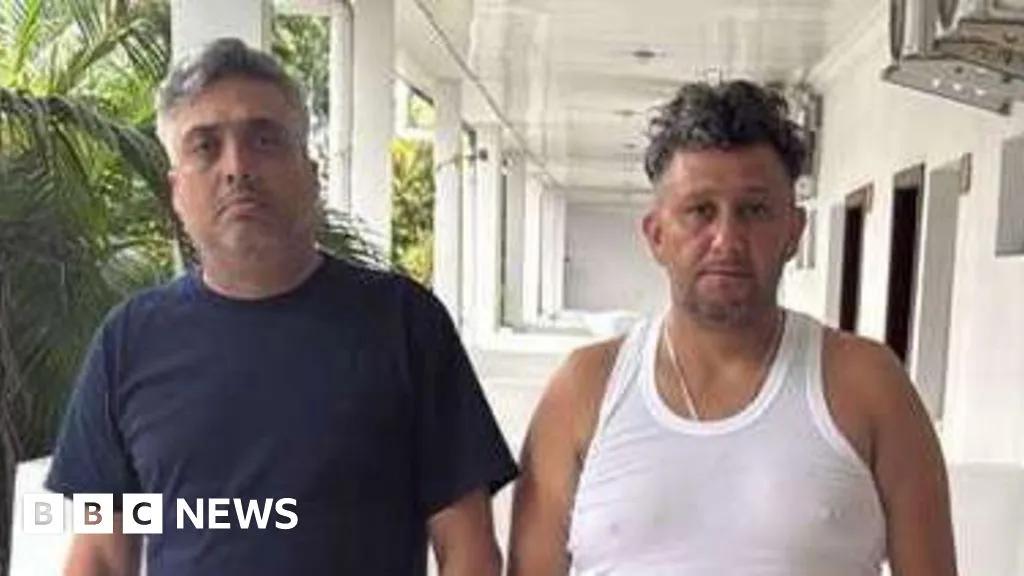
Latin American deportees sent to the Democratic Republic of Congo (DR Congo) by the US describe shock and uncertainty in a country they had never seen. The 15 individuals, who deny committing crimes in the US, are housed in a hotel on the outskirts of Kinshasa, with their care and support funded by the US.
BBC News - WorldFiled 2026-05-22 · 00:10 GMTLean · CenterRead · 4 min
BBC News - WorldFIG 01
Reading time
4min
Word count
844words
Sources cited
3cited
Entities identified
10entities
Quality score
100%
§ 01
Briefing Summary
AI-generatedNEWSAR · AI
Latin American deportees sent to the Democratic Republic of Congo (DR Congo) by the US describe shock and uncertainty in a country they had never seen. The 15 individuals, who deny committing crimes in the US, are housed in a hotel on the outskirts of Kinshasa, with their care and support funded by the US. They report experiencing illness due to poor conditions, including power cuts and lack of clean water, despite access to some amenities like a swimming pool. Deportees feel isolated, lack information about their future, and face limited options, with returning home being financially unfeasible for most. The US State Department has been asked for comment.
Confidence 0.90Sources 3Claims 5Entities 10
§ 02
Article analysis
Model · rule-basedFraming
Human Interest
Human Rights
Tone
Mixed Tone
AI-assessed
CalmNeutralAlarmist
Factuality
0.70 / 1.00
Factual
LowHigh
Sources cited
3
Well sourced
FewMany
§ 03
Key claims
5 extracted01
Deportees are experiencing illness such as fever, vomiting, and diarrhea, which they are told is normal adaptation.
quoteCubillos
Confidence
0.95
02
Deportees feel they have nowhere to go and are emotionally and psychologically affected by the lack of information and uncertainty.
quoteMarta and other deportees
Confidence
0.90
03
Deportees deny committing any crimes in the US.
factualAll of those sent to DR Congo
Confidence
0.90
04
Latin American deportees in DR Congo report unacceptable conditions including power cuts and lack of drinking water.
quoteMigrants and asylum seekers interviewed by BBC Mundo
Confidence
0.90
05
The US authorities are paying for the deportees' stay in the DR Congo.
factualDR Congo
Confidence
0.85
§ 04
Full report
4 min read · 844 words§ 05
Entities
10 identifiedKey playerOppositionContextPositiveNeutralNegative
Locations4
Topics1
§ 06
Keywords & salience
9 termsdeportation
1.00
dr congo
0.90
migrants
0.80
asylum seekers
0.70
latin americans
0.60
us state department
0.60
health concerns
0.50
humanitarian conditions
0.50
temporary stay
0.40
§ 07
Topic connections
Interactive graph Network visualization showing 51 related topics
View Full Graph Person Organization Location Event|Click node to navigate|Edge numbers = shared articles