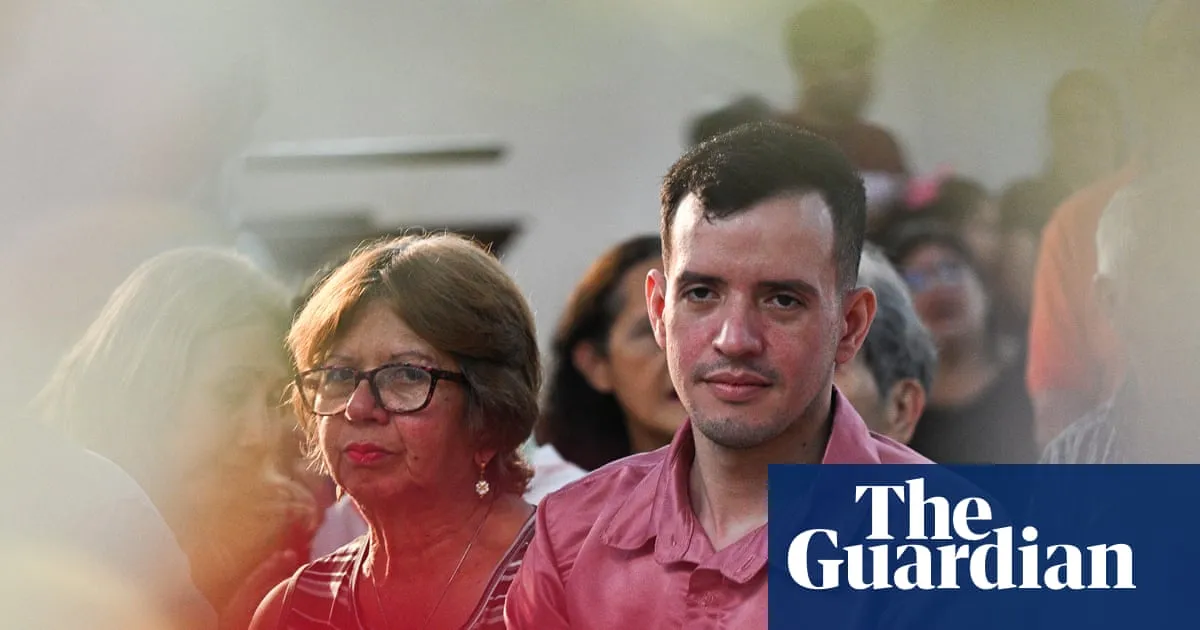
One of the Venezuelan men sent from the US to El Salvador’s most notorious prison by Donald Trump has moved to Spain to request asylum after concluding that he did not feel safe back home and did not trust US authorities sufficiently to return to fight his legal case.Andry José Hernández Romero left Venezuela for Spain in early February and is due for his first asylum hearing in court there in a few days, hoping that the country’s liberal approach to Immigration will afford him kinder treatment than the US or his own country had provided him, he revealed to the Guardian in his first interview since leaving for Europe.The 33-year-old hairstylist and makeup artist originally came to the US from his home in western Venezuela to escape persecution as a gay man and the risks of opposing the government of its then president Nicolás Maduro.Speaking in a video call from southern Spain, Hernández is still recovering from the trauma of his experiences in Venezuela, the US and El Salvador, but expressed optimism about his new surroundings.“I can say I feel safe here, this is a place where I can be reborn, heal my mental health, let people know about my abilities as a makeup artist and find the happiness they took away from me more than a year ago,” he said in the interview conducted in Spanish.Hernández gained global attention last year when he and 252 other Venezuelan migrants were abruptly deported from the US without due process or any word to their families, and in defiance of a judge, and flown by the Trump administration to the brutal mega-prison for alleged terrorists in El Salvador known as Cecot.Protesters demand the release of immigrants outside the permanent mission of El Salvador to the UN on 24 April 2025 in New York City. Photograph: Michael M Santiago/Getty ImagesImages of the bewildered and terrified group being roughed up and having their heads shaved, and then lined up on the ground with bowed heads, flashed around the world, a new symbol of the returning US president’s harsh anti-Immigration agenda. They were held incommunicado for months in cages and initially given no prospect of release under allegations of having ties to a Venezuelan gang, which Hernández and the others vehemently denied.International human rights groups found Hernández and the other detainees faced psychological and physical abuse, including cases of sexual violence, before they were suddenly released in a prisoner swap last summer and returned home.Hernández received a jubilant reception. He began trying to rebuild his life, and he told the Guardian he initially promised his family he would never leave Venezuela again.However, after a few weeks he began fearing for his life once more after a knock on his family’s door in Táchira.“I had received a call from the vice-president’s office and I was offered a job, which I declined, and then they came to my house and my family had to tell them I wasn’t there,” Hernández said. He had actually hidden during the visit.He explained that before the vice-president’s office could even specify the kind of job it wanted him to do, he refused it. It was August 2025 and Delcy Rodríguez ran the office. He didn’t want to have ties to a government that had persecuted him as a gay man, he said, and having officials coming to the house just made him convinced he was going to be surveilled by the authorities.He was back home, surrounded by his family, feeling protected during a time that he had expected to be a rough transition into society, back at work and even making new friends.Months later, Rodríguez was sworn in as the acting president of Venezuela following the capture of Maduro by the US military. Around the same time, Hernández made up his mind.“That’s when I made the decision to come to Spain,” he said.Hernández takes a video call at his home in Capacho, Táchira state, Venezuela, on 24 July 2025. Photograph: Federico Parra/AFP via Getty ImagesHe has some relatives there and Venezuelans do not require a visa to enter Spain, while those fleeing persecution are allowed to request asylum.“I have heard that Spain is a country with open policies towards immigrants and the LGBTQ+ communities and that they don’t experience discrimination,” said Hernández. He feels secure and optimistic about making another fresh start.In March 2025, the Trump administration controversially invoked the Alien Enemies Act of 1798 to order the expulsion of Hernández and 136 other men who ended up in Cecot. Hernández was accused of being a member of the Venezuelan gang Tren de Aragua, which Trump designated a terrorist group and bizarrely accused of staging an invasion of the US.It didn’t matter that Hernández had explained to Immigration officials that he had fled Venezuela due to persecution stemming from his sexual orientation. His crown tattoos above the names of his parents were deemed proof of gang affiliation. He has denied the charge throughout his ordeal and his attorneys noted he has no criminal record.Lindsay Toczylowski, co-founder of the Immigrant Defenders Law Center (ImmDef), who is acting as Hernández’s lawyer, said that in nearly two decades of helping asylum seekers from around the world fleeing violence, she had “never been in a situation where it was not safe for a client to seek protection in the US”.The US federal judge James Boasberg ordered the Trump administration to facilitate the return of the men deported under the Alien Enemies Act to El Salvador and allow them to receive the due process that he ruled they had been denied. But most recently, a court of appeals blocked Boasberg from investigating whether the Trump administration knowingly defied his order from March 2025 to return the planes carrying Hernández and the other Venezuelan deportees.“From a legal perspective, we believe that it’s important for him to clear his name if he wants to travel to the US in the future. But from a moral perspective, he was accused with absolutely no evidence of being part of something that he has never had anything to do with. No one should be accused of something like that without any option to refute the allegations,” said Toczylowski.“There are no immediate options available for him [and the others] to finally have their day in court and be able to clear” their names, she added.In Spain, where Hernández now waits for his first asylum interview, scheduled for the end of this month, officials have defied the increasingly harsh Immigration policies being embraced in Europe and the US. Earlier this year, the Spanish prime minister, Pedro Sánchez, announced that Spain would grant legal status to roughly 500,000 migrant workers, most from Latin America.Hernández greets his father, Luis Felipe Hernandez, after returning to Venezuela on 23 July 2025. Photograph: Johnny Parra/AFP via Getty ImagesSpain has a strong record of taking in immigrants, especially Venezuelans seeking international protection, like Hernández.According to numbers shared by the Spanish government with the Guardian, Venezuelans made up the highest number of requests for international protection there in 2025. And up to 30 April this year, more than 25,000 Venezuelans have sought asylum in Spain.Hernández said he is still marked by the trauma he endured during his time at Cecot. For example, when someone approaches him and simply taps him on the shoulder, his mind jumps back to the prison. He still wants to clear his name, though, but doesn’t know how to do so at the moment.Remarkably, he said: “I don’t hold a grudge against the US. I can’t judge an entire country based on the actions of a group of people like Donald Trump [or] Kristi Noem, but entering the US at this time doesn’t guarantee I will keep my freedom and that is why I will continue to fight my case from Spain.“Recovering my happiness will only be possible at the right place with the right people.”
SRCThe Guardian - World News
LANGEN
LEANCenter-Left
WORDS1 311
ENT10
FRI · 2026-05-22 · 10:00 GMTBRIEF NSR-2026-0522-78406
NSR-2026-0522-78406News Report·EN·Human Interest
Venezuelan makeup artist who was deported to El Salvador seeks asylum in Spain: ‘I feel safe here’
Andry José Hernández Romero, a Venezuelan makeup artist deported from the US to El Salvador's Cecot prison, has sought asylum in Spain. He left Venezuela for Spain in early February, feeling unsafe in his home country and distrustful of US authorities to pursue his legal case there.
Justo RoblesThe Guardian - World NewsFiled 2026-05-22 · 10:00 GMTLean · Center-LeftRead · 6 min
The Guardian - World NewsFIG 01
Reading time
6min
Word count
1 311words
Sources cited
1cited
Entities identified
10entities
Quality score
100%
§ 01
Briefing Summary
AI-generatedNEWSAR · AI
Andry José Hernández Romero, a Venezuelan makeup artist deported from the US to El Salvador's Cecot prison, has sought asylum in Spain. He left Venezuela for Spain in early February, feeling unsafe in his home country and distrustful of US authorities to pursue his legal case there. Hernández had initially fled Venezuela due to persecution as a gay man and opposition to the government. He was among 252 Venezuelan migrants deported by the Trump administration to El Salvador, where they were held in harsh conditions before being released. Fearing renewed surveillance in Venezuela after declining a job offer from the vice-president's office, Hernández decided to seek safety and a fresh start in Spain, hoping for a more welcoming immigration policy.
Confidence 0.90Sources 1Claims 5Entities 10
§ 02
Article analysis
Model · rule-basedFraming
Human Interest
Legal & Judicial
Tone
Mixed Tone
AI-assessed
CalmNeutralAlarmist
Factuality
0.70 / 1.00
Factual
LowHigh
Sources cited
1
Limited
FewMany
§ 03
Key claims
5 extracted01
Hernández and 252 other Venezuelan migrants were flown to El Salvador's Cecot prison by the Trump administration.
factualThe Guardian
Confidence
1.00
02
He states he feels safe in Spain and believes it's a place where he can 'be reborn' and heal.
quoteAndry José Hernández Romero
Confidence
1.00
03
Hernández claims he was deported from the US without due process and fears returning to fight his legal case.
factualAndry José Hernández Romero
Confidence
1.00
04
Venezuelan man deported to El Salvador by Trump seeks asylum in Spain due to safety concerns.
factualAndry José Hernández Romero
Confidence
1.00
05
International human rights groups found detainees faced psychological and physical abuse, including sexual violence.
factualInternational human rights groups
Confidence
0.90
§ 04
Full report
6 min read · 1 311 words§ 05
Entities
10 identifiedKey playerOppositionContextPositiveNeutralNegative
People3
Organizations1
Locations5
§ 06
Keywords & salience
10 termsasylum
1.00
deportation
0.90
venezuelan migrants
0.80
human rights
0.70
spain
0.60
donald trump
0.60
el salvador
0.60
anti-immigration agenda
0.50
due process
0.40
persecution
0.40
§ 07
Topic connections
Interactive graph No topic relationship data available yet. This graph will appear once topic relationships have been computed.