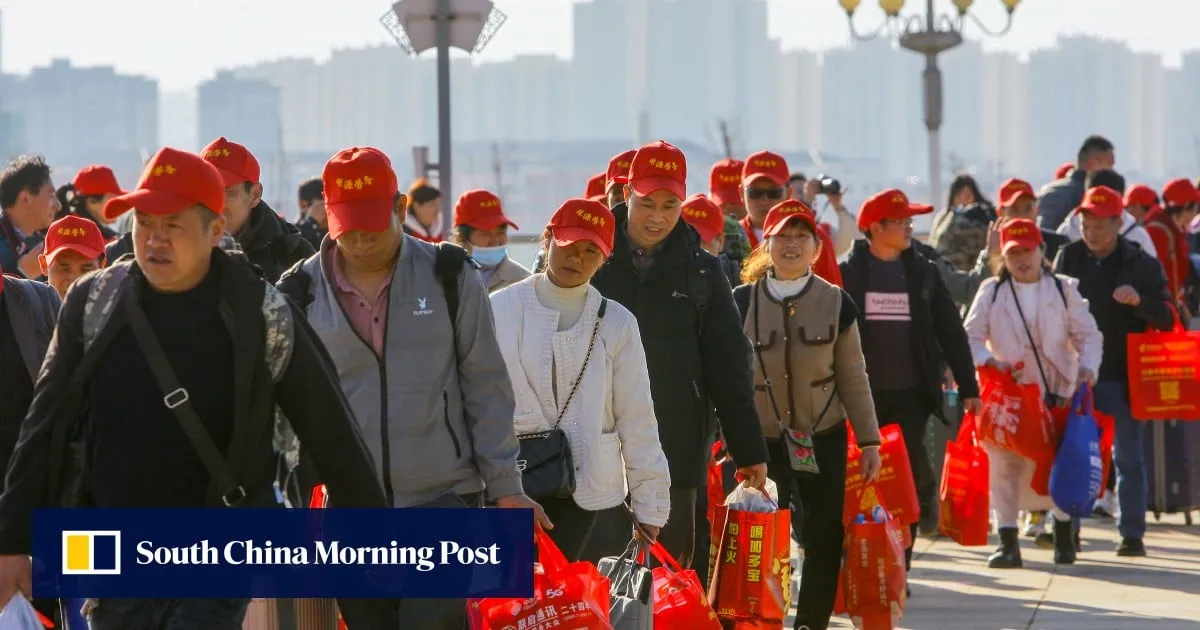
China has moved to ease residency restrictions that prevent migrant workers from accessing social insurance where they work, in a sweeping effort to expand coverage and strengthen labour protections nationwide.The new measures were announced on Friday by the State Council, China’s cabinet.The move is part of China’s broader push to create a unified national market by removing barriers to the free flow of capital and talent.Under the new policy, workers can enrol in social insurance programmes in the cities where they are employed, regardless of their official hometown registration, or hukou.Authorities will also refine the mechanisms for transferring and continuing social insurance relationships across regions, a long-standing challenge for a highly mobile workforce.It reflects China’s latest policy reform emphasis on achieving renhu fenli - or the “separation between place of residence and household registration”. According to census sample data released on Friday, China’s migrant population has surpassed 357 million.Historically, the hukou system locked migrant workers out of vital public services – like healthcare and public schooling – in the places where they lived and worked. In recent years, however, these rigid restrictions have been progressively relaxed.
SRCSouth China Morning Post
LANGEN
LEANCenter-Right
WORDS186
ENT11
FRI · 2026-05-22 · 14:31 GMTBRIEF NSR-2026-0522-78448
NSR-2026-0522-78448News Report·EN·Social Justice
China removes hukou hurdle for migrant workers in social insurance shake-up
China's State Council announced new measures to ease residency restrictions, allowing migrant workers to enroll in social insurance programs in the cities where they are employed, regardless of their official hometown registration (hukou). This move aims to expand social insurance coverage and strengthen labor protections nationwide, supporting China's goal of creating a unified national market by removing barriers to the free flow of talent.
Meredith ChenSouth China Morning PostFiled 2026-05-22 · 14:31 GMTLean · Center-RightRead · 1 min
South China Morning PostFIG 01
Reading time
1min
Word count
186words
Sources cited
0cited
Entities identified
11entities
Quality score
100%
§ 01
Briefing Summary
AI-generatedNEWSAR · AI
China's State Council announced new measures to ease residency restrictions, allowing migrant workers to enroll in social insurance programs in the cities where they are employed, regardless of their official hometown registration (hukou). This move aims to expand social insurance coverage and strengthen labor protections nationwide, supporting China's goal of creating a unified national market by removing barriers to the free flow of talent. The policy also seeks to improve mechanisms for transferring social insurance relationships across regions, addressing a long-standing challenge for the country's mobile workforce of over 357 million people. Historically, the hukou system limited migrant workers' access to public services, but these restrictions have been progressively relaxed.
Confidence 0.90Claims 5Entities 11
§ 02
Article analysis
Model · rule-basedFraming
Social Justice
Political Strategy
Tone
Measured
AI-assessed
CalmNeutralAlarmist
Factuality
0.90 / 1.00
Factual
LowHigh
Sources cited
0
No named sources
FewMany
§ 03
Key claims
5 extracted01
Historically, the hukou system prevented migrant workers from accessing vital public services in their places of residence and work.
factual
Confidence
1.00
02
China's migrant population has surpassed 357 million, according to census sample data.
statisticcensus sample data
Confidence
1.00
03
Workers can now enroll in social insurance in their city of employment, regardless of their hukou.
factual
Confidence
1.00
04
China has eased residency restrictions for migrant workers to access social insurance where they work.
factual
Confidence
1.00
05
The new measures were announced by the State Council, China’s cabinet.
factual
Confidence
1.00
§ 04
Full report
1 min read · 186 words§ 05
Entities
11 identifiedKey playerOppositionContextPositiveNeutralNegative
Locations1
§ 06
Keywords & salience
10 termsmigrant workers
1.00
social insurance
1.00
hukou system
1.00
residency restrictions
0.90
labour protections
0.80
unified national market
0.70
renhu fenli
0.60
state council
0.50
migrant population
0.50
policy reform
0.40
§ 07
Topic connections
Interactive graph Network visualization showing 51 related topics
View Full Graph Person Organization Location Event|Click node to navigate|Edge numbers = shared articles