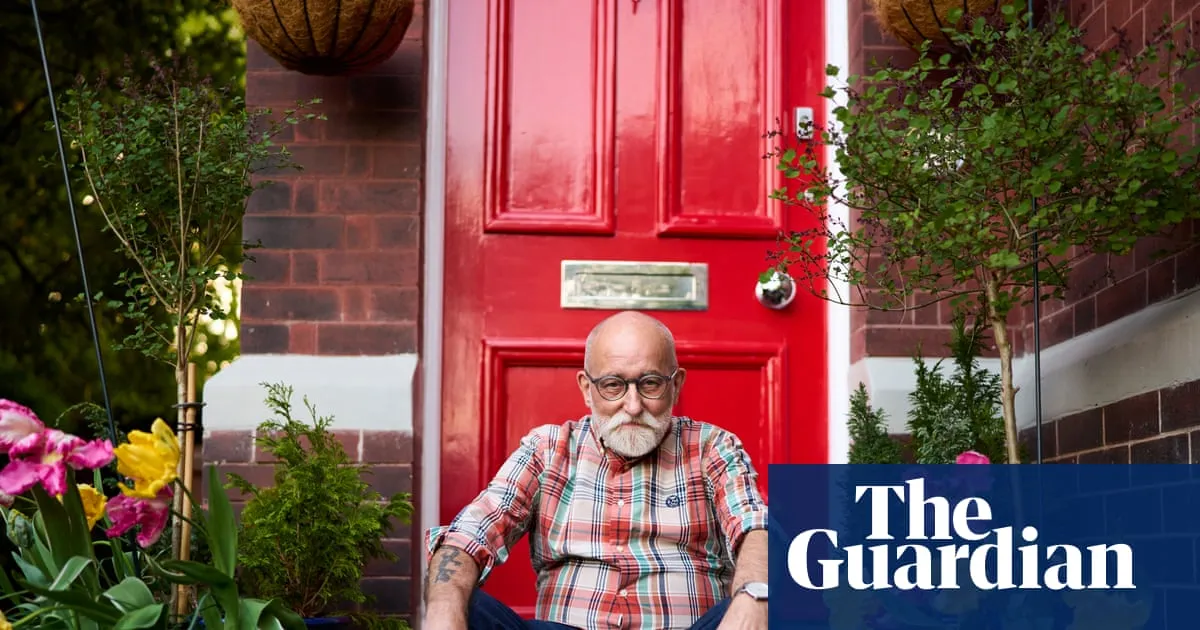
Stephen Whittle was visiting the Chelsea Flower Show as a birthday treat with his wife on Thursday afternoon. At around the same time, the updated code of practice from the Equality and Human Rights Commission was published. It confirmed, among myriad updates, that single-sex spaces such as toilets and changing rooms must be used on the basis of biological sex, and that transgender people may not access those that accord with their lived gender.Among the floral displays, 70-year-old Whittle did not stray from habit. “Of course I used the male facilities, as I have done for the last 50 years. Can you imagine what the guy on security would have said if I’d gone to the ladies?”Whittle, who spearheaded the campaign for Gender Recognition across the UK in the 1990s, has witnessed the significant advances, both legal and social, in the intervening years, and on Friday his focus was “trying to calm people down and say: ‘Stay cool; we’ll get through this’”.For many in the trans and wider LGBTQ+ community, as well as those running businesses and services, there has been a sense of limbo since the Supreme Court ruling on biological sex in April 2025, as they looked to the equalities watchdog to provide practical guidance on how to implement the judgment.For gender-critical groups who have campaigned specifically for the exclusion of trans women from women-only services, yesterday’s updated code was welcomed as a consolidation of last year’s court victory.But for others it prompted more questions, and for some, the guidance confirmed their worst fears.“Just watching the evening news was kind of humiliating,” says Blake, a data analyst based near Liverpool. “Having this frame of ‘where are people going to pee?’ It’s such a reduction of the problems we have in our lives, like access to healthcare, and also a real day-to-day struggle.”While still examining the 340-page code on Friday morning, Katie Russell, the chief executive and co-founder of Support After Rape and Sexual Violence Leeds, says neither it nor the court ruling have been “super-clear” on how to remain trans inclusive. But since April last year, her service has taken bespoke legal advice and consulted with service users, and is making changes to governing documents.“In practical terms, we understand we have lost the right to call ourselves women-only, and we’re gradually changing our language to make it clear we are still women-centred but for us that includes trans women. We want to operate within the law but continue to model our intersectional feminist values,” she said.Russell emphasises that trans women and non-binary clients make up a tiny percentage of the 1,700 individuals SARSVL supported last year, mainly through one-to-one work in person, online or through the helpline. “For us that’s absolutely a proportionate means of achieving a legitimate aim – because where else would they have to go?”Many businesses contacted by the Guardian said they wanted more time to examine the detail of the updates. But the cosmetics brand Lush, which has been consistently pro-inclusion, said the guidance was “a significant setback for human rights in the UK”.The brand’s campaign lead, Andrew Butler, said: “It puts frontline service providers, retail workers and many others in the position of policing people’s gender based on perception, with their organisations’ liability on the line for their judgment. The guidance is a mess because the legislation is a mess. Government needs to legislate to fix equalities law and include trans voices to do so equitably.”Kate Nicholls, the chair of UKHospitality – and representing a sector that has expressed concern about the logistics of toilet provision and its capacity to remain trans inclusive – was cautiously optimistic. “The shift to make clear that gender-neutral toilets and facilities are acceptable is a particularly positive step,” she said.Alice, an anaesthetist working in England, says she has been coordinating with similarly affected colleagues since April last year, to ensure that the hospital she works in has gender-neutral facilities “at strategic intervals”.“But the building I work in is very old and limited in what facilities it can offer,” she said. Alice, who also needs to change clothes at work, can find herself at some distance from a toilet she is allowed to use and facing the choice of leaving her patient for an extended period, which she would never do, or dehydrating herself.Like many transgender individuals the Guardian has interviewed in recent years, Alice is making plans to move out of the UK. “It’s been made abundantly clear that I’m not welcome. I love my job and my family have a happy life here, but I will not be a second-class citizen in my own country.”
SRCThe Guardian - World News
LANGEN
LEANCenter-Left
WORDS769
ENT12
FRI · 2026-05-22 · 16:58 GMTBRIEF NSR-2026-0522-78486
NSR-2026-0522-78486News Report·EN·Social Justice
‘Kind of humiliating’: trans community responds to EHRC’s new code of practice
The Equality and Human Rights Commission (EHRC) has published an updated code of practice stating that single-sex spaces, such as toilets and changing rooms, must be used based on biological sex, meaning transgender people may not access facilities aligning with their lived gender. This guidance follows a Supreme Court ruling and has been welcomed by gender-critical groups but has caused distress and confusion for many in the trans and LGBTQ+ community.
Libby Brooks Scotland correspondentThe Guardian - World NewsFiled 2026-05-22 · 16:58 GMTLean · Center-LeftRead · 4 min
The Guardian - World NewsFIG 01
Reading time
4min
Word count
769words
Sources cited
3cited
Entities identified
12entities
Quality score
100%
§ 01
Briefing Summary
AI-generatedNEWSAR · AI
The Equality and Human Rights Commission (EHRC) has published an updated code of practice stating that single-sex spaces, such as toilets and changing rooms, must be used based on biological sex, meaning transgender people may not access facilities aligning with their lived gender. This guidance follows a Supreme Court ruling and has been welcomed by gender-critical groups but has caused distress and confusion for many in the trans and LGBTQ+ community. Organizations like Support After Rape and Sexual Violence Leeds are adapting their language to remain inclusive while operating within the law, and some businesses, like Lush, view the guidance as a setback for human rights. The EHRC's update has led some transgender individuals to consider leaving the UK due to feeling unwelcome.
Confidence 0.90Sources 3Claims 5Entities 12
§ 02
Article analysis
Model · rule-basedFraming
Social Justice
Human Interest
Tone
Mixed Tone
AI-assessed
CalmNeutralAlarmist
Factuality
0.60 / 1.00
Mixed
LowHigh
Sources cited
3
Well sourced
FewMany
§ 03
Key claims
5 extracted01
Support After Rape and Sexual Violence Leeds (SARSVL) is changing its language to clarify it remains women-centred but includes trans women.
factualKatie Russell (SARSVL)
Confidence
1.00
02
The new guidance has been described as 'humiliating' by some in the trans community.
quoteBlake
Confidence
1.00
03
Transgender people may not access single-sex spaces that accord with their lived gender.
factualEHRC
Confidence
1.00
04
The EHRC's updated code of practice states single-sex spaces must be used on the basis of biological sex.
factualEHRC
Confidence
1.00
05
Gender-critical groups welcomed the updated code as a consolidation of a previous court victory.
factual
Confidence
0.90
§ 04
Full report
4 min read · 769 words§ 05
Entities
12 identifiedKey playerOppositionContextPositiveNeutralNegative
People3
Organizations4
§ 06
Keywords & salience
10 termsehrc code of practice
1.00
trans community
1.00
biological sex
0.90
single-sex spaces
0.90
gender recognition
0.80
transgender rights
0.70
equality and human rights commission
0.70
lived gender
0.60
supreme court ruling
0.50
gender-critical groups
0.40
§ 07
Topic connections
Interactive graph No topic relationship data available yet. This graph will appear once topic relationships have been computed.