In 1957, the Soviet Union kicked off the Cold War’s Space Race, shocking the world by sending Sputnik, the world’s first Artificial Satellite, into orbit.Four years later, it did the same to cosmonaut Yuri Gagarin, making him the first human in space. In 1969, the US provided another image that defined the era: Neil Armstrong leaving the Eagle lunar lander and planting the American flag on the moon, declaring it “one small step for man, one giant leap for mankind.”For the two superpowers, the Space Race was an ideological contest measured in firsts – with each milestone setting down a marker for technological know-how, national pride and a renewed commitment to push beyond the bounds of Earth.
SRCSouth China Morning Post
LANGEN
LEANCenter-Right
WORDS117
ENT10
SAT · 2026-05-23 · 01:00 GMTBRIEF NSR-2026-0523-78546
NSR-2026-0523-78546News Report·EN·Technology
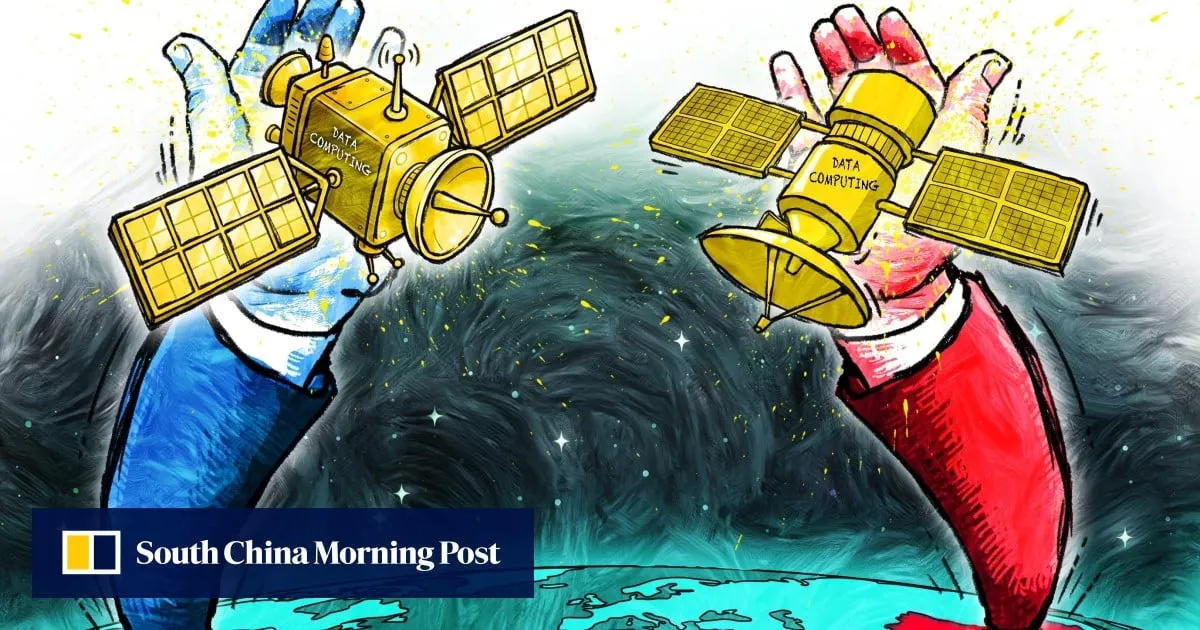
A cloud above the clouds: US, China race to make space a computing platform
The article recounts the initial phase of the Cold War space race, initiated by the Soviet Union in 1957 with the launch of Sputnik, the first artificial satellite. This was followed by the Soviet Union sending Yuri Gagarin into space in 1961, making him the first human to do so.
Wency ChenSouth China Morning PostFiled 2026-05-23 · 01:00 GMTLean · Center-RightRead · 1 min
South China Morning PostFIG 01
Reading time
1min
Word count
117words
Sources cited
0cited
Entities identified
10entities
Quality score
100%
§ 01
Briefing Summary
AI-generatedNEWSAR · AI
The article recounts the initial phase of the Cold War space race, initiated by the Soviet Union in 1957 with the launch of Sputnik, the first artificial satellite. This was followed by the Soviet Union sending Yuri Gagarin into space in 1961, making him the first human to do so. The United States responded in 1969 by landing Neil Armstrong on the moon. For both superpowers, these achievements were seen as a contest of technological prowess, national pride, and a drive to explore beyond Earth.
Confidence 0.85Claims 4Entities 10
§ 02
Article analysis
Model · rule-basedFraming
Technology
Conflict
Tone
Measured
AI-assessed
CalmNeutralAlarmist
Factuality
0.70 / 1.00
Factual
LowHigh
Sources cited
0
No named sources
FewMany
§ 03
Key claims
4 extracted01
Neil Armstrong planted the American flag on the moon in 1969.
factual
Confidence
1.00
02
Yuri Gagarin became the first human in space four years after Sputnik.
factual
Confidence
1.00
03
The Soviet Union launched the first artificial satellite, Sputnik, in 1957.
factual
Confidence
1.00
04
The space race was an ideological contest measured in firsts.
factual
Confidence
0.90
§ 04
Full report
1 min read · 117 words§ 05
Entities
10 identifiedKey playerOppositionContextPositiveNeutralNegative
Organizations1
Locations3
§ 06
Keywords & salience
9 termsspace race
1.00
computing platform
0.90
us
0.80
china
0.80
space
0.70
soviet union
0.60
technological know-how
0.50
national pride
0.40
artificial satellite
0.40
§ 07
Topic connections
Interactive graph Network visualization showing 5 related topics
View Full Graph Person Organization Location Event|Click node to navigate|Edge numbers = shared articles