"You have to shake hands; you have to hug people," he tells the BBC. "Forgetting to know that we have a crisis, an emergency crisis in our country."Three days after the funeral, he fell sick with Ebola, finding himself turning from healthcare worker to patient and ending up in the capital, Monrovia, in an overcrowded ward, filled with the bodies of those who had died."We sat in the ambulance," he remembers, "and people were just dying at the front of the hospital."Faley recovered from the infection but his wife and son later caught the virus as well. His wife got better and made it home. Tragically their four-year-old son Momo did not survive.The lessons from the West African outbreak a decade ago are helping to shape the response this week to the new surge of cases in DR Congo, with funerals banned for those suspected to have been infected.Patrick FaleyA lot of foreigners trooping into their community brings fears" This has sparked tension in some communities, with a crowd angrily setting fire to part of a hospital on Thursday near the epicentre in the city of Bunia after being told a body would not be released for burial.But it is essential to learn lessons from the past and to ensure affected communities are on board, says Dr Patrick Otim, the WHO's area manager for Africa."One of the biggest lessons from the West Africa outbreak and previous Ebola outbreaks in DRC is that speed matters," he says."Early delays in detecting cases, isolating patients and engaging communities can allow transmission chains to expand very quickly."Another point, he explains, is that outbreaks cannot be controlled through medical interventions alone."Community trust is essential. Safe and dignified burials, local leadership engagement and clear communication are just as important as laboratories and treatment centres."This outbreak is the 17th to have emerged in DR Congo since Ebola was discovered half a century ago in 1976.It is only the third worldwide of the rare Bundibugyo species of Ebola, which emerges less often than the more common one known as Zaire.And while the West African outbreak was curbed, after two years, with vaccines, experts have warned Bundibugyo has no vaccine or known treatment."Just because a vaccine works against one particular type of a virus doesn't mean it's going to work against another one," Professor Thomas Geisbert tells me over the phone from his laboratory at the University of Texas Medical Branch in the US.Geisbet warns that getting a vaccine from the laboratory to rollout, with trials and manufacturing, can cost more than $1bn (£745m).It is an investment with "a whole bunch of zeros behind the dollars", he says - and one pharmaceutical companies so far have not seen as being profitable.For Wallace Bulimo, biochemistry professor at Kenya's University of Nairobi, events in DR Congo underscore the need for more investment."Why is it that we have not actually done a lot of work on this virus?" he asks. "And yet we knew it was there."It was first discovered in 2007, so we should have actually never ignored it."Faley warns those currently on the front line in eastern DR Congo that there is a risk in warning communities that the current outbreak has no known cure."If you're going to tell the community that listens to the radio that Ebola has no cure," he says, people who fall sick will not bother to seek medical help."[For them] going to the treatment unit [means] they're just going to die, because there's no treatment."These mistakes, he argues, could lead to stigma and discouragement within local communities as they feel helpless.Patrick FaleyPatrick Faley (L) and his team in Sinje were tasked with building trust, dispelling rumours and helping people understand why shaking hands was dangerousAnother lesson he draws from his own experience in Liberia is the rush of foreign organisations to help on the ground.This week tonnes of aid have been shipped to Ituri, the province in eastern DR Congo at the epicentre of the outbreak, with medical organisations and UN agencies making plans to deploy teams to support local medics."A lot of foreigners trooping into their community brings fears," says Faley."In Liberia, during the initial stages people were still in denial and left their community because of the influx of NGOs."Outside organisations, including the WHO, have been clear it is the Congolese government itself that is leading on the response, which is in a historically insecure area where armed groups have operated for years."The DRC has some of the most experienced Ebola responders in the world," says Otim."Over the past decade, the country has managed multiple Ebola outbreaks and built strong expertise in surveillance, laboratory systems, case management, infection prevention and control, vaccination strategies and outbreak co-ordination."For him, the challenge is not a lack of experience."The challenge is the operational environment, including insecurity, displacement, limited infrastructure and intense population movement, which make outbreak control far more complex."The immediate goal is to contain the virus before it can spread further - with experts warning that missed chances to spot the outbreak sooner could mean the outbreak is already far bigger than is known.There are few reasons for optimism, but scientists do point out that Bundibugyo's fatality rate, of 30%, is lower than for other Ebola species."On one hand," says Prof Geisbet, "it's good that the mortality rate, historically, for Bundibugyo has been lower.""But the incubation period," he warns, "could be longer. That means you have people that are out in the community that could be infected being able to expose other people for a longer period of time, so that could be a challenge."
SRCBBC News - World
LANGEN
LEANCenter
WORDS929
ENT11
FRI · 2026-05-22 · 23:07 GMTBRIEF NSR-2026-0523-78550
NSR-2026-0523-78550News Report·EN·Public Health
'Speed, money and compassion' - lessons from an Ebola survivor and other experts
Lessons from the 2014 West African Ebola outbreak are informing the current response in the Democratic Republic of Congo (DRC). Ebola survivor Patrick Faley emphasizes the importance of speed, community engagement, and clear communication, recalling his own experience of losing his son to the virus.
BBC News - WorldFiled 2026-05-22 · 23:07 GMTLean · CenterRead · 4 min
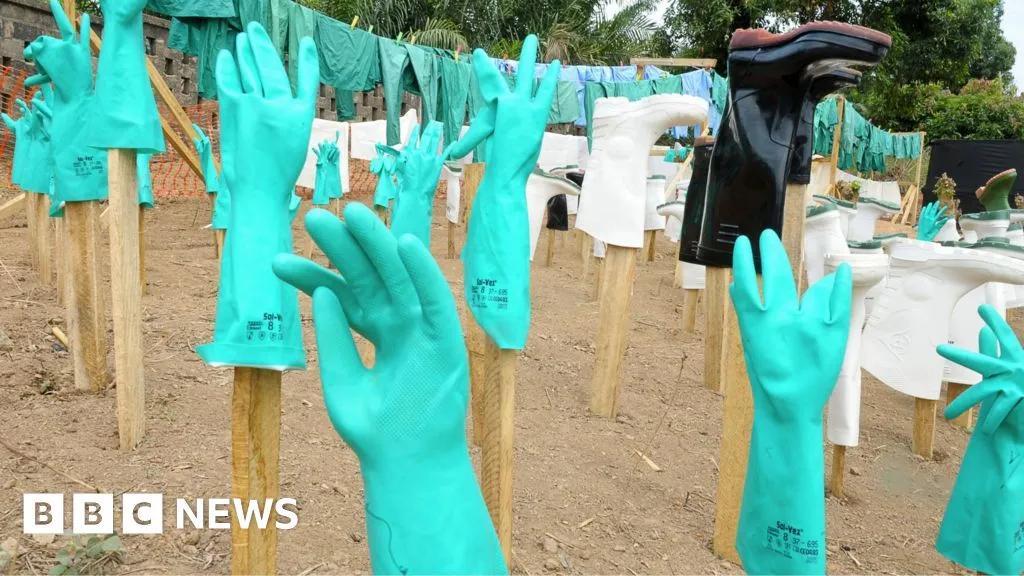
BBC News - WorldFIG 01
Reading time
4min
Word count
929words
Sources cited
4cited
Entities identified
11entities
Quality score
100%
§ 01
Briefing Summary
AI-generatedNEWSAR · AI
Lessons from the 2014 West African Ebola outbreak are informing the current response in the Democratic Republic of Congo (DRC). Ebola survivor Patrick Faley emphasizes the importance of speed, community engagement, and clear communication, recalling his own experience of losing his son to the virus. Experts like Dr. Patrick Otim of the WHO stress that early detection, isolation, and community trust are crucial, alongside medical interventions. The current outbreak in the DRC involves the less common Bundibugyo species, for which no vaccine or known treatment exists, highlighting the need for increased investment in research and development. Concerns also exist about the potential for stigma and discouragement if communities are told there is no cure, and the influx of foreign aid can cause fear and displacement. Despite the challenging operational environment, the DRC possesses experienced Ebola responders.
Confidence 0.90Sources 4Claims 5Entities 11
§ 02
Article analysis
Model · rule-basedFraming
Public Health
Human Interest
Tone
Measured
AI-assessed
CalmNeutralAlarmist
Factuality
0.70 / 1.00
Factual
LowHigh
Sources cited
4
Well sourced
FewMany
§ 03
Key claims
5 extracted01
The Bundibugyo species of Ebola has no vaccine or known treatment.
factual
Confidence
1.00
02
Community trust, safe burials, local leadership, and clear communication are as important as medical interventions.
factualDr Patrick Otim
Confidence
1.00
03
Speed in detecting cases, isolating patients, and engaging communities is crucial for controlling outbreaks.
factualDr Patrick Otim
Confidence
1.00
04
Lessons from the West African Ebola outbreak are informing the response to a new surge of cases in DR Congo.
factual
Confidence
1.00
05
Developing and rolling out a vaccine can cost over $1 billion and is not seen as profitable by pharmaceutical companies.
factualProfessor Thomas Geisbert
Confidence
0.90
§ 04
Full report
4 min read · 929 words§ 05
Entities
11 identifiedKey playerOppositionContextPositiveNeutralNegative
Organizations2
Locations4
Events1
Topics1
§ 06
Keywords & salience
10 termsebola outbreak
1.00
ebola survivor
1.00
dr congo
0.90
west african outbreak
0.80
community trust
0.70
speed matters
0.70
bundibugyo species
0.60
healthcare worker
0.50
safe burials
0.50
vaccine
0.40
§ 07
Topic connections
Interactive graph Network visualization showing 51 related topics
View Full Graph Person Organization Location Event|Click node to navigate|Edge numbers = shared articles