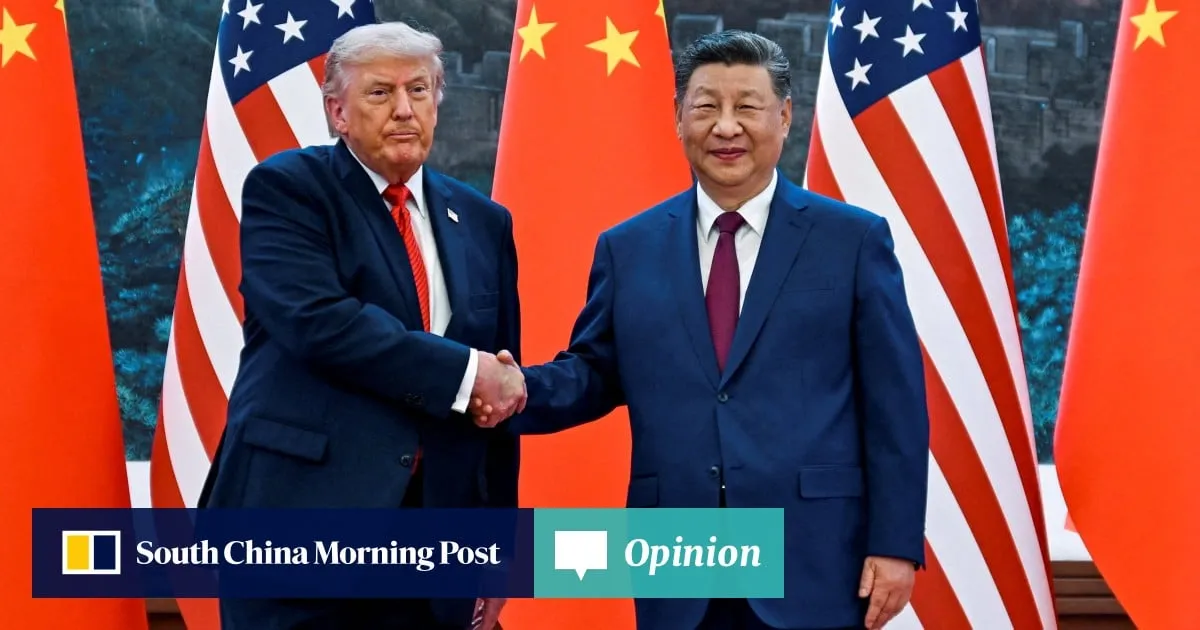
When Xi Jinping and Donald Trump concluded their Beijing summit, the most consequential outcome – for China at least – may prove not material, but conceptual: the adoption of “constructive strategic stability” (CSS) as the guiding framework for managing their intensifying competition.For Southeast Asia, a region often caught in the rivalry between the two powers, understanding what this means will matter in the years ahead.The framework reflects a long-held Chinese strategic aspiration. Beijing has sought for years to anchor its relationship with Washington within an overarching paradigm – one that would codify, at the highest level, a set of principles governing how the two powers relate to each other.From Beijing’s perspective, it also reflects Washington’s implicit recognition of China as a near-peer – if not already a coequalWhen Xi visited Washington during the Obama administration in 2015, Beijing floated the concept of a “new type of major power relations”. Washington was cool. The balance of power then still favoured the US and American policymakers were wary of any formulation that smacked of a G2 condominium, with its implicit endorsement of Chinese co-primacy.
SRCSouth China Morning Post
LANGEN
LEANCenter-Right
WORDS182
ENT8
SAT · 2026-05-23 · 03:00 GMTBRIEF NSR-2026-0523-78558
NSR-2026-0523-78558News Report·EN·Political Strategy
What the China-US stability pact means for Southeast Asia
The recent Beijing summit between Xi Jinping and Donald Trump resulted in the adoption of "constructive strategic stability" (CSS) as a framework for managing US-China competition. This conceptual agreement, reflecting a long-held Chinese aspiration, aims to establish principles governing the relationship between the two powers.
Hoang Thi HaSouth China Morning PostFiled 2026-05-23 · 03:00 GMTLean · Center-RightRead · 1 min
South China Morning PostFIG 01
Reading time
1min
Word count
182words
Sources cited
1cited
Entities identified
8entities
Quality score
100%
§ 01
Briefing Summary
AI-generatedNEWSAR · AI
The recent Beijing summit between Xi Jinping and Donald Trump resulted in the adoption of "constructive strategic stability" (CSS) as a framework for managing US-China competition. This conceptual agreement, reflecting a long-held Chinese aspiration, aims to establish principles governing the relationship between the two powers. From China's perspective, CSS signifies Washington's recognition of China as a near-peer. This framework is significant for Southeast Asia, a region frequently impacted by US-China rivalry, as understanding its implications will be crucial for the region's future. Previously, China proposed a "new type of major power relations" in 2015, which was met with caution by the US due to concerns about endorsing Chinese co-primacy.
Confidence 0.90Sources 1Claims 5Entities 8
§ 02
Article analysis
Model · rule-basedFraming
Political Strategy
Tone
Measured
AI-assessed
CalmNeutralAlarmist
Factuality
0.60 / 1.00
Mixed
LowHigh
Sources cited
1
Limited
FewMany
§ 03
Key claims
5 extracted01
For Southeast Asia, understanding what this means will matter in the years ahead.
factualThe article's own claim
Confidence
0.90
02
From Beijing’s perspective, it also reflects Washington’s implicit recognition of China as a near-peer – if not already a coequal
factualThe article's own claim
Confidence
0.80
03
Beijing has sought for years to anchor its relationship with Washington within an overarching paradigm – one that would codify, at the highest level, a set of principles governing how the two powers relate to each other.
factualThe article's own claim
Confidence
0.80
04
Xi Jinping and Donald Trump concluded their Beijing summit, the most consequential outcome – for China at least – may prove not material, but conceptual
factualThe article's own claim
Confidence
0.70
05
Washington was cool. The balance of power then still favoured the US and American policymakers were wary of any formulation that smacked of a G2 condominium, with its implicit endorsement of Chinese co-primacy.
quoteA policymaker or expert quoted in the article
Confidence
0.70
§ 04
Full report
1 min read · 182 words§ 05
Entities
8 identifiedKey playerOppositionContextPositiveNeutralNegative
Organizations1
Locations3
§ 06
Keywords & salience
8 termsconstructive strategic stability
1.00
china-us relations
0.90
southeast asia
0.80
major power competition
0.70
strategic aspiration
0.60
new type of major power relations
0.50
balance of power
0.40
g2 condominium
0.40
§ 07
Topic connections
Interactive graph Network visualization showing 51 related topics
View Full Graph Person Organization Location Event|Click node to navigate|Edge numbers = shared articles