Behavior of teen in mosque shooting led police to seize family guns a year before attack 1 of 3 | Candles with victims names are placed outside the Islamic Center of San Diego in the aftermath of a shooting on Wednesday, May 20, 2026, in San Diego. (AP Photo/Ty ONeil) 2 of 3 | Two people pray during a vigil, the day after a shooting, outside of the Islamic Center of San Diego, Tuesday, May 19, 2026, in San Diego. (AP Photo/Jae C. Hong) 3 of 3 | People embrace outside the security office of the Islamic Center of San Diego, a day after a shooting, Tuesday, May 19, 2026, in San Diego. (AP Photo/Jae C. Hong) 1 of 3 | Candles with victims names are placed outside the Islamic Center of San Diego in the aftermath of a shooting on Wednesday, May 20, 2026, in San Diego. (AP Photo/Ty ONeil) 1 of 3 Candles with victims names are placed outside the Islamic Center of San Diego in the aftermath of a shooting on Wednesday, May 20, 2026, in San Diego. (AP Photo/Ty ONeil) Add AP News on Google Add AP News as your preferred source to see more of our stories on Google. Share 2 of 3 | Two people pray during a vigil, the day after a shooting, outside of the Islamic Center of San Diego, Tuesday, May 19, 2026, in San Diego. (AP Photo/Jae C. Hong) 2 of 3 Two people pray during a vigil, the day after a shooting, outside of the Islamic Center of San Diego, Tuesday, May 19, 2026, in San Diego. (AP Photo/Jae C. Hong) Add AP News on Google Add AP News as your preferred source to see more of our stories on Google. Share 3 of 3 | People embrace outside the security office of the Islamic Center of San Diego, a day after a shooting, Tuesday, May 19, 2026, in San Diego. (AP Photo/Jae C. Hong) 3 of 3 People embrace outside the security office of the Islamic Center of San Diego, a day after a shooting, Tuesday, May 19, 2026, in San Diego. (AP Photo/Jae C. Hong) Add AP News on Google Add AP News as your preferred source to see more of our stories on Google. Share Updated [hour]:[minute] [AMPM] [timezone], [monthFull] [day], [year] One of the teenagers who killed three people at a San Diego mosque this week was flagged to Law enforcement last year for exhibiting alarming behavior and idolizing Nazis, prompting police to confiscate his father’s guns, according to court records.The officers who conducted a welfare check at the home of Caleb Vazquez wrote that he was “involved in suspicious behavior idolizing Nazis and mass shooters,” and obtained a court order on Jan. 29, 2025, to remove 26 guns under a 2014 California law allowing the confiscation of firearms from people considered dangerous. Vazquez’s father initially denied police entry into his home when they requested to see how he was storing his weapons.Vazquez’s parents had voluntarily removed the guns from the house and placed them in a secure storage facility days earlier, according to an affidavit signed by Marco Vazquez, the father. Authorities have said Vazquez, 18, met Cain Clark, 17, online, where they both were radicalized. Police haven’t shared more details about how they knew each other, or specified whose weapons were used in the shooting. Cain Clark’s mother told Law enforcement that weapons were missing from her home on Monday, kicking off an hourslong search for the teens before they committed the shooting at the Islamic Center of San Diego and then killed themselves, police said. Court filings indicate mental health strugglesCourt filings show Vazquez decided to “secure all sharp knives in the home” and removed from the house the firearms that they had previously kept in a secure gun safe into an outside storage facility. The affidavit also mentions unspecified serious allegations against their son, who was also previously committed to an involuntary psychiatric hospitalization. The court filings, first reported by The New York Times, didn’t say what he was admitted for.The Vazquez family said in a statement released Thursday that Caleb Vazquez was on the autism spectrum and had grown to resent parts of his identity — but didn’t specify what aspects were challenging to him.“Coming from a diverse family that not only includes immigrants but Muslims as well, we always taught the importance of acceptance, compassion, and love for one another. We are proud of the different backgrounds, cultures, ethnicities, and religions within our family and community,” their statement said. “We believe this, combined with exposure to hateful rhetoric, extremist content, and propaganda spread across parts of the internet, social media, and other online platforms, contributed to his descent into radicalized ideologies and violent beliefs,” said their statement, released through their attorney Colin Rudolph. His family said they tried to get him helpThey encouraged him to seek help and he spent time in rehabilitation centers, the statement said. Vazquez’s parents did not immediately respond to calls seeking comment from The Associated Press. An attorney who represented Vazquez’s parents when their guns were confiscated also didn’t immediately respond to calls.In writings by Vazquez and Clark that expressed white supremacist views, Vazquez wrote of having “some mental health issues” and being rejected by women. They suggest both teenagers idolized previous shooters who have died while carrying out mass shootings. The writings expressed hatred toward Jewish people, Muslims, Black people and a range of other groups. Vazquez left the San Diego Unified School District in June 2018 after attending Washington Elementary up until the 5th grade, district spokesperson James Canning told The Associated Press. It’s unclear where he went to school after that. Clark was enrolled in a virtual high school in the district, Canning said.Police began searching for the teens on Monday after Clark’s mother called to say her son was suicidal and ran away. She told them he was dressed in camouflage, had taken multiple weapons from the home, and was with an acquaintance, San Diego Police Chief Scott Wahl said earlier this week.Officers were still interviewing the mother about places the teens might be when the shooting began at the county’s largest mosque. De-radicalizing people is becoming more difficultVazquez’s father said in a 2025 court statement that his family made a concerted effort to steer Caleb Vazquez back onto the right track. He said when they locked away their weapons, they were in communication with his school, were monitoring his social media presence closely and he was in therapy twice a week.“We observe all of his online activities, who he talks to, what he talks about, and who he is friends with,” Marco Vazquez wrote, emphasizing that he didn’t support his son’s ideology.Some experts say it’s increasingly difficult to help people drawn to the kind of radicalism Vazquez and Clark expressed. Samira Benz works for the Violence Prevention Network, which conducts interventions when people are radicalized into believing in violent extremism. Benz said the work has become increasingly complicated as the internet blurs ideologies and creates niche, meme-based languages that can be fleeting and hard to decipher. “Even if a parent is looking at the phone of their child, they don’t necessarily see something bad is going on,” Benz said.___Associated Press writers Julie Watson and Javier Arciga in San Diego contributed. Riddle is a national reporter reporter for the Associated Press working on the Rapid Response Team. She also covers Law enforcement.
SRCAssociated Press (AP)
LANGEN
LEANCenter
WORDS1 242
ENT8
SAT · 2026-05-23 · 06:23 GMTBRIEF NSR-2026-0523-78613
NSR-2026-0523-78613News Report·EN·Legal & Judicial
Behavior of teen in mosque shooting led police to seize family guns a year before attack
A year before the San Diego mosque shooting, one of the perpetrators, 18-year-old Caleb Vazquez, was flagged to law enforcement for displaying alarming behavior, including idolizing Nazis and mass shooters. This led to a court order in January 2025 to confiscate 26 firearms from his father's home under a California law for dangerous individuals.
By
SAFIYAH RIDDLEAssociated Press (AP)Filed 2026-05-23 · 06:23 GMTLean · CenterRead · 5 min
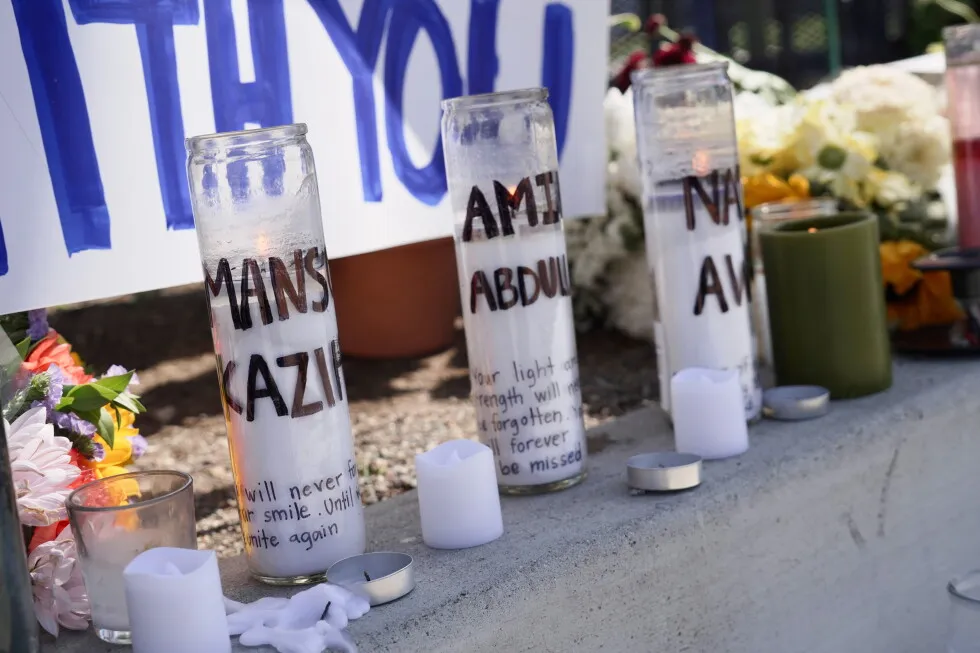
Associated Press (AP)FIG 01
Reading time
5min
Word count
1 242words
Sources cited
1cited
Entities identified
8entities
Quality score
100%
§ 01
Briefing Summary
AI-generatedNEWSAR · AI
A year before the San Diego mosque shooting, one of the perpetrators, 18-year-old Caleb Vazquez, was flagged to law enforcement for displaying alarming behavior, including idolizing Nazis and mass shooters. This led to a court order in January 2025 to confiscate 26 firearms from his father's home under a California law for dangerous individuals. Vazquez and the other teen, 17-year-old Cain Clark, were radicalized online. Clark's mother reported missing weapons from her home, initiating a search that preceded the shooting at the Islamic Center of San Diego, where three people were killed before the teens died by suicide. Vazquez's family stated he was on the autism spectrum and had struggled with aspects of his identity, attributing his radicalization partly to online exposure to hateful rhetoric.
Confidence 0.90Sources 1Claims 5Entities 8
§ 02
Article analysis
Model · rule-basedFraming
Legal & Judicial
Human Interest
Tone
Measured
AI-assessed
CalmNeutralAlarmist
Factuality
0.80 / 1.00
Factual
LowHigh
Sources cited
1
Limited
FewMany
§ 03
Key claims
5 extracted01
The teen's parents had voluntarily removed the guns and placed them in secure storage days before the welfare check.
factualaffidavit signed by Marco Vazquez
Confidence
1.00
02
The teen's father initially denied police entry when they requested to see how he was storing his weapons.
factualcourt records
Confidence
1.00
03
Police obtained a court order on Jan. 29, 2025, to remove 26 guns from the teen's father's home under a California law.
factualcourt records
Confidence
1.00
04
One of the mosque shooting teens was flagged to law enforcement last year for alarming behavior and idolizing Nazis.
factualcourt records
Confidence
1.00
05
Authorities stated the shooter met the other teen online where they were both radicalized.
factualAuthorities
Confidence
0.90
§ 04
Full report
5 min read · 1 242 words§ 05
Entities
8 identifiedKey playerOppositionContextPositiveNeutralNegative
People3
Organizations4
Locations1
§ 06
Keywords & salience
8 termsmosque shooting
1.00
alarming behavior
0.90
idolizing nazis
0.80
gun confiscation
0.70
law enforcement
0.60
welfare check
0.50
court records
0.40
mass shooters
0.40
§ 07
Topic connections
Interactive graph Network visualization showing 15 related topics
View Full Graph Person Organization Location Event|Click node to navigate|Edge numbers = shared articles