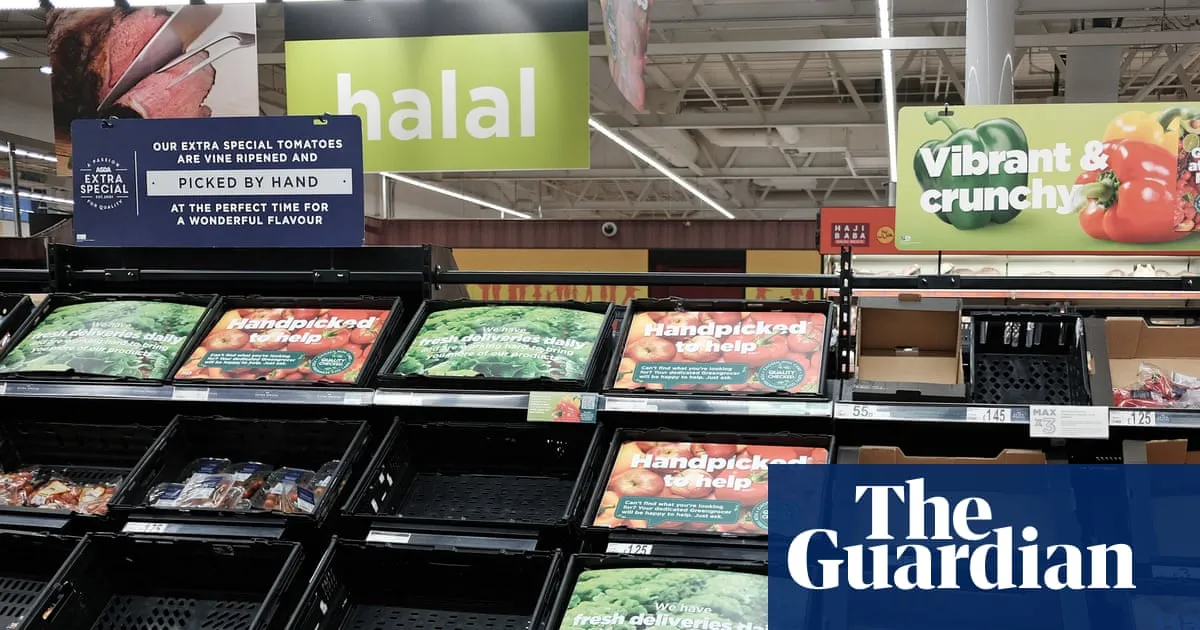
Britain’s vital supply chains are unprepared for the prospect of a major shock such as war with Russia, and bold steps are needed to catch up with “worst-case scenario” planning by European states, ministers have been warned.Donald Trump’s “America First” transformation of the US, which has made what was once a trusted UK ally a much less reliable partner, should also feed into that planning, according to a new report.The warnings are contained in research by the National Preparedness Commission (NPC), which promotes national crisis planning and is overseen by a panel including senior figures from emergency services, the NHS and experts on risk and security.The calls coincide with continuing concern over the impact of the war in the Middle East on fuel costs and the prices of food and other goods in the UK, which saw the government recently ask supermarkets to consider freezing the prices of some essentials.The report, launched privately at Westminster last week, puts a spotlight on the resilience of Britain’s supply chain and how it could be tested by looming dangers ranging from a fresh pandemic, the Climate Crisis or what is now focusing the minds of officials: a war with Russia.It said that Britain is lagging behind other European countries when it comes to the stockpiling of supplies such as critical medicines, and called for fresh thinking.“The conversation in government should shift from why we should not stockpile to how and where we might most sensibly do it. It is easy to forget that during the pandemic the UK benefited from medicines that had been stockpiled to pre-empt disrupted supplies on leaving the EU,” it said.In terms of stockpiling for the health sector alone, it noted that medicine suppliers are required to hold at least eight weeks of buffer stock for hospitals, but compliance is patchy and not mandated for pharmacies serving primary care.The government also has no intention to produce a critical medicines list or to strategically stockpile critical medicines or medical equipment, it added, other than to assist military personnel in the event of a CBRN (chemical, biological, radiological and nuclear) attack.By contrast, many EU states require pharmaceutical companies to hold buffer stocks of designated medicines ranging from one month to six months.When it comes to food supply, the UK is one of the least self-sufficient countries in Europe. The government neither has a strategic stockpile nor does it require big wholesalers and distributors to hold buffer stocks. By contrast, countries such as Norway and Sweden have begun to rebuild emergency grain and food reserves while other EU states proactively encourage households to store several days’ worth of food and water for emergencies.The report – titled Future-proofing Security of Supply in a Contested World – warned that recent global events such as the Iran war and repeated lurches in international relations raised profound questions about the future ability of the UK to access raw materials and components.Britain also faces being squeezed by what the report describes as the “hard-nosed nationalism” of the US, the collaborations of EU states, China’s manufacturing and Russia’s war economy footing.It comes nearly a year on from the publication of the government’s national security strategy, initiatives such as moves to prioritise British suppliers for contracts in sectors vital to national security, and calls by Keir Starmer for a “whole-of-society” approach to security and resilience.But there are concerns that the issue has lost focus amid other political distractions, while the Commons defence committee reported last November that the “national conversation” sought by the prime minister had yet to start, with little public engagement and no clear central direction.“It is a mistake to assume that catastrophic events will not happen,” warned the NPC report.“The closure of the strait of Hormuz and disruption to regional air traffic due to the US-Israel war with Iran in March 2026 is the most recent thud in a drumbeat of wake-up calls about supply chain resilience,” it said. Along with the war in Ukraine and the Covid pandemic, each had the effect of “exposing known vulnerabilities and revealing underappreciated fragility”.Its author, Richard Smith-Bingham, a strategic adviser on risk and resilience and former head of insights at insurance broker and risk adviser Marsh, said the UK currently risked falling behind other countries in its efforts to secure the medium to long-term supply of critical materials, components and other vital goods.“Hard choices must be made and bolder actions taken to reduce our vulnerability to coercion and ensure we are better prepared for sustained crises we might face,” he added.A government spokesperson said: “The UK’s supply chains are strong and resilient and we actively monitor for risks.“When pressures emerge, we’ve demonstrated we can act quickly, recently reopening a CO2 plant in the north-east to increase production and protect supplies.”
SRCThe Guardian - World News
LANGEN
LEANCenter-Left
WORDS791
ENT12
SUN · 2026-05-24 · 10:00 GMTBRIEF NSR-2026-0524-78825
NSR-2026-0524-78825News Report·EN·National Security
UK supply chain unprepared for major shocks such as war, report warns
A report by the National Preparedness Commission (NPC) warns that the UK's supply chains are unprepared for major shocks like war with Russia or further global instability, including the US's less reliable partnership. The research highlights that Britain lags behind European states in stockpiling critical supplies such as medicines and food, with no government intention to create a critical medicines list or strategic stockpile beyond military needs.
Ben Quinn Political CorrespondentThe Guardian - World NewsFiled 2026-05-24 · 10:00 GMTLean · Center-LeftRead · 4 min
The Guardian - World NewsFIG 01
Reading time
4min
Word count
791words
Sources cited
1cited
Entities identified
12entities
Quality score
100%
§ 01
Briefing Summary
AI-generatedNEWSAR · AI
A report by the National Preparedness Commission (NPC) warns that the UK's supply chains are unprepared for major shocks like war with Russia or further global instability, including the US's less reliable partnership. The research highlights that Britain lags behind European states in stockpiling critical supplies such as medicines and food, with no government intention to create a critical medicines list or strategic stockpile beyond military needs. Unlike many EU countries and nations like Norway and Sweden, the UK does not mandate buffer stocks for wholesalers or encourage household emergency preparedness. The report, titled "Future-proofing Security of Supply in a Contested World," urges ministers to adopt "worst-case scenario" planning and make bolder actions to reduce vulnerability to coercion and ensure preparedness for sustained crises.
Confidence 0.90Sources 1Claims 5Entities 12
§ 02
Article analysis
Model · rule-basedFraming
National Security
Economic Impact
Tone
Mixed Tone
AI-assessed
CalmNeutralAlarmist
Factuality
0.70 / 1.00
Factual
LowHigh
Sources cited
1
Limited
FewMany
§ 03
Key claims
5 extracted01
UK supply chains are unprepared for major shocks like war, according to a National Preparedness Commission report.
factualNational Preparedness Commission
Confidence
0.90
02
The UK is one of Europe's least self-sufficient countries regarding food supply, with no strategic stockpile or wholesaler buffer stock requirements.
factualNational Preparedness Commission
Confidence
0.85
03
Britain is lagging behind European countries in stockpiling critical supplies such as medicines.
factualNational Preparedness Commission
Confidence
0.85
04
The UK government has no intention to produce a critical medicines list or strategically stockpile critical medicines/equipment, except for military CBRN attacks.
factualNational Preparedness Commission
Confidence
0.80
05
Donald Trump's 'America First' policy makes the US a less reliable partner for the UK.
factualNational Preparedness Commission
Confidence
0.75
§ 04
Full report
4 min read · 791 words§ 05
Entities
12 identifiedKey playerOppositionContextPositiveNeutralNegative
Organizations2
Locations5
Events1
§ 06
Keywords & salience
10 termssupply chain
1.00
national preparedness
0.90
war with russia
0.80
stockpiling
0.80
critical medicines
0.70
food supply
0.60
resilience
0.50
eu
0.40
climate crisis
0.40
pandemic
0.40
§ 07
Topic connections
Interactive graph Network visualization showing 51 related topics
View Full Graph Person Organization Location Event|Click node to navigate|Edge numbers = shared articles