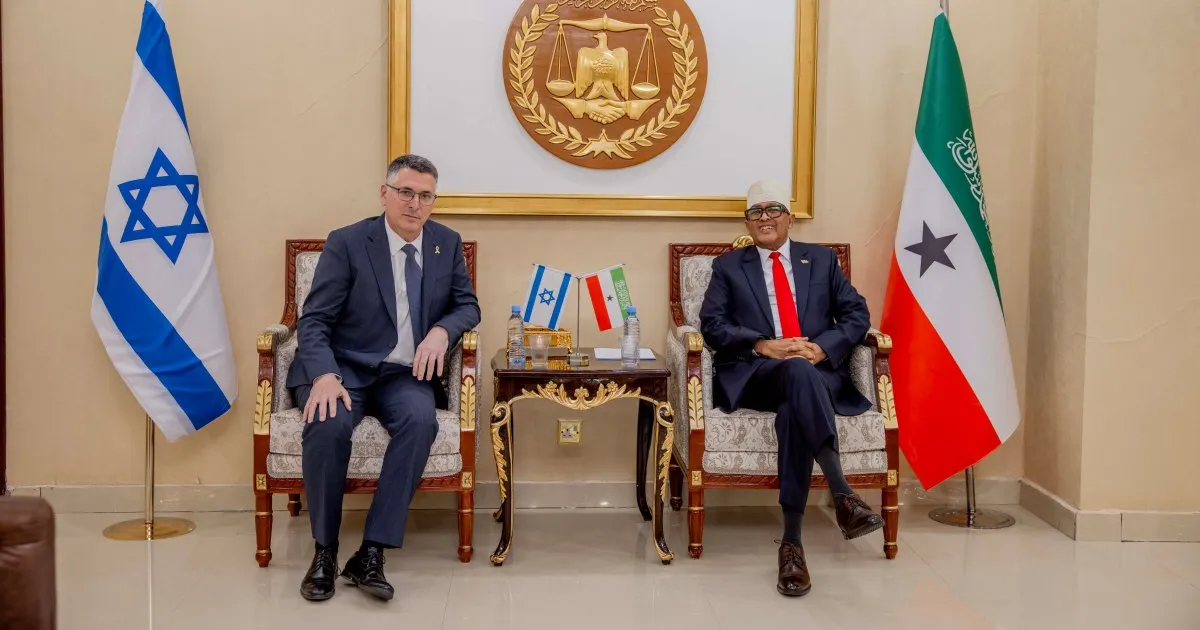
From proximity to Yemen’s Houthis to intersecting interests, recognition of region marks shift towards unconventional alliances.Somaliland President Abdirahman Mohamed Abdullahi, right, poses with Israel’s Foreign Minister Gideon Saar at the presidential palace in Hargeisa, Somaliland [File: Somaliland presidency/AFP]Published On 16 Jan 2026Israel’s announcement late last year that it would recognise Somaliland as an independent state was followed almost immediately by anger from Somalia and condemnation across Africa and the Middle East.Among criticisms of the move came a warning from Yemen’s Houthis, with the group’s leader, Abdel-Malik al-Houthi, describing it as a “hostile stance” and saying any Israeli presence in Somaliland would be treated as a military target.Recommended Stories list of 3 itemslist 1 of 3Somaliland recognition: Israel’s foothold in the Horn of Africalist 2 of 3Saudi-led coalition says STC’s al-Zubaidi fled to UAE via Somalilandlist 3 of 3Top Somaliland official defends Israel ties amid Arab backlashend of listThose concerns were reinforced this month when Israel’s foreign minister, Gideon Saar, visited Somaliland and included the strategic port city of Berbera in his itinerary.In a readout after the trip, he said security cooperation was on the agenda.Somaliland officials have since indicated they are open to the possibility of Israeli military presence in the territory – a prospect that would place Israel directly across the Gulf of Aden from the Houthis, thus validating the group’s concerns.This week, al-Houthi said he was “serious” about his earlier threat, adding he would not “hesitate to target any fixed Zionist presence accessible to us”.Israel’s conflict with the HouthisIsrael’s recognition of Somaliland is part of a broader shift in its policy from covert state-to-state engagement towards cultivating ties with alternative actors, following prolonged conflicts with Iran and its regional allies, experts say.When Prime Minister Benjamin Netanyahu announced the move on December 26, he publicly thanked Mossad director David Barnea, pointing to the intelligence dimension of the engagement.Experts say the timing reflects Israel’s growing concern about the threat posed by the Houthis in the southern Red Sea region.During the genocidal war on Gaza, Israel has traded fire with the Houthis, who have fired missiles and drones from northern Yemen and also targeted Israeli-linked shipping in the Red Sea, in what they said were moves in solidarity with the Palestinians.“Everyone just looks at the map and understands what Israel is looking for here,” Shiri Fein-Grossman, the CEO of the Israel-Africa Relations Institute and a former member of the Israeli National Security Council, recently told Israeli outlet i24 News.“The recognition of Somaliland gives Israel a strategic location near the Houthis in Yemen and comes at a time that Israel needs as many friends as possible.”Much attention focuses on Berbera, a city on Somaliland’s Gulf of Aden coast at the Red Sea’s entrance, historically hosting the Ottomans, the Soviets during Somalia’s pro-Moscow Cold War alignment, the United States, and, since 2017, the United Arab Emirates (UAE).The port sits along one of the world’s busiest shipping lanes, just across the Gulf of Aden on the Red Sea, and about 500km (300 miles) from Houthi-controlled areas of Yemen.An assessment published in November by Israel’s Institute for National Security Studies noted that Somaliland’s territory could “forward base for multiple missions: intelligence monitoring of the Houthis and their armament efforts; logistical support for Yemen’s legitimate government in its war against them; and a platform for direct operations against the Houthis”.Over the past two years, Israeli strikes in Yemen have hit key economic and civilian infrastructure and killed Houthi leaders, yet unnamed Israeli officials told The Jerusalem Post that the group remains nearly undeterrable.This has prompted calls for a total overhaul of Israel’s military and security doctrines, including by the Israeli army’s Dado Center for Interdisciplinary Military Studies, due to what it said were significant changes in the “characteristics of Israel’s security environment”.“This context has totally brought Somaliland into effect,” Max Webb, an independent analyst on the Horn of Africa, told Al Jazeera. “The Houthis are now the largest Iranian proxy posing a direct threat to Israel,” he said, citing the weakening of Hezbollah in Lebanon and the collapse of the Bashar al-Assad government in Syria.“Israel has never previously been attacked by the Houthis; this is a new development. And so it shouldn’t come as a surprise that they’re prepared to work with new actors in order to counter that Houthi threat,” Webb said.Asher Lubotzky, a senior fellow at the Israeli think tank, the Israel-Africa Relations Institute, told Al Jazeera that while Israel’s military demonstrated it could strike distant targets, its overall performance against the Houthis was “below the passing mark”, despite it launching the longest-range strike Israel had ever carried out.The Houthis, in turn, have threatened to strike any Israeli presence in Somaliland, a move that Mostafa Hasan, Somaliland’s former intelligence director, said amounts to a declaration of war.Lubotzky said Somaliland had taken a major risk and, in a November report for an Israeli think tank, suggested that other countries take the lead in recognising Somaliland to reduce potential fallout for both Hargeisa and Israel. “But they wanted recognition and they think it is worth it,” he said.“Most of the countries which were extremely mad at Israel for this, were mad at Israel before,” he added.According to Webb, “both sides have very little to lose diplomatically.“Israel is more isolated than it has ever been, and Somaliland isn’t recognised by anyone. Israel can take the heat, and Somaliland gets a breakthrough.”A ‘state of necessity’For Somaliland, Israel’s diplomatic lifeline arrives at a moment of comparable vulnerability.In 2023, the region suffered a major military setback, losing the eastern city of Las Anod and its surroundings to anti-separatist forces, with Somali Prime Minister Hamza Barre even visiting the city last April. A new administration under Somalia’s federal system has been established.Several senior Somali cabinet ministers have arrived in the city this week, and the president is expected to visit over the weekend.Somalia’s federal government has also increased pressure over the last year through airspace controls, visa restrictions and port regulations.A source close to Somaliland’s government, speaking anonymously to Al Jazeera, said the measures had created a sense of unease in Hargeisa, making the need for action more urgent.Hersi Ali Haji Hassan, chair of the governing Waddani party, told Al Jazeera Mubasher that “we are in a state of necessity for official international recognition,” adding there “is no choice before us but to welcome any country that recognises our existential right”.In mid-2025, the administration of Somaliland’s Abdirahman Mohamed Abdillahi sent letters to 193 heads of state offering strategic access and cooperation in exchange for diplomatic recognition. Last week, the president, known locally as Cirro, said only Israel had responded.Though the effort produced no immediate public breakthroughs, in recent years, Somaliland has won the support of prominent US Republicans such as Ted Cruz and Scott Perry, and even appeared in Project 2025, a document closely aligned with President Donald Trump’s base that is believed to be guiding policy.Trump has distanced himself from Somaliland recognition, telling the New York Post he was unlikely to follow Israel’s lead. However, he did say the matter was being “studied”.Meanwhile, US Ambassador Tammy Bruce declined to condemn Israel’s recognition of Somaliland at the United Nations Security Council last year, even as she insisted US policy hadn’t changed. The State Department told Al Jazeera it had no role in Israel’s decision to recognise Somaliland.In Somaliland, most people appear to have backed the deal with Israel.Meanwhile, many of its supporters have welcomed its positioning as a potential Western ally – cultivating ties with Taiwan, deciding to build a relationship with Israel – while moving against regional and global rivals, including China, Iran, and its networks of regional allies.“Somaliland has tried to present itself as a place where those interests intersect,” said Jethro Norman, a Somalia expert at the Danish Institute for International Studies. “In a more transactional global environment, geography matters more.”Mostafa Hasan, former intelligence director in Somaliland, told the Jerusalem Center for Security and Foreign Affairs that Somaliland would safeguard Israel’s and Western interests following recognition.Alon Liel, a former Israeli diplomat, told Al Jazeera that Israel’s goals were much larger than simply having a position from which it could strike Yemen.“This relationship with Somaliland indicates that Israel is preparing for more international troubles and is looking for friends it can build leverage on with some strategic added value, like Somaliland,” Liel said.He added that Israel also wants to show it can still gain new allies despite the fallout from its two-year war on Gaza.Somaliland’s president recently officially accepted an invitation by Netanyahu to visit Israel, during which an embassy is likely to be opened.Analysts say the relationship is still new, with its trajectory uncertain, and that both Somaliland and Israel will be assessing the announcements’ consequences and potential opportunities.After Saar’s visit to Hargeisa this month, Somaliland’s Foreign Minister Abdirahman Dahir Adam expressed on X hope that the trip marked “the beginning of a promising partnership”, with Saar saying Israel was determined to “vigorously advance relations”.Somalia’s President Hassan Sheikh Mohamud, meanwhile, appealed to Somaliland’s leaders, urging them to reconsider talks and stressing that wider recognition of independence could only come through negotiations with Mogadishu – a signal he was willing to engage on Somaliland’s core demands.“The federal government will find it easy to do anything it can in order to find unity,” he said in a national address.Farhan Isak Yusuf, the deputy director at Somali Public Agenda, a Mogadishu-based think tank, said talks between both sides were now unlikely, as the diplomatic breakthrough has left Somaliland’s leaders feeling emboldened and vindicated.“Mogadishu should avoid taking escalatory measures now,” he added, “as there is a risk of pushing Somaliland’s leaders further and giving them reason to pull away.”
SRCAl Jazeera
LANGEN
LEANCenter
WORDS1 607
ENT12
FRI · 2026-01-16 · 11:29 GMTBRIEF NSR-2026-0116-7896
NSR-2026-0116-7896News Report·EN·Political Strategy
What does Israel want in Somaliland?
In late 2025, Israel announced its recognition of Somaliland, a move that sparked anger from Somalia and condemnation across Africa and the Middle East. This decision reflects a shift in Israeli foreign policy towards cultivating ties with alternative actors, driven by concerns about threats from Iran's regional allies, particularly Yemen's Houthis.
Faisal AliAl JazeeraFiled 2026-01-16 · 11:29 GMTLean · CenterRead · 7 min
Al JazeeraFIG 01
Reading time
7min
Word count
1 607words
Sources cited
2cited
Entities identified
12entities
Quality score
100%
§ 01
Briefing Summary
AI-generatedNEWSAR · AI
In late 2025, Israel announced its recognition of Somaliland, a move that sparked anger from Somalia and condemnation across Africa and the Middle East. This decision reflects a shift in Israeli foreign policy towards cultivating ties with alternative actors, driven by concerns about threats from Iran's regional allies, particularly Yemen's Houthis. The Houthis have warned against any Israeli presence in Somaliland, threatening to treat it as a military target. Security cooperation was discussed during a visit by Israel's Foreign Minister Gideon Saar to Somaliland, including the strategic port city of Berbera. Somaliland officials have expressed openness to a potential Israeli military presence, which would place Israel directly across the Gulf of Aden from the Houthis.
Confidence 0.90Sources 2Claims 5Entities 12
§ 02
Article analysis
Model · rule-basedFraming
Political Strategy
National Security
Tone
Mixed Tone
AI-assessed
CalmNeutralAlarmist
Factuality
0.70 / 1.00
Factual
LowHigh
Sources cited
2
Limited
FewMany
§ 03
Key claims
5 extracted01
Recognition of Somaliland gives Israel a strategic location near the Houthis.
quoteShiri Fein-Grossman
Confidence
1.00
02
Israel's foreign minister visited Somaliland and included Berbera in his itinerary.
factualArticle
Confidence
1.00
03
Yemen’s Houthis warned against Israel's recognition of Somaliland.
factualArticle
Confidence
1.00
04
Israel recognized Somaliland as an independent state.
factualArticle
Confidence
1.00
05
Somaliland officials are open to Israeli military presence.
factualArticle
Confidence
0.80
§ 04
Full report
7 min read · 1 607 words§ 05
Entities
12 identifiedKey playerOppositionContextPositiveNeutralNegative
People4
§ 06
Keywords & salience
10 termssomaliland
1.00
israel
1.00
recognition
0.80
houthis
0.80
security cooperation
0.60
military presence
0.60
red sea
0.50
gulf of aden
0.50
yemen
0.40
strategic port
0.40
§ 07
Topic connections
Interactive graph Network visualization showing 51 related topics
View Full Graph Person Organization Location Event|Click node to navigate|Edge numbers = shared articles