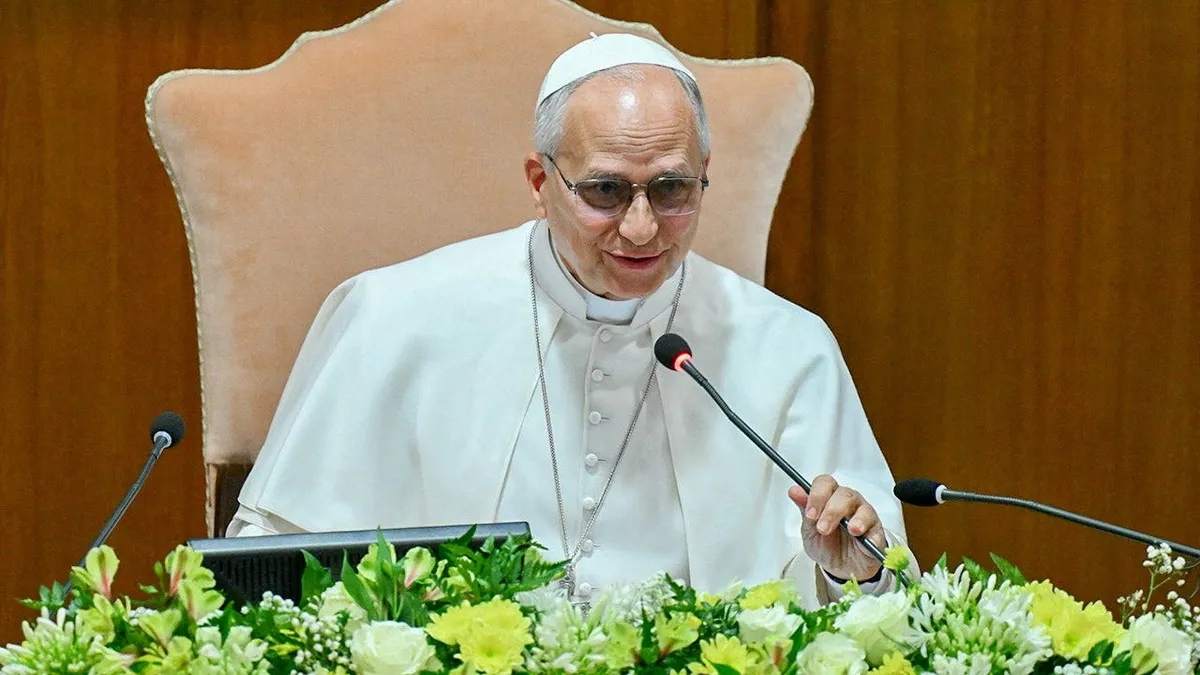
Pope Leo unveiled the Vatican’s new encyclical, "Magnifica Humanitas," warning that Artificial Intelligence risks becoming a tool of "domination, exclusion and death" unless governments and institutions place moral limits on the rapidly developing technology. The Vatican is formally entering the global debate over Artificial Intelligence as governments and tech companies race to develop increasingly powerful AI systems with limited international regulation. The pontiff invoked Pope Leo XIII’s 1891 encyclical "Rerum Novarum," which addressed worker exploitation during the Industrial Revolution, arguing that AI represents a similarly transformative moment threatening human dignity . "Today we find ourselves facing a transformation of similar magnitude, with perhaps even greater consequences," the Pope said. UN REVISITS 'KILLER ROBOT' REGULATIONS AS CONCERNS ABOUT AI-CONTROLLED WEAPONS GROW The pope warned about increasingly autonomous weapons systems that are beyond meaningful human control. He also said AI systems could block access to healthcare, employment and security because of biased data. He compared AI governance to nuclear arms control . "Like nuclear energy , it must be at the service of all and of the common good," he said. AI layoffs may be backfiring on companies The pope said disarming AI alone is not enough and called on governments and institutions to "build" systems rooted in trust and human dignity. Recalling devastating floods in Peru, he said rebuilding means restoring trust and hope. WHY A CLASSICAL EDUCATION MAY BE THE KEY TO HUMANITY’S FUTURE IN THE AI ERA The pope also laid out the church’s broader argument about humanity and technology. "The person bears within him- or herself a freedom, an interiority and a vocation to love and worship that no machine can replace," he said. The Vatican is attempting to insert moral theology into a largely secular technological arms race. "Stay awake," the pope urged, warning humanity not to surrender moral judgment to machines .
SRCFox News - World
LANGEN
LEANCenter-Right
WORDS306
ENT8
MON · 2026-05-25 · 18:31 GMTBRIEF NSR-2026-0525-79123
NSR-2026-0525-79123News Report·EN·Human Rights
Pope Leo warns AI risks becoming tool of 'domination, exclusion and death' in new encyclical
In a new encyclical titled "Magnifica Humanitas," Pope Leo has warned that artificial intelligence could become a tool of "domination, exclusion and death" if moral limits are not imposed by governments and institutions. The Vatican is entering the global AI debate, highlighting the lack of international regulation as AI technology rapidly advances.
Fox News - WorldFiled 2026-05-25 · 18:31 GMTLean · Center-RightRead · 2 min
Fox News - WorldFIG 01
Reading time
2min
Word count
306words
Sources cited
1cited
Entities identified
8entities
Quality score
100%
§ 01
Briefing Summary
AI-generatedNEWSAR · AI
In a new encyclical titled "Magnifica Humanitas," Pope Leo has warned that artificial intelligence could become a tool of "domination, exclusion and death" if moral limits are not imposed by governments and institutions. The Vatican is entering the global AI debate, highlighting the lack of international regulation as AI technology rapidly advances. The Pope drew parallels to the Industrial Revolution, emphasizing AI's potential to threaten human dignity and citing concerns about autonomous weapons systems and biased AI that could restrict access to essential services. He called for AI to be governed like nuclear energy, serving the common good, and urged for systems built on trust and human dignity, reminding humanity not to surrender moral judgment to machines.
Confidence 0.90Sources 1Claims 5Entities 8
§ 02
Article analysis
Model · rule-basedFraming
Human Rights
Technology
Tone
Mixed Tone
AI-assessed
CalmNeutralAlarmist
Factuality
0.60 / 1.00
Mixed
LowHigh
Sources cited
1
Limited
FewMany
§ 03
Key claims
5 extracted01
No machine can replace human freedom, interiority, and vocation to love and worship.
quotePope Leo
Confidence
1.00
02
AI governance should be compared to nuclear arms control and be at the service of all for the common good.
quotePope Leo
Confidence
1.00
03
AI systems could block access to healthcare, employment, and security due to biased data.
quotePope Leo
Confidence
1.00
04
AI represents a transformative moment threatening human dignity, similar to the Industrial Revolution.
quotePope Leo
Confidence
1.00
05
Artificial intelligence risks becoming a tool of 'domination, exclusion and death' unless moral limits are placed on it.
quotePope Leo
Confidence
1.00
§ 04
Full report
2 min read · 306 words§ 05
Entities
8 identifiedKey playerOppositionContextPositiveNeutralNegative
Locations1
§ 06
Keywords & salience
10 termsartificial intelligence
1.00
moral limits
0.90
human dignity
0.80
autonomous weapons
0.70
pope leo
0.60
vatican
0.60
ai governance
0.50
common good
0.40
trust
0.40
humanity
0.40
§ 07
Topic connections
Interactive graph Network visualization showing 51 related topics
View Full Graph Person Organization Location Event|Click node to navigate|Edge numbers = shared articles