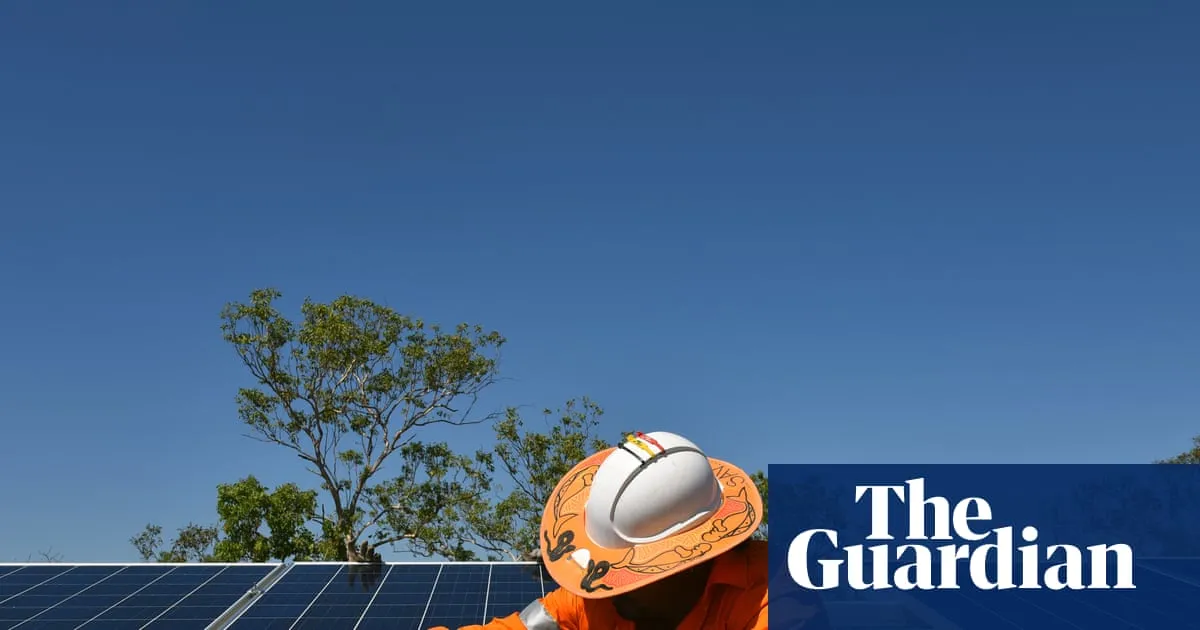
renewable energy and Batteries are helping bring down Power bills, the government says. Photograph: AAP View image in fullscreen renewable energy and Batteries are helping bring down Power bills, the government says. Photograph: AAP Power bills to fall by up to 10% from July as renewables and Batteries soar across Australia Australia now a top-three global player in Batteries, and renewable energy met nearly half of the nation’s power in 2025 Follow our Australia news live blog for latest updates Get our breaking news email, free app or daily news podcast energy bills for households and small businesses will fall by up to 10% from July across parts of the eastern states, as a new industry survey shows record levels of renewables and Batteries in the power grid. Households in New South Wales and south-east Queensland on standing electricity plans – known as the “default market offer” – can expect prices to fall between 3.4% and 10.7% compared to last year, according to the Australian Energy Regulator’s final offer for 2026-27. Some could save up to $155 per year. While, South Australian households on a flat rate could expect an increase of 1.4%. Prices would fall for small businesses across three states - some by up to 20.9% - with businesses in NSW saving up to $1303, up to $601 in south-east Queensland and up to $673 in SA. AER chair Clare Savage said the large entry of Batteries into the grid, along with solar and increased output from wind had reduced volatility, despite uncertainty created by conflict in the Middle East. “Batteries have been displacing more expensive gas and hydro in the evenings, and we’ve just seen flatter prices through the whole day. That’s really translated to lower forward electricity contract prices.” The final offer released on Tuesday included the “solar sharer”, an opt-in plan enabling customers with smart meters to access three free hours of electricity in the middle of the day. “The new solar sharer offer is an opportunity to make further savings if households can shift some of their electricity usage, such as washing machines, air conditioning, or electric vehicle charging, into the middle of the day,” Savage said. “We encourage consumers to speak to their retailer about how this new option works because for some households it could be a transformative way to reduce their electricity bills.” Victorian customers on standing offers could also expect a price fall, with bills expected to fall by 5% on average for households and 6% for businesses, according to prices released by the state’s Essential Services Commission. Most Australians were not on standing offers, but the prices provided an important safety net for consumers. About 987,000 households and 139,000 businesses, accessed default offers across the four states. Victoria’s Essential Services Commission chair Gerard Brody said lower electricity prices would be “welcome news” for Victorian households and small business owners who continue to face cost-of-living pressures.” “You can find a better deal by shopping around, but the default offer provides a simple, fair option to all households and small businesses.” The energy minister, Chris Bowen, said renewable energy and Batteries reducing pressure at peak times contributed to the fall in prices. “We know energy bills are still too high – because when coal breaks down, your bill goes up – but this news shows steady progress.” The news comes as the renewable industry’s annual snapshot found Australia is now a top-three global player in Batteries and renewable energy met nearly half of the nation’s power in 2025. But the Clean Energy Council warned that progress could stall as investment in new wind and solar plummeted. The report found renewable energy supplied 43% of Australia’s power throughout 2025, up from 39% in 2024. The year ended on a high, with clean energy generating more than 50% of power in the national grid in the final quarter. Australia ranked third in the world for utility-scale Batteries, behind only China and the United States – with 2GW of large-scale battery capacity connected to the grid, up 233% on the previous year. Yet despite these achievements, the CEC chief executive, Jackie Trad, said the energy transition was approaching a “critical juncture”. “The next five years matter most,” she said. “Our sector’s highest priority in 2026 must be to remove the barriers slowing investment in new large-scale wind and solar projects that will ultimately replace unreliable coal generators.” A 48% fall in new investment in onshore wind and solar signalled a likely slowdown. This was most evident for wind, with 0.9GW reaching financial close in 2025, compared with 2.2GW the previous year. According to the report, rising inflation, regulatory bottlenecks, slow delivery of transmission and delayed coal closures contributed to weakening investor confidence. Investment in battery storage remained strong. The uptake of home Batteries surged 260%, compared with 2024, helped by the federal government’s cheaper home Batteries program. More than 268,000 small-scale storage systems were added during 2025 - a number that has since grown to 400,000. Explore more on these topics Energy Australian politics Labor party news Share Reuse this content
SRCThe Guardian - World News
LANGEN
LEANCenter-Left
WORDS847
ENT12
TUE · 2026-05-26 · 00:16 GMTBRIEF NSR-2026-0526-79162
NSR-2026-0526-79162News Report·EN·Economic Impact
Power bills to fall by up to 10% from July as renewables and batteries soar across Australia
Energy bills for households and small businesses in parts of eastern Australia will decrease by up to 10% from July. This reduction is attributed to a significant increase in renewable energy and battery storage within the national power grid.
Australian Associated Press and Petra StockThe Guardian - World NewsFiled 2026-05-26 · 00:16 GMTLean · Center-LeftRead · 4 min
The Guardian - World NewsFIG 01
Reading time
4min
Word count
847words
Sources cited
2cited
Entities identified
12entities
Quality score
100%
§ 01
Briefing Summary
AI-generatedNEWSAR · AI
Energy bills for households and small businesses in parts of eastern Australia will decrease by up to 10% from July. This reduction is attributed to a significant increase in renewable energy and battery storage within the national power grid. Households in New South Wales and south-east Queensland on default electricity plans can expect savings of 3.4% to 10.7%, potentially saving up to $155 annually. Small businesses in these regions and South Australia will also see price drops, with some experiencing reductions of up to 20.9%. The Australian Energy Regulator noted that the influx of batteries has reduced price volatility. While renewable energy met nearly half of Australia's power in 2025 and the nation is a top-three global player in batteries, investment in new wind and solar projects has declined, raising concerns about the future pace of the energy transition.
Confidence 0.90Sources 2Claims 5Entities 12
§ 02
Article analysis
Model · rule-basedFraming
Economic Impact
Technology
Tone
Measured
AI-assessed
CalmNeutralAlarmist
Factuality
0.80 / 1.00
Factual
LowHigh
Sources cited
2
Limited
FewMany
§ 03
Key claims
5 extracted01
Batteries have been displacing more expensive gas and hydro in the evenings, leading to flatter prices.
quoteClare Savage (AER chair)
Confidence
0.95
02
Households in NSW and south-east Queensland on standing electricity plans can expect prices to fall between 3.4% and 10.7%.
statisticAustralian Energy Regulator
Confidence
0.90
03
Energy bills for households and small businesses will fall by up to 10% from July across parts of the eastern states.
statisticAustralian Energy Regulator
Confidence
0.90
04
Victorian customers on standing offers could expect a price fall, with bills expected to fall by 5% on average for households.
statisticGerard Brody (Victorian Essential Services Commission chair)
Confidence
0.85
05
Renewable energy met nearly half of the nation’s power in 2025.
statisticArticle
Confidence
0.70
§ 04
Full report
4 min read · 847 words§ 05
Entities
12 identifiedKey playerOppositionContextPositiveNeutralNegative
People1
Organizations1
Locations6
§ 06
Keywords & salience
9 termspower bills
1.00
renewable energy
1.00
batteries
0.90
electricity prices
0.80
australia
0.70
solar
0.60
default market offer
0.50
australian energy regulator
0.50
solar sharer
0.40
§ 07
Topic connections
Interactive graph Network visualization showing 51 related topics
View Full Graph Person Organization Location Event|Click node to navigate|Edge numbers = shared articles