The British security services were involved in formulating the controversial Legacy Act, which offered an amnesty to soldiers and paramilitiaries despite MI5’s role in many killings during the Northern Ireland Troubles, it can be revealed.The presence of policing and state agency figures among a secret policymaking group involved in devising the act – a fact established through an investigation by Belfast-based newsletter the Detail and shared with The Guardian – has angered victims’ groups already critical of the legislation.The 2023 act’s conditional immunity, which the current government removed after a vote in January, was opposed by all political parties in Northern Ireland, albeit sometimes for different reasons.Daniel Holder, from the Committee on the Administration of Justice (CAJ), a Belfast-based NGO, fought an eight-month battle to have documents relating to the legacy senior working group released after his freedom of information requests were initially rebuffed.Holder, who shared the documents marked “official secret” with the Detail, said: “It is only now that some detail of the group has emerged. The legacy investigations senior working group was set up behind closed doors to assist the development of what became Boris Johnson’s government’s notorious Legacy Act.“Despite the legal duties to ensure effective and independent investigations into legacy cases, which clearly include those involving the security forces, the group itself tasked with advising on how the policy should be developed heavily involves policing and security figures.”The revelations that security services were involved in the act’s formulation lend weight to long-held public concerns that the security and policing services were behind the Legacy Act and the Independent Commission for Reconciliation (ICRIR), the body it set up to investigate cases. The previous attempt to address legacy issues, the Historical Enquiries Team, was folded in 2014 after it was found that it had failed to properly investigate state killings.Holder said the act that emerged from the meetings “led to the shutting down on the 1 May 2024 of hundreds of cases under the then existing legacy mechanisms and their disastrous replacement with the ICRIR, which more than two years on is yet to complete a single case”.Members of the group, established in 2020, included the former Police Service of Northern Ireland (PSNI) chief constable George Hamilton, and Madeleine Alessandri, who was the UK deputy national security adviser until 2020, before being appointed permanent secretary for the Northern Ireland Office. Another attender, Chloe Squires, was the director of national security at the Home Office at the time of the meeting. The rest of the attenders worked for, or had links to, the state, chiefly its policing and security apparatus.Minutes taken from a meeting recorded Hamilton as saying: “Families will welcome information recovery. It is the small vocal minority that will present the legal challenges and we should be ready for that but they do not speak for the silent majority who just want to move on.”In response, Mark Thompson, of Relatives for Justice, said: “I wouldn’t describe the 1,100 bereaved relatives [reflecting the number of civil cases lodged by bereaved families when the Legacy Act was introduced] of murder victims including victims of torture who want answers as a ‘small and vocal minority’.”He added: “It is not lost on all these families that the very people who made these comments represent the very same state agencies that would be subject to robust independent investigations with full accountability if we were to have such a process.”Another released document presented a list of suggested talking points for the chair of the secret group. It underlined the government’s aim to conclude the investigations of the 3,500 deaths that occurred during the Troubles “within two years”, a timeframe it acknowledged as “ambitious”. It said: “A key component of the policy package is the intention to introduce a legal bar on further criminal investigations or prosecutions as a way of providing certainty to veterans and victims and ‘unlocking’ further information recovery opportunities.”The documents show that the legacy senior working group met on 19 June and 20 July 2020. The files indicated that there was a third meeting scheduled but no further information has been disclosed about it and a government source indicated that it did not occur.Holder said the “very existence of the group only seems to have been revealed incidentally when the then PSNI chief constable, Simon Byrne, to his credit, told a Westminster committee that the PSNI had declined to join the group in order to remain impartial”.A Northern Ireland Office spokesperson said: “This relates to a group that was established to discuss issues relating to the development of the previous government’s Legacy Act, which this government is repealing and replacing.”Hamilton said: “My sight of the minutes is almost six years after the event. In light of this, I cannot confirm that any of the comments attributed to me were accurately recorded …“My agreement to be part of the working group was to ensure the lessons of previous attempts at dealing with legacy investigations were understood and to ensure learnings were not lost in the drafting of any new proposals. Most importantly, I emphasised the importance of having victims and families at the centre of any investigation, review or information recovery process.”He also said that excerpts of what he said were selective and had been taken out of context.
SRCThe Guardian - World News
LANGEN
LEANCenter-Left
WORDS877
ENT12
TUE · 2026-05-26 · 05:00 GMTBRIEF NSR-2026-0526-79196
NSR-2026-0526-79196News Report·EN·Legal & Judicial
UK security services helped devise act that gave amnesty over Troubles killings
A secret policymaking group, including figures from British security services, policing, and state agencies, helped devise the UK's controversial Legacy Act. This act, intended to offer amnesty for Troubles killings, has angered victims' groups who argue it undermines independent investigations.
Cormac Kehoe and Haroon SiddiqueThe Guardian - World NewsFiled 2026-05-26 · 05:00 GMTLean · Center-LeftRead · 4 min
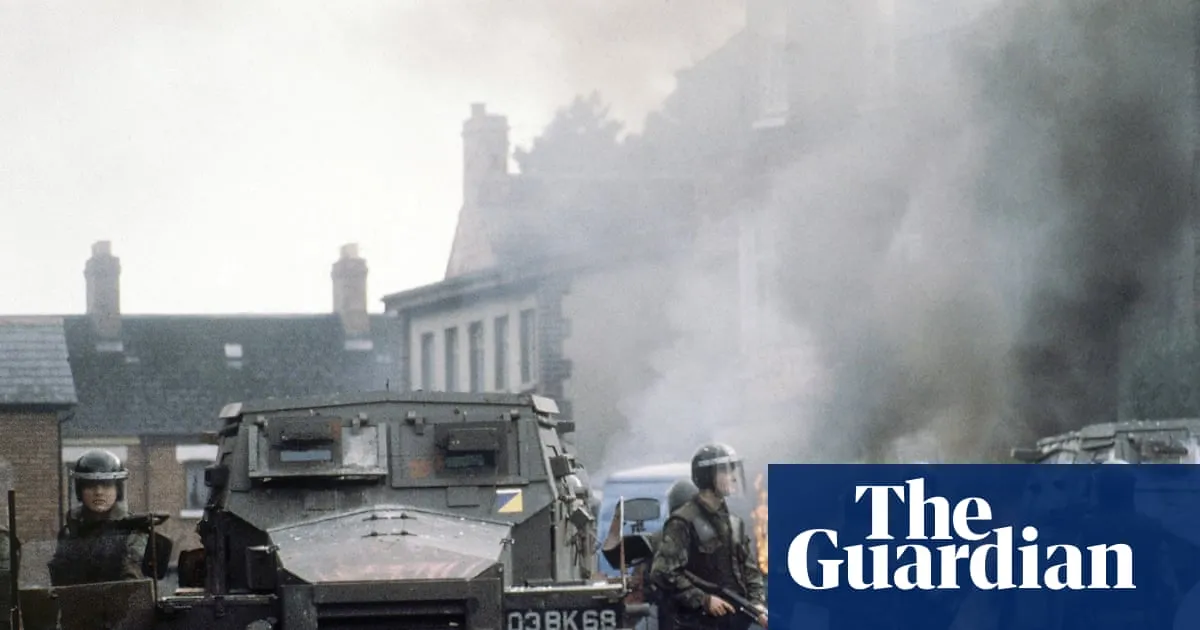
The Guardian - World NewsFIG 01
Reading time
4min
Word count
877words
Sources cited
3cited
Entities identified
12entities
Quality score
100%
§ 01
Briefing Summary
AI-generatedNEWSAR · AI
A secret policymaking group, including figures from British security services, policing, and state agencies, helped devise the UK's controversial Legacy Act. This act, intended to offer amnesty for Troubles killings, has angered victims' groups who argue it undermines independent investigations. Documents reveal the group, established in 2020, aimed to conclude investigations within two years and introduce a legal bar on prosecutions to provide certainty. The presence of security and policing figures in the group, tasked with advising on policy development, raises concerns about the impartiality of the act and the Independent Commission for Reconciliation it established. The current government is repealing and replacing the act.
Confidence 0.90Sources 3Claims 5Entities 12
§ 02
Article analysis
Model · rule-basedFraming
Legal & Judicial
Human Rights
Tone
Measured
AI-assessed
CalmNeutralAlarmist
Factuality
0.70 / 1.00
Factual
LowHigh
Sources cited
3
Well sourced
FewMany
§ 03
Key claims
5 extracted01
The Legacy Act offered an amnesty to soldiers and paramilitaries involved in Troubles killings.
factual
Confidence
1.00
02
Members of the legacy investigations senior working group included former PSNI chief constable George Hamilton and Madeleine Alessandri.
factual
Confidence
0.90
03
The Legacy Act led to the shutting down of hundreds of cases and their replacement with the ICRIR, which has yet to complete a single case.
factualDaniel Holder (CAJ)
Confidence
0.90
04
Victims' groups are angered by the revelations and the legislation.
factual
Confidence
0.90
05
UK security services were involved in formulating the controversial Legacy Act.
factualthe Detail and the Guardian
Confidence
0.90
§ 04
Full report
4 min read · 877 words§ 05
Entities
12 identifiedKey playerOppositionContextPositiveNeutralNegative
People4
Organizations6
§ 06
Keywords & salience
9 termslegacy act
1.00
troubles killings
0.90
security services
0.80
amnesty
0.70
northern ireland
0.60
policymaking group
0.50
victims' groups
0.50
independent commission for reconciliation
0.40
state killings
0.40
§ 07
Topic connections
Interactive graph No topic relationship data available yet. This graph will appear once topic relationships have been computed.