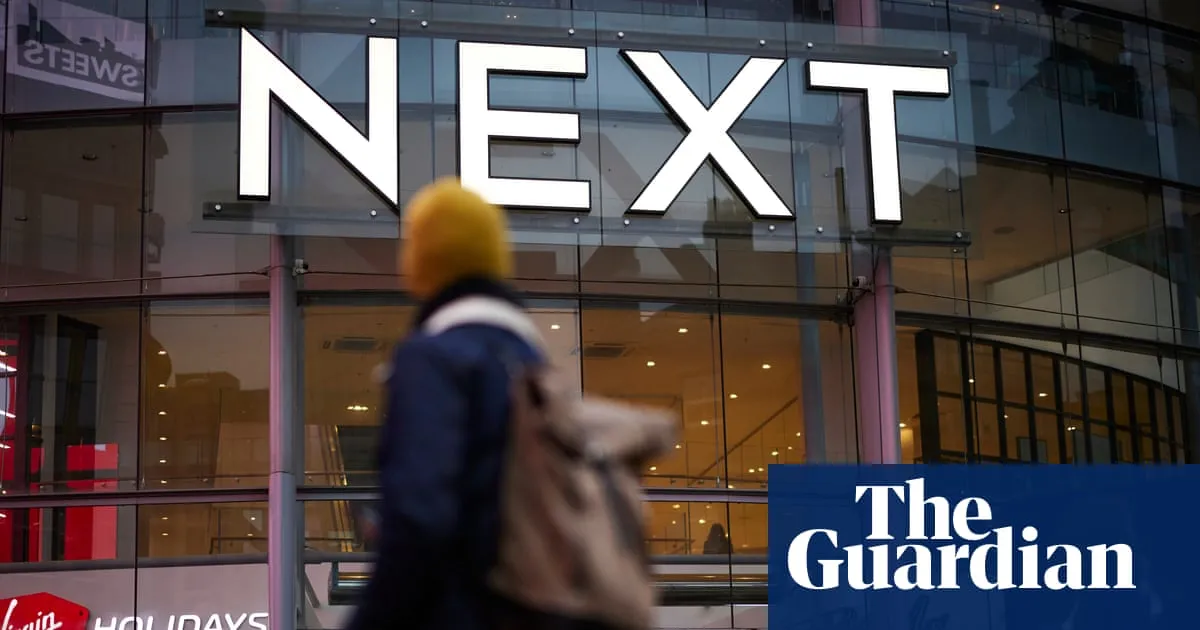
The boss of Next has sounded the alarm about a “dramatic fall” in the number of entry-level jobs in the UK that is driving up youth unemployment, saying the retailer now receives twice as many applicants for each role than two years ago.Lord Wolfson said the clothing and homeware chain, where he has been chief executive since 2001, typically received 10 applications for every job in its shops in 2024 but that number has now risen to 19.“That doubling of applicants for shop jobs is indicative of just how big the crisis is in youth unemployment at the moment,” he told the BBC.Wolfson’s comments came as a report commissioned by the government is expected to find that Labour has failed to tackle the soaring number of people not in education, employment or training (Neet) and must launch a “system reset” involving a fresh attempt to overhaul health and disability benefits.Alan Milburn, who is leading a review into why almost a million young people are Neet, said ministers had so far responded with a series of disjointed jobs programmes, rather than a cohesive strategy.Wolfson said a ban on zero-hours contracts coming in from Next year, which is included in the government’s Employment Rights Act, would make hiring more difficult.More than a million people in the UK are working on a zero-hours contract basis, in areas ranging from hospitality and warehouses to the NHS. Hundreds of thousands of them are on zero-hours contracts despite working for the same employer for years, according to the TUC.Technology is having a big impact on jobs, and entry-level roles are most vulnerable to the advent of artificial intelligence. Next is increasingly using automation and other technology, such as self-scanning lockers, for customers to return items instead of having staff on tills.Wolfson, who received a record pay package of more than £7m last year, called on the government to reverse the rise in national insurance contributions (NICs) employers have to pay, along with minimum wage rises.The Conservative peer could be paid up to £9.27m this year after Next announced plans to increase his basic salary and bonuses. Earlier this month, the retailer increased its full-year profit expectations to £1.2bn, with sales up 6.2% in the first quarter.A Treasury spokesperson said: “Cutting wages for the lowest paid during a time of global uncertainty is not the answer. Increasing the national minimum wage boosts pay for over 200,000 young workers, and employer NICs are lower when hiring under‑21s.”Traditionally, young people often get their first week experience at a shop stacking shelves or serving drink and food in a restaurant, cafe or pub. Wolfson said, because of the cost increases, Next had fewer staff in individual shops, while its online business was thriving.The Employment Rights Act will require employers to offer guaranteed hours to casual workers. Wolfson said this would make it “much harder” for Next to offer more hours for its staff.While he is in favour of eliminating zero-hours contracts in most sectors, he said the new rules were tricky for retail, “because the risk is you then have to contract for those hours forever”.However, the TUC said the right to a regular-hours contract “is set to be based on a reference period over several months which will even out peaks and troughs”, and would not impact holiday jobs.Alice Martin, the head of research at the Work Foundation at Lancaster University, said: “Young people are entering one of the toughest labour markets in years, facing intense competition for a shrinking number of entry-level jobs.“Retail and other sectors are changing rapidly, with more online sales and fewer staff needed on the shop floor. That has contributed to a sharp fall in vacancies, leaving many young people facing repeated rejection as they try to enter work.“But a difficult labour market is no excuse for undermining pay or job security. The ban on exploitative zero-hour contracts is long overdue. One in five workers in the UK is in severely insecure work, without predictable pay or basic protections. These reforms have not yet come into force, so blaming current hiring trends on them is misplaced.”Wolfson suggested that ultimately the best way to improve the jobs market was through economic growth.“Youth unemployment is really a symptom of wider problems with employment in the economy, and of course, if you’ve got fewer jobs, the people who suffer most are the people with the least experience and that is the youngest,” he said.
SRCThe Guardian - World News
LANGEN
LEANCenter-Left
WORDS737
ENT12
TUE · 2026-05-26 · 08:23 GMTBRIEF NSR-2026-0526-79259
NSR-2026-0526-79259News Report·EN·Economic Impact
Next boss warns over ‘dramatic fall’ in UK entry-level jobs
Next CEO Lord Wolfson has warned of a "dramatic fall" in UK entry-level jobs, evidenced by a doubling of applicants for each role at his company in two years. This trend is contributing to a youth unemployment crisis, according to Wolfson.
Julia KolleweThe Guardian - World NewsFiled 2026-05-26 · 08:23 GMTLean · Center-LeftRead · 3 min
The Guardian - World NewsFIG 01
Reading time
3min
Word count
737words
Sources cited
4cited
Entities identified
12entities
Quality score
100%
§ 01
Briefing Summary
AI-generatedNEWSAR · AI
Next CEO Lord Wolfson has warned of a "dramatic fall" in UK entry-level jobs, evidenced by a doubling of applicants for each role at his company in two years. This trend is contributing to a youth unemployment crisis, according to Wolfson. His comments coincide with a report expected to criticize the government's failure to address youth unemployment. Wolfson also cited the upcoming ban on zero-hours contracts and the impact of technology on entry-level positions as contributing factors. He suggested reversing national insurance contribution increases and minimum wage rises, while the Treasury defended minimum wage hikes for young workers. Experts note intense competition for fewer jobs, with retail and other sectors transforming due to online sales.
Confidence 0.90Sources 4Claims 5Entities 12
§ 02
Article analysis
Model · rule-basedFraming
Economic Impact
Social Justice
Tone
Mixed Tone
AI-assessed
CalmNeutralAlarmist
Factuality
0.60 / 1.00
Mixed
LowHigh
Sources cited
4
Well sourced
FewMany
§ 03
Key claims
5 extracted01
Employer National Insurance Contributions (NICs) are lower when hiring under-21s.
factualTreasury spokesperson
Confidence
1.00
02
Next is increasingly using automation and technology, such as self-scanning lockers, for customer returns.
factualArticle
Confidence
1.00
03
The number of applicants for entry-level jobs at Next has doubled in two years, from 10 to 19 per role.
statisticLord Wolfson (Next CEO)
Confidence
1.00
04
A government-commissioned report is expected to find Labour has failed to tackle soaring NEET numbers.
quoteAlan Milburn (report leader)
Confidence
0.90
05
The ban on zero-hours contracts will make hiring more difficult for retailers like Next.
predictionLord Wolfson (Next CEO)
Confidence
0.80
§ 04
Full report
3 min read · 737 words§ 05
Entities
12 identifiedKey playerOppositionContextPositiveNeutralNegative
Organizations5
Locations1
§ 06
Keywords & salience
10 termsentry-level jobs
1.00
youth unemployment
1.00
neet
0.90
zero-hours contracts
0.80
artificial intelligence
0.70
automation
0.60
minimum wage
0.50
national insurance contributions
0.50
next
0.40
lord wolfson
0.40
§ 07
Topic connections
Interactive graph No topic relationship data available yet. This graph will appear once topic relationships have been computed.