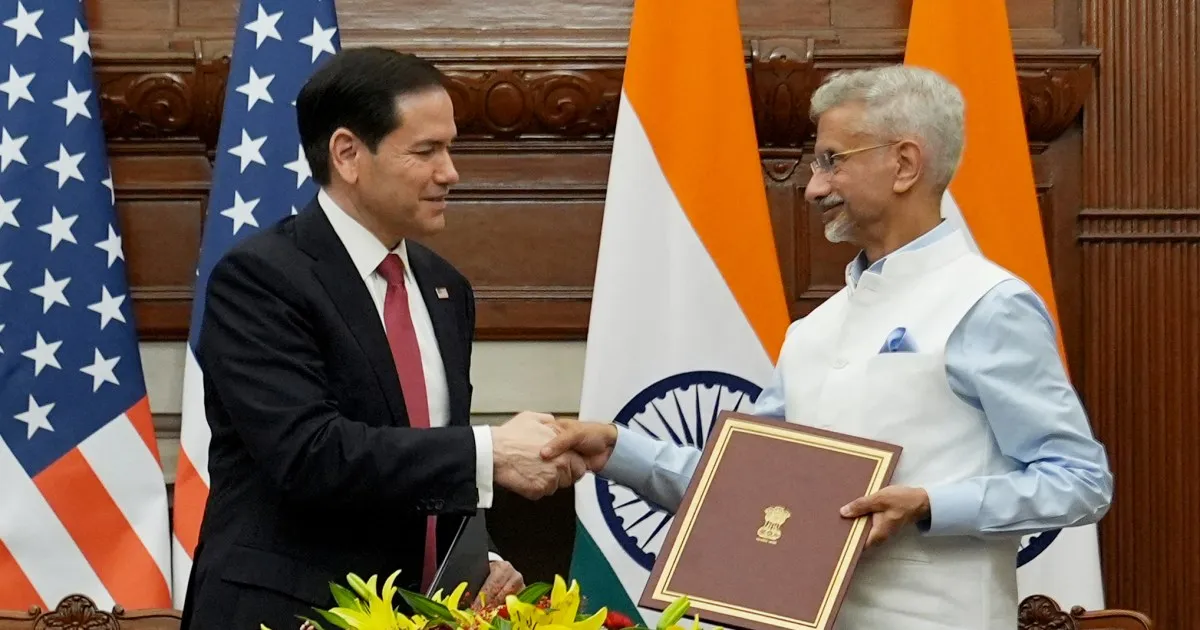
EXPLAINERThe agreement is latest US has signed as it seeks to diversify its Rare Earths supply chain.Published On 26 May 2026India and the United States have signed a framework agreement to secure supplies of Critical Minerals and Rare Earths, including their mining and processing, according to the Indian Ministry of External Affairs and the US embassy in India.Tuesday’s deal was finalised between Indian External Affairs Minister Subrahmanyam Jaishankar and US Secretary of State Marco Rubio in New Delhi during Rubio’s four-day trip to India.Rubio spent a few days in India before a meeting of foreign ministers from the informal Quad security forum – comprising the US, Japan, Australia and India – in New Delhi on Tuesday, the final day of his trip. The Indian foreign ministry also on Tuesday separately announced a Critical Minerals framework among the Quad countries.Here is more about the frameworks announced as well as more about India’s Critical Minerals stockpile.What are Critical Minerals, and why are they significant?Critical Minerals are nonfuel minerals used to manufacture batteries, clocks, wiring, military hardware, semiconductors and other technological products. The US describes them as “essential to the economic or national security of the US” and having “a supply chain vulnerable to disruption”.Nickel, cobalt, lithium, aluminium and zinc are among the best known Critical Minerals. For 12 Critical Minerals, the US relies entirely on imports. For 29 additional Critical Minerals, the US imports at least half of what it needs.Critical Minerals include 17 rare earth elements – 15 lanthanides (metallic elements) on the periodic table, scandium and yttrium. China has deposits of 12 of these. Rare earth metals have special magnetic properties and are necessary for the production of permanent magnets, used for industrial automation, electric vehicle motors, renewable energy generators, electronics and many medical devices. Rare Earths are also used in key components of hardware that support semiconductors and artificial intelligence technologies.The processing costs for Rare Earths are high, and mining them involves heavy use of chemicals that generate toxic waste.Currently, China controls most of the world’s supply of rare earth minerals. China itself is home to 60 percent of these minerals and processes 90 percent of the world’s supply.The US and other countries rely heavily on China for these minerals, and Washington, especially under President Donald Trump, has pushed to diversify US sourcing of these minerals to reduce reliance on China.What is the US-India Critical Minerals framework?The Indian foreign ministry said the framework seeks to deepen New Delhi and Washington’s cooperation across the Critical Minerals and Rare Earths supply chain, including mining, processing, recycling and related investments.An Indian statement referred to a Critical Minerals conference in Washington, DC, in February that Jaishankar attended. In the same month, India joined the US‑led Pax Silica initiative on secure semiconductor and AI supply chains.The US embassy also said a bilateral deal was reached on Tuesday. “Through this framework, the United States and India will engage in international efforts to protect sensitive supply chains from coercive market practices and reduce our collective vulnerability to single-source monopolies,” an embassy statement said.The statements do not expand on specific terms of the framework deal or how the cooperation would take place.Which Critical Minerals does India have?In July 2023, the Indian government released a list of 30 minerals that it described as critical: antimony, beryllium, bismuth, cobalt, copper, gallium, germanium, graphite, hafnium, indium, lithium, molybdenum, niobium, nickel, platinum group elements, phosphorous, potash, rare earth elements, rhenium, silicon, strontium, tantalum, tellurium, tin, titanium, tungsten, vanadium, zirconium, selenium and cadmium.According to government sources, India has 13.15 million tonnes of monazite, a phosphate mineral that contains rare earth oxides, one of the main natural sources of Rare Earths. The Indian government estimated that the country’s monazite contains 7.23 million tonnes of rare earth oxides (REOs). By comparison, a US Geological Survey report estimated that China has an estimated 44 million tonnes of REOs in its reserves, almost half of the world’s known reserves.The US International Trade Administration (ITA) said in a report this year that India currently produces only four Critical Minerals: copper, graphite, phosphorous and titanium. This is due to limited exploration and lack of proper infrastructure and processing technology, the ITA said.In India’s national budget for the financial year 2026-2027, which began on April 1, the government introduced a new policy measure to create “rare earth corridors” in the states of Odisha, Kerala, Andhra Pradesh and Tamil Nadu. These would be hubs for mining and processing rare earth minerals, doing research and manufacturing high-performance rare earth magnets used in electric vehicles, wind turbines and other advanced technologies.What is the Quad Critical Minerals initiative?A multilateral document released by the Indian foreign ministry detailed a framework expanding on key areas for cooperation among the Quad countries on Critical Minerals supply chains.The document said Quad governments and private companies intend to mobilise up to $20bn for the initiative, using a mix of loans, guarantees, subsidies and long-term purchase agreements. The countries aim to channel this funding into mining, processing and recycling projects to make their Critical Minerals supply chains more resilient and less dependent on a few suppliers.The Quad countries have also agreed to share information on good practices and technical approaches for permitting, licensing and other regulatory processes.They also agreed to cooperate on recycling and recovery of Critical Minerals, including during processing, to strengthen supply chains and promote the recycling of Critical Minerals among Quad partners and “like‑minded” countries.Which other countries has the US signed Critical Minerals deals with?In December, the US announced a $1.25bn investment in Critical Minerals mining at Reko Diq in Pakistan’s Balochistan province.During the Critical Minerals meeting that the US hosted in February, it signed 11 Critical Minerals frameworks with Argentina, the Cook Islands, Ecuador, Guinea, Morocco, Paraguay, Peru, the Philippines, the United Arab Emirates, the United Kingdom and Uzbekistan, the State Department said.In April, the US announced up to $50m in equity investment to back the Phalaborwa Rare Earths Project in South Africa.
SRCAl Jazeera
LANGEN
OutletState media · Qatar
WORDS988
ENT12
TUE · 2026-05-26 · 14:36 GMTBRIEF NSR-2026-0526-79352
NSR-2026-0526-79352News Report·EN·Diplomatic
India, US strike critical minerals deal: What’s in it, why does it matter?
India and the United States have signed a framework agreement to enhance cooperation in the mining, processing, recycling, and investment of critical minerals and rare earths. This deal, finalized on May 26, 2026, between Indian External Affairs Minister S.
Sarah ShamimAl JazeeraFiled 2026-05-26 · 14:36 GMTOutlet · State media · QatarRead · 4 min
Al JazeeraFIG 01
Reading time
4min
Word count
988words
Sources cited
3cited
Entities identified
12entities
NEWSAR · AI
India and the United States have signed a framework agreement to enhance cooperation in the mining, processing, recycling, and investment of critical minerals and rare earths. This deal, finalized on May 26, 2026, between Indian External Affairs Minister S. Jaishankar and US Secretary of State Marco Rubio in New Delhi, is part of the US's strategy to diversify its supply chain for these essential materials. Critical minerals are vital for technologies like semiconductors, batteries, and military hardware, with China currently dominating global supply. India possesses significant reserves of monazite, a source of rare earths, but currently produces only a few critical minerals due to infrastructure and processing limitations. The agreement aims to reduce reliance on single-source monopolies and protect sensitive supply chains.
Confidence 0.90Sources 3Claims 5Entities 12
Framing
Diplomatic
Technology
Tone
Measured
AI-assessed
CalmNeutralAlarmist
Factuality
0.90 / 1.00
Factual
LowHigh
Sources cited
3
Well sourced
FewMany
01
The framework seeks to deepen New Delhi and Washington’s cooperation across the critical minerals and rare earths supply chain, including mining, processing, recycling and related investments.
factualIndian foreign ministry
Confidence
1.00
02
The US relies entirely on imports for 12 critical minerals and at least half of its needs for 29 additional critical minerals.
factualUS
Confidence
1.00
03
Critical minerals are nonfuel minerals used to manufacture batteries, clocks, wiring, military hardware, semiconductors and other technological products.
factualUS
Confidence
1.00
04
India and the United States have signed a framework agreement to secure supplies of critical minerals and rare earths, including their mining and processing.
factualIndian Ministry of External Affairs and the US embassy in India
Confidence
1.00
05
China controls most of the world’s supply of rare earth minerals, processing 90 percent of the world’s supply.
factualarticle
Confidence
0.90
§ 04
Full report
4 min read · 988 wordsKey playerOppositionContextPositiveNeutralNegative
People3
Organizations1
Locations4
rare earths
1.00
critical minerals
1.00
supply chain
0.90
india-us deal
0.80
diversification
0.70
semiconductors
0.60
mining and processing
0.50
quad security forum
0.50
china
0.40
economic security
0.40
§ 07
Connections
Who appears together in the newsIn this articleWider coverageLine weight = articles in common
Laying out network…
Strongest ties articles in common
- 15,001
- 4,854
- 2,429
- 1,062
- 820
- 727
Recurring context not named in this article
- LIranlinks 11
- LJapanlinks 11
- LWashingtonlinks 10
- PXi Jinpinglinks 10
- LRussialinks 10
- LAustralialinks 10
- OEuropean Unionlinks 10
- LBeijinglinks 10