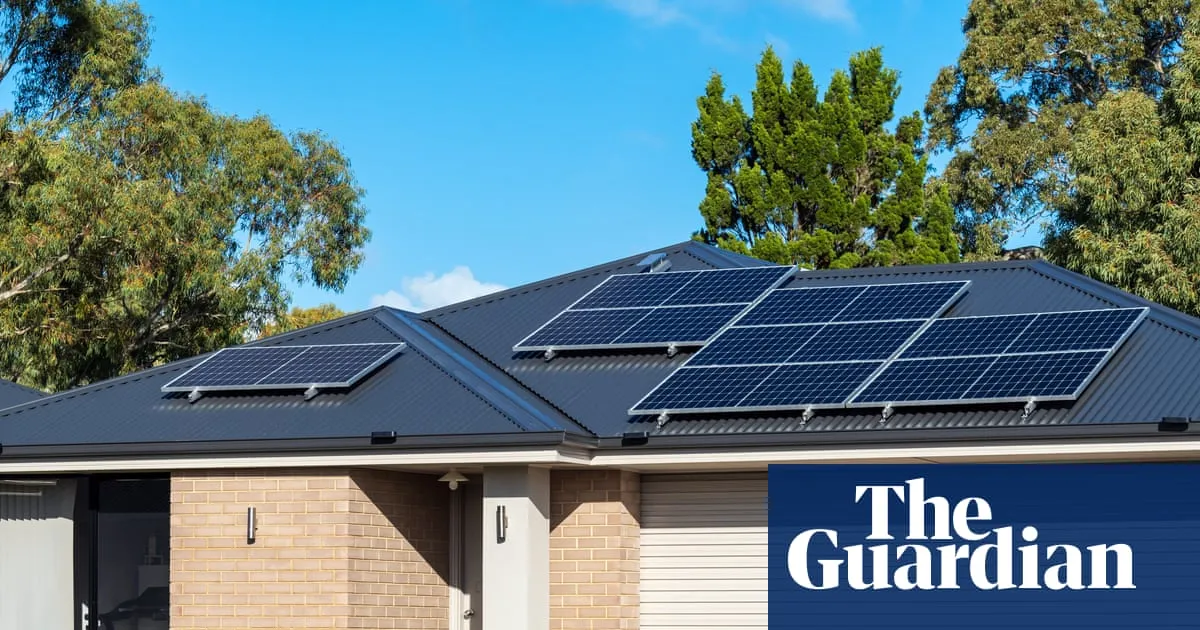
A combination of rooftop solar, insulation and efficient appliances can halve energy bills in rental homes, experts say. Photograph: moisseyev/Getty Images/iStockphoto View image in fullscreen A combination of rooftop solar, insulation and efficient appliances can halve energy bills in rental homes, experts say. Photograph: moisseyev/Getty Images/iStockphoto Renters could save $20bn on bills in a decade from rooftop solar and appliance upgrades – if landlords act Owners’ lack of motivation due to ‘split incentive’ is main reason rental properties are missing out on energy upgrades, research finds Get our breaking news email, free app or daily news podcast Renters make up nearly a third of Australian households, yet many are missing out on energy upgrades – such as insulation, appliances and rooftop solar – that could slash their power bills and improve home comfort. The problem, according to the Institute for Energy Economics and Financial Analysis (IEEFA), is landlords’ lack of motivation. “The responsibility to do a lot of these household energy upgrades – to install insulation, to change out appliances like heaters and hot water systems – rests with the landlord,” the energy finance analyst Jay Gordon said. “But because they don’t get the energy bill savings, there’s essentially no financial motivation for them to do it.” This “split incentive” was the root cause behind the lower rates of insulation in rental properties, according to the IEEFA analysis. Separately, research from Australia" class="entity-link entity-organization" data-entity-id="134513" data-entity-type="organization">Energy Consumers Australia this week found the split incentive explained why 44% of owner-occupiers had solar compared with 11% of renters. IEEFA modelled a range of energy efficiency measures across thousands of scenarios, and different types of households in every state and territory. Gordon said that in the vast majority of cases a combination of efficiency upgrades, efficient appliances and rooftop solar halved energy bills, relative to a poorly performing home. Collectively, the upgrades could save renters $20bn within a decade, and $107bn by 2050 – outweighing the capital costs. But regulation was needed to solve the split-incentive problem, Gordon said. Victoria has introduced minimum energy efficiency standards for rental properties to take effect from March next year. The IEEFA report recommended a coordinated approach across all states and territories, including a standard requirement that gas or inefficient electric appliances be replaced with efficient electric alternatives when they broke down. For non-appliance improvements – such as rooftop solar or home batteries – standards could provide landlords with flexibility to choose from a variety of upgrades including thermal efficiency improvements, rooftop solar and batteries. Gordon added that future reforms could make eligibility for federal tax incentives, such as negative gearing, conditional on properties meeting minimum standards. The independent energy consultant Tim Forcey said there were also steps tenants could take without involving their landlords. Forcey, the author of My Efficient Electric Home Handbook, said in homes that already had reverse cycle air conditioning, people could start saving money immediately by using their split systems for heating instead of gas. Switching out shower heads, draft-proofing and closing wall vents were all reversible steps that would also reduce energy costs, he said. “If you’ve got a shower head that’s using two or three times as much water as it needs to, that can be a big saving.” Covering windows with bubble wrap worked a bit like double-glazing, he said, making things warmer while still letting light through. In summer, a perforated foil product could be fitted inside windows and skylights to keep homes cooler by reflecting the sun’s heat. The benefits of upgrading rental properties would extend well beyond households, Gordon said, with the energy savings easing the strain on power networks during peak demand periods. “In most regions, the upgrades delivered a net reduction in average-day peak electricity demand in summer and winter, even if some renters increased their electricity consumption following the upgrades,” he said. “In regions like Victoria where gas appliances are widespread, upgrading rental properties would also deliver material gas savings, helping to free up gas supply for critical industries.” Explore more on these topics Energy Australian climate and environment in focus Solar power Renting Housing news Share Reuse this content
SRCThe Guardian - World News
LANGEN
LEANCenter-Left
WORDS683
ENT10
TUE · 2026-05-26 · 14:01 GMTBRIEF NSR-2026-0526-79357
NSR-2026-0526-79357News Report·EN·Economic Impact
Renters could save $20bn on bills in a decade from rooftop solar and appliance upgrades – if landlords act
Renters in Australia could save $20 billion on energy bills over a decade through upgrades like rooftop solar and efficient appliances, according to research by the Institute for Energy Economics and Financial Analysis (IEEFA). The primary barrier is a "split incentive," where landlords, who pay for upgrades, do not benefit from the energy bill savings, leading to a lack of motivation.
Petra StockThe Guardian - World NewsFiled 2026-05-26 · 14:01 GMTLean · Center-LeftRead · 3 min
The Guardian - World NewsFIG 01
Reading time
3min
Word count
683words
Sources cited
2cited
Entities identified
10entities
Quality score
100%
§ 01
Briefing Summary
AI-generatedNEWSAR · AI
Renters in Australia could save $20 billion on energy bills over a decade through upgrades like rooftop solar and efficient appliances, according to research by the Institute for Energy Economics and Financial Analysis (IEEFA). The primary barrier is a "split incentive," where landlords, who pay for upgrades, do not benefit from the energy bill savings, leading to a lack of motivation. This results in rental properties having lower rates of energy efficiency improvements compared to owner-occupied homes. IEEFA recommends regulatory intervention, such as minimum energy efficiency standards for rentals, to address this issue. While some tenants can implement minor, reversible cost-saving measures independently, systemic change requires landlord action and potentially government incentives or mandates.
Confidence 0.90Sources 2Claims 5Entities 10
§ 02
Article analysis
Model · rule-basedFraming
Economic Impact
Social Justice
Tone
Measured
AI-assessed
CalmNeutralAlarmist
Factuality
0.70 / 1.00
Factual
LowHigh
Sources cited
2
Limited
FewMany
§ 03
Key claims
5 extracted01
44% of owner-occupiers have solar compared with 11% of renters.
statisticEnergy Consumers Australia
Confidence
0.95
02
The "split incentive" between landlords and renters is the main reason rental properties are missing out on energy upgrades.
factualIEEFA
Confidence
0.90
03
A combination of rooftop solar, insulation, and efficient appliances can halve energy bills in rental homes.
factualexperts
Confidence
0.90
04
Renters could save $20bn on bills in a decade from rooftop solar and appliance upgrades, if landlords act.
statisticIEEFA
Confidence
0.85
05
Regulation is needed to solve the split-incentive problem for energy upgrades in rental properties.
factualJay Gordon
Confidence
0.80
§ 04
Full report
3 min read · 683 words§ 05
Entities
10 identifiedKey playerOppositionContextPositiveNeutralNegative
People1
Organizations2
§ 06
Keywords & salience
10 termsrental properties
1.00
energy bills
1.00
energy upgrades
0.90
split incentive
0.90
rooftop solar
0.80
efficient appliances
0.80
insulation
0.70
landlords
0.60
renters
0.60
energy efficiency
0.50
§ 07
Topic connections
Interactive graph Network visualization showing 8 related topics
View Full Graph Person Organization Location Event|Click node to navigate|Edge numbers = shared articles