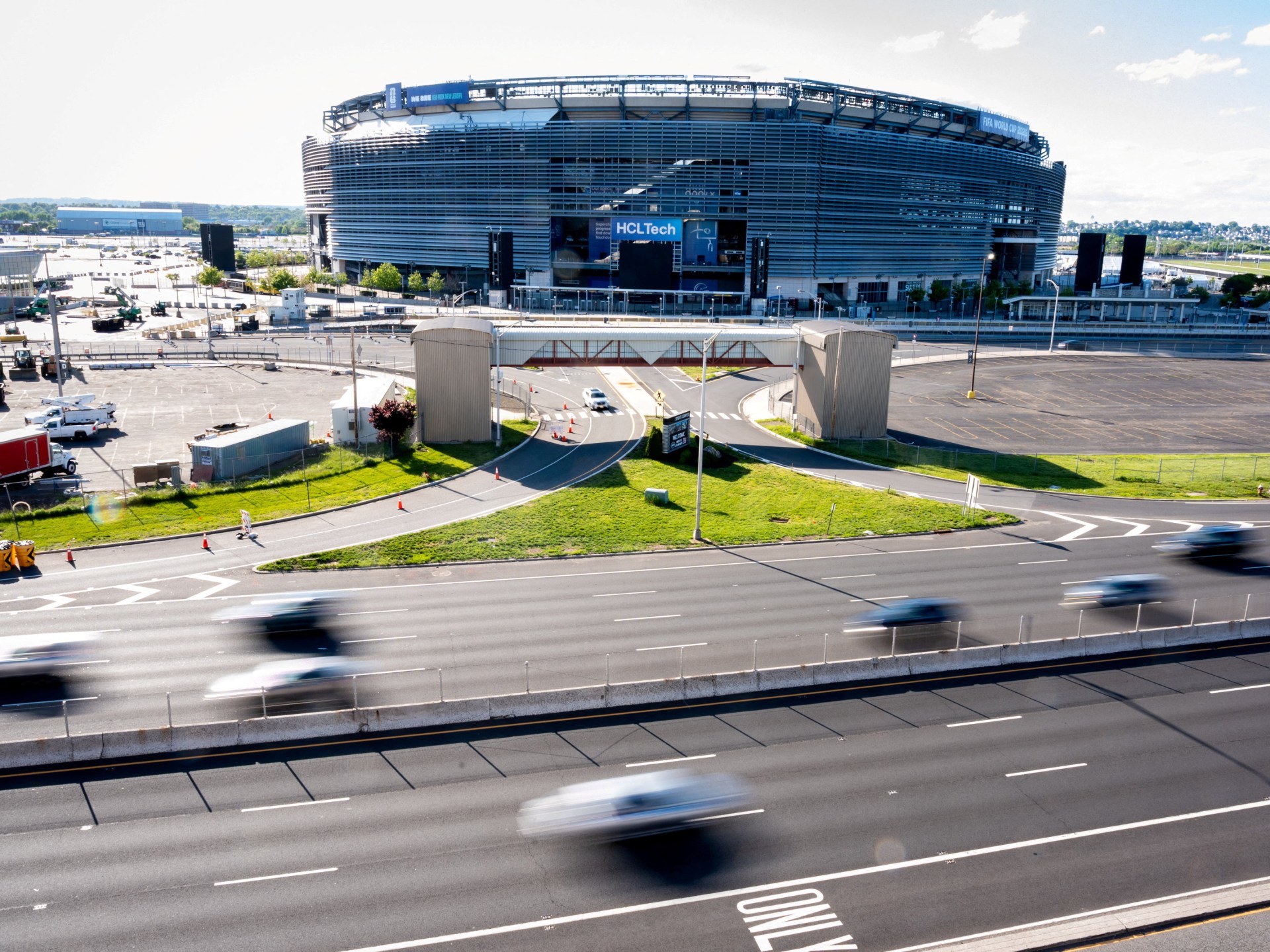
As ticket prices soar to record levels, fans come to terms with overall cost of following their teams at World Cup.MetLife Stadium in New Jersey has among the highest associated costs for attending World Cup games [Angelina Katsanis/Reuters]Published On 26 May 2026Dubbed the “Sommermarchen,” or “Summer Fairy Tale,” the 2006 World Cup in Germany was a widely praised showcase for a modern, unified nation that was welcoming to fans from around the globe.Part of that success was the “KombiTicket”, which gave fans free access to local public transportation on match days.Recommended Stories list of 4 itemslist 1 of 4US Supreme court rejects NFL attempt to move racism case to arbitrationlist 2 of 4Medvedev shocked by wildcard Walton in French Open first roundlist 3 of 4NBA legend Jordan pays tribute to Guardiola at Man City manager’s sendofflist 4 of 4Inter Miami says Messi dealing with ‘overload’, fatigue in left hamstringend of listSince then, World Cup host countries have invested heavily in getting fans to and from matches, especially in Russia in 2018, where even long-distance trains between host cities were free, and Qatar in 2022, where free metro access helped turn stadium-hopping into part of the tournament experience.Then came the United States.Already reeling from astronomical ticket prices, expensive flights and exorbitant hotel costs, fans have been outraged to discover that getting to some stadiums via rail will come with another hefty bill: $98 round-trip train fares in New Jersey and $80 in Massachusetts – trips that normally cost NFL fans $12.90 and $20, respectively.Officials insist they are not trying to rip off fans, but are instead just trying to cover the costs of security and expanded train service without being a drain on taxpayers. Yet fans see it as just another way that tournament organisers are burdening fans who are already paying huge sums to visit the US, a huge, car-centric country where public transit has long been an afterthought in many locales.Unlike past hosts, some state and local officials have been less willing to swallow the costs, arguing they should be covered by FIFA, the international football body that stands to rake in billions of dollars from the event.“Planning for this World Cup has been a nightmare from start to finish,” said Scotland-born Rory Phillips-Hunter, a 37-year-old hospitality worker who lives in northern England. “I think it’s the most inaccessible one there’s ever been.”Mystified by the lack of affordable options to travel 25 miles (40 kilometres) from Providence, Rhode Island, to Foxborough, Massachusetts, where Scotland’s first two matches will take place, Phillips-Hunter and some fellow Tartan Army members decided to figure it out themselves.At about $50 per person, the Scots have booked about 20 school buses to take nearly 1,000 members of the plaid-clad fan group to each match. They are even getting a police escort, all for just more than half the cost of the $95 bus fare that local officials are offering – a combined savings of more than $85,000.The $95 bus fare was never going to break the bank, Phillips-Hunter knows, but he and so many other Scots are already paying huge sums to see their men’s team compete in the World Cup for the first time in 28 years. Phillips-Hunter estimates it will take him two years to pay off the credit card debt he’s taking on for his six-day trip to the US, including the $1,350 he spent on a ticket for the Scotland-Morocco match.Beyond anything, Phillips-Hunter is frustrated that a group of Scots from across the ocean were able to organise transportation for so much cheaper than what local officials offered.“When I look at that difference in cost, that’s just profits you’re taking from us,” he said.Not every host city is approaching transportation the same way. Atlanta, Houston and Seattle have stadiums linked directly to their rail systems, and regular fares will apply. Miami-Dade County officials recently announced they will offer free shuttles to get fans to and from Hard Rock Stadium in Miami Gardens, about 15 miles (24 kilometres) from downtown Miami. Philadelphia, meanwhile, is offering free rides on the way back from the stadium, thanks to funding from FIFA sponsor Airbnb. And Kansas City, Missouri, is running $15 shuttles.The relatively high transit costs for the matches at MetLife Stadium in New Jersey and Gillette Stadium in Massachusetts are partly because they are in the suburbs, and many fans drive to the NFL games they typically host. But parking will be extremely limited during the World Cup due to expanded security perimeters, broadcast needs and lots being used as VIP areas, forcing far more fans to use public transit.David Gogishvili is a senior researcher at Switzerland’s University of Lausanne and studies how sport organisers put together big events like the World Cup.He said it is standard practice for organisers like FIFA to pass much of the cost on to host countries. The difference this time is that the US has “stronger and more independent” state and local officials who have been less willing to take on the cost and “bow to the wills of FIFA”.“These costs should be borne by the organisation that is earning money out of these events, which is FIFA. It should not always be the host cities that take on all the expenses,” Gogishvili said, noting the football body’s expected $13bn revenue from 2023-26.New Jersey Governor Mikie Sherrill, a Democrat, has called on FIFA to cover the transportation costs to matches.But FIFA pushed back, arguing that no other global event has been asked to absorb such costs and that its initial agreements with host cities called for free transportation for fans to all matches. The agreements were later changed to allow cities to provide transit “at cost”.The reason transit has been so accessible at recent World Cups is that host nations like Russia and Qatar have viewed the tournament as a “public relations exercise,” and subsidised transit accordingly, Gogishvili said.Officials’ anxiety over transit costs also comes amid growing concern that the promised World Cup economic boon will not materialise, with hotel room bookings not meeting expectations in most of the 11 US cities hosting the tournament. A 2022 study co-authored by Gogishvili found that nearly every World Cup from 1966 through 2018 ran at a financial deficit.Yonah Freemark, a researcher at the Washington-based Urban Institute think tank who specialises in transit issues, said World Cup fans from Europe and Asia will encounter less-advanced but costlier transit systems than they are used to back home.Pointing to the transit pricing tied to matches in New Jersey and Massachusetts, Freemark said officials “are trying to get away with murder”. Wait times and transit access, he added, will likely fall well short of what many foreign visitors are used to.Ynara Correa da Costa, a Brazilian systems analyst who lives outside Sao Paulo, will be attending her seventh World Cup.Like many, she was stunned when officials initially proposed charging as much as $150 for train fares from New York City to MetLife Stadium, where Brazil plays its opener against Morocco. The widespread shock led New Jersey officials to lower the price to $98 after securing additional funding.But even the lowered price for a short train ride “is just not acceptable”, Costa said.Costa was heartened when the local host committee said it had secured more buses to get to the stadium and slashed the price from $80 to $20. But there are only enough bus seats for 18,000 fans to get to the stadium, which holds about 82,500.That seems far more manageable to Costa. Earlier, she wondered whether she and other cost-conscious fans might have to walk to MetLife Stadium, but that is not possible.“We’ll go to the match, that I know,” Costa said. “But how? Let’s see.”
SRCAl Jazeera
LANGEN
LEANCenter
WORDS1 283
ENT12
TUE · 2026-05-26 · 16:02 GMTBRIEF NSR-2026-0526-79387
NSR-2026-0526-79387News Report·EN·Human Interest
Scotland fans book 20 school buses for games at ‘inaccessible’ US World Cup
Scotland fans are chartering 20 school buses to transport nearly 1,000 supporters to World Cup games in the US due to exorbitant public transportation costs. Unlike previous World Cups where public transit was often free or subsidized, the 2026 US tournament features significantly higher train fares, with officials citing security and service costs.
By The Associated PressAl JazeeraFiled 2026-05-26 · 16:02 GMTLean · CenterRead · 6 min
Al JazeeraFIG 01
Reading time
6min
Word count
1 283words
Sources cited
2cited
Entities identified
12entities
Quality score
100%
§ 01
Briefing Summary
AI-generatedNEWSAR · AI
Scotland fans are chartering 20 school buses to transport nearly 1,000 supporters to World Cup games in the US due to exorbitant public transportation costs. Unlike previous World Cups where public transit was often free or subsidized, the 2026 US tournament features significantly higher train fares, with officials citing security and service costs. Fans, already facing record ticket prices, expensive flights, and hotels, view these transit fees as another financial burden. Scotland fans organized their own bus transport, costing about $50 per person, significantly less than the $95 offered by local officials. While some US host cities offer more affordable transit options, others, particularly those near suburban stadiums like MetLife and Gillette, present significant challenges for fans.
Confidence 0.90Sources 2Claims 5Entities 12
§ 02
Article analysis
Model · rule-basedFraming
Human Interest
Economic Impact
Tone
Mixed Tone
AI-assessed
CalmNeutralAlarmist
Factuality
0.60 / 1.00
Mixed
LowHigh
Sources cited
2
Limited
FewMany
§ 03
Key claims
5 extracted01
The 2006 World Cup in Germany offered a 'KombiTicket' for free local public transportation on match days.
factual
Confidence
0.95
02
World Cup train fares in New Jersey are $98 round-trip, and $80 in Massachusetts, compared to normal NFL fares of $12.90 and $20.
statistic
Confidence
0.95
03
Scotland fans booked 20 school buses for nearly 1,000 members to travel to World Cup matches due to high public transport costs.
factualScotland-born Rory Phillips-Hunter
Confidence
0.90
04
Fans view the high transport costs as another way tournament organizers are burdening them, especially in the car-centric US.
factual
Confidence
0.85
05
Officials claim high World Cup transport costs are to cover security and expanded train service without burdening taxpayers.
quoteOfficials
Confidence
0.80
§ 04
Full report
6 min read · 1 283 words§ 05
Entities
12 identifiedKey playerOppositionContextPositiveNeutralNegative
Organizations2
Locations8
§ 06
Keywords & salience
8 termsworld cup
1.00
fan costs
0.90
transportation costs
0.80
inaccessible stadiums
0.70
ticket prices
0.60
public transit
0.50
fifa
0.40
scotland fans
0.40
§ 07
Topic connections
Interactive graph Network visualization showing 51 related topics
View Full Graph Person Organization Location Event|Click node to navigate|Edge numbers = shared articles