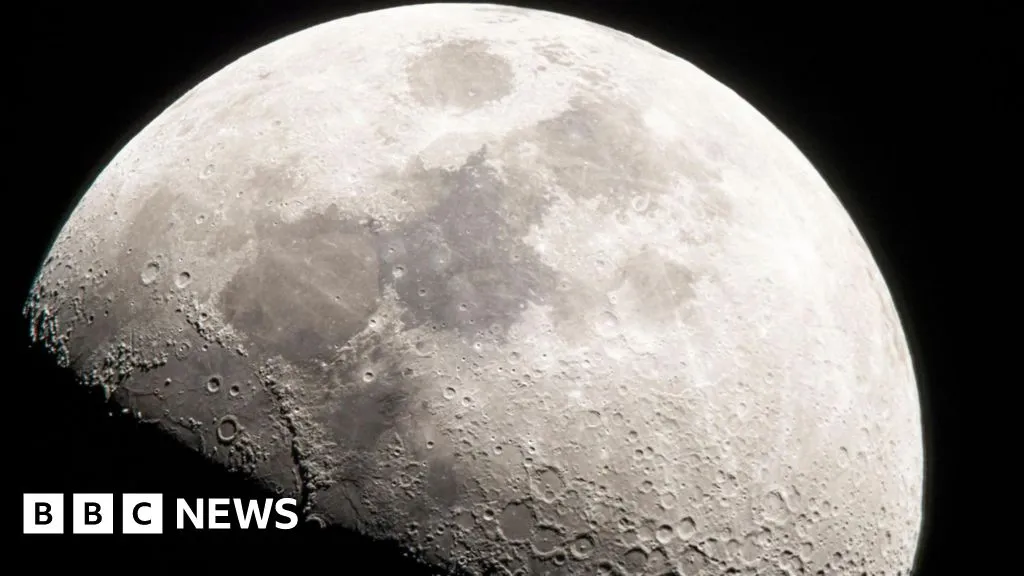
A base would allow the US to carry out scientific experiments, potentially mine valuable resources, and travel to Mars more easily.But most experts agree that Nasa's timeline is unrealistic. Despite the US's success in sending four astronauts around the Moon in its Artemis II mission in April, some scientists believe China is likely to be the next country to land humans on the lunar surface."It would not surprise me at all if China gets there first," Dr Simeon Barber, Lunar Scientist at Open University, told BBC News, citing Nasa's setbacks in securing a craft that can land humans on the Moon.Nasa's Ignition Moon Base programme has three phases.Before humans travel there, the space agency wants to send robotic landers and hopping drones to explore and map the Moon's challenging terrain.Delivery vehicles would also be taken that could drive astronauts over the lunar surface and carry communications and scientific instruments.On Tuesday, Nasa said companies including Blue Origin, Intuitive Machines, and Astrobotic have been awarded the contracts to build the machines.
SRCBBC News - World
LANGEN
LEANCenter
WORDS169
ENT12
TUE · 2026-05-26 · 20:25 GMTBRIEF NSR-2026-0526-79413
NSR-2026-0526-79413News Report·EN·Technology
Nasa unveils next steps to build permanent Moon base
NASA is planning to establish a permanent Moon base, with initial steps involving sending robotic landers, hopping drones, and roving vehicles to explore and map the lunar surface. These robotic missions will precede human arrivals, with delivery vehicles designed to transport astronauts and carry scientific instruments.
BBC News - WorldFiled 2026-05-26 · 20:25 GMTLean · CenterRead · 1 min
BBC News - WorldFIG 01
Reading time
1min
Word count
169words
Sources cited
1cited
Entities identified
12entities
Quality score
100%
§ 01
Briefing Summary
AI-generatedNEWSAR · AI
NASA is planning to establish a permanent Moon base, with initial steps involving sending robotic landers, hopping drones, and roving vehicles to explore and map the lunar surface. These robotic missions will precede human arrivals, with delivery vehicles designed to transport astronauts and carry scientific instruments. The base aims to facilitate scientific experiments, resource mining, and easier travel to Mars. Companies like Blue Origin, Intuitive Machines, and Astrobotic have been contracted to build these machines. Despite NASA's Artemis II mission success, some experts believe China may land humans on the Moon first due to NASA's challenges in developing a human landing craft.
Confidence 0.90Sources 1Claims 5Entities 12
§ 02
Article analysis
Model · rule-basedFraming
Technology
National Security
Tone
Measured
AI-assessed
CalmNeutralAlarmist
Factuality
0.70 / 1.00
Factual
LowHigh
Sources cited
1
Limited
FewMany
§ 03
Key claims
5 extracted01
Companies including Blue Origin, Intuitive Machines, and Astrobotic have been awarded contracts to build machines for Nasa's Moon base program.
factual
Confidence
1.00
02
Nasa's Ignition Moon Base programme has three phases, starting with robotic landers and drones.
factual
Confidence
0.90
03
A permanent Moon base would allow the US to carry out scientific experiments, potentially mine valuable resources, and travel to Mars more easily.
factual
Confidence
0.90
04
Most experts agree that Nasa's timeline for building a Moon base is unrealistic.
factual
Confidence
0.80
05
China is likely to be the next country to land humans on the lunar surface.
predictionDr Simeon Barber, Lunar Scientist at Open University
Confidence
0.70
§ 04
Full report
1 min read · 169 words§ 05
Entities
12 identifiedKey playerOppositionContextPositiveNeutralNegative
Organizations5
§ 06
Keywords & salience
10 termsnasa
1.00
permanent moon base
1.00
artemis ii mission
0.80
china
0.70
ignition moon base programme
0.70
robotic landers
0.60
lunar surface
0.50
scientific experiments
0.40
valuable resources
0.40
travel to mars
0.40
§ 07
Topic connections
Interactive graph No topic relationship data available yet. This graph will appear once topic relationships have been computed.