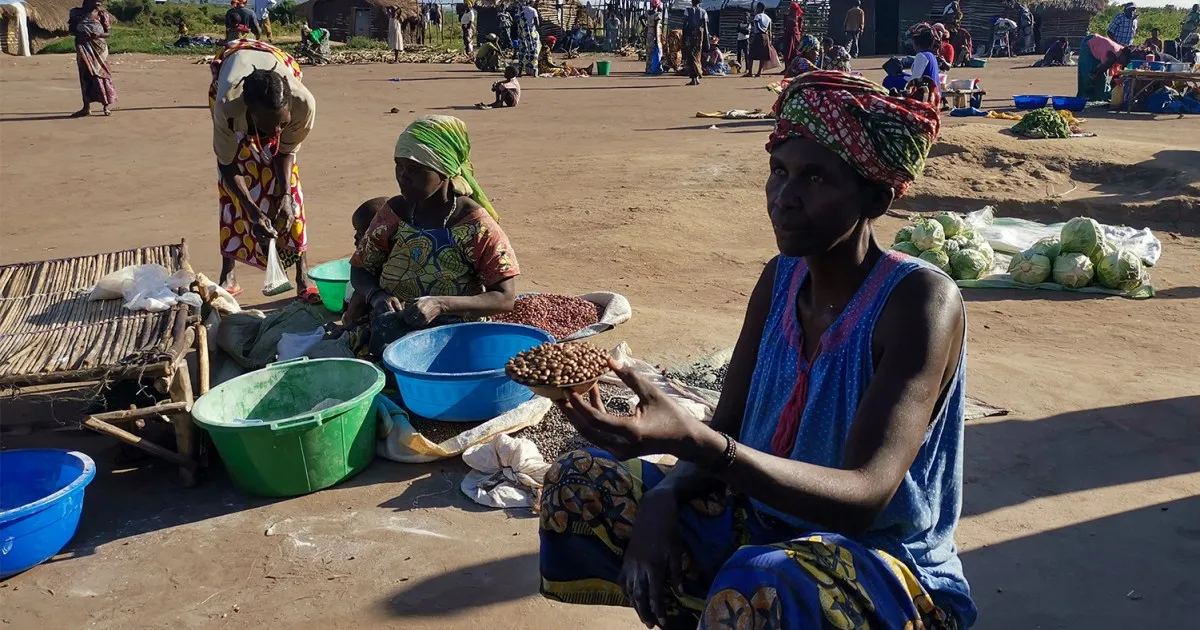
Bunia faces isolation amid Ebola outbreak fears, with airspace closure and Ugandan border curbs adding economic strain.The Bunia health zone is one of 11 Congolese health zones affected by the Ebola outbreak declared in mid-May 2026 by health authorities [Prosper Heri Ngorora/Al Jazeera]Published On 27 May 2026Goma, Democratic Republic of the Congo – The Congolese authorities have suspended all flights to and from Bunia in the eastern Democratic Republic of the Congo in an attempt to contain an Ebola outbreak.The decision was taken by the Ministry of Transport and Communications, which has banned all air traffic in and out of Bunia, the capital of Ituri province, where the virus continues to spread.“This precautionary measure aims to prevent any cross-border spread of the epidemic and to ensure the health and safety of passengers, crews and airport staff,” an official statement received by Al Jazeera said, urging all airport services “to strictly comply with the health and safety guidelines issued by the competent authorities”.Despite the restrictions, Kinshasa has allowed certain exceptions. Humanitarian, medical and emergency flights may be authorised, but only with special approval from aviation and health authorities.The provision is intended to ensure the continuity of essential operations, particularly the transport of medical personnel, supplies and humanitarian aid crucial to the response.“Bunia Airport is one of the DRC’s border points. Several planes take off and land there. Closing this facility will cause significant disruption. As you know, the road is virtually impassable and many people prefer to fly,” said Pascal Tudja, an economic analyst in Bunia.Growing isolationUganda, one of Bunia’s main cross-border gateways for trade and passenger movement, has also introduced restrictions on travel to and from the DRC as part of efforts to prevent the spread of Ebola.The measures have affected transport and movement between eastern DRC and neighbouring Uganda, including areas close to Ituri province, further complicating travel and trade in the region.Bunia relies heavily on Uganda as a main route for incoming goods [Prosper Heri Ngorora/Al Jazeera]Many goods entering Bunia pass through Uganda, making the neighbouring country a critical supply route for the city.The combined restrictions are already being felt in the city’s commercial activity.“The closure of our border with Uganda is already affecting our business. I import my goods from Kampala. I have orders from my customers, but I can’t fulfil them because of the border closure,” said Sarah Bitangalo, a clothes retailer in Bunia.Another resident, Bernard Bahati, a teacher and father of three, said closing the airspace is essential to containing the virus, but questioned how long the measure will remain in place and called for accompanying support measures for residents.“This airport is a real catalyst for Bunia’s economic development. Hundreds of tonnes of food and non-food products are distributed here in Ituri via the airport. We risk witnessing a health disaster coupled with an economic disaster,” he warned in an interview with Al Jazeera.Businesses strugglingMitterrand Mweze is a business operator in Bunia, the capital of Ituri province.For nearly 20 years, he has been investing in hotels, bars and children’s playgrounds in the region. For him, the closure of Bunia Airport amounts to the region being cut off or isolated, which jeopardises the smooth running of his business.“There are travellers who come to invest, for economic reasons. Without an airport, it’s difficult to carry on business as usual,” he said.“With the decision to close the airport, we will be forced to rely solely on those already in Bunia, yet if travellers were to come, it could boost our business,” he suggested.According to UN-Habitat, 50 percent of economic activity in Bunia falls within the tertiary sector, including services, transport, retail, and public administration.Mitterrand Mweze said the government should consider tax relief measures to ease the burden on businesses.“We ask the government to please bear us in mind when it comes to taxation. They can make things easier for us because we will no longer be able to operate as before. Otherwise, we risk going bankrupt during this difficult period,” he said.The price to payThe Bunia health zone is one of 11 Congolese health zones affected by the Ebola outbreak declared in mid-May 2026 by health authorities.According to the Congolese Ministry of Public Health, the outbreak had already killed more than 220 people as of May 26, 2026. More than 930 cases have been reported in the provinces of North Kivu, South Kivu and Ituri.The Africa Centres for Disease Control and Prevention says nearly $500m has been pledged and committed by African governments and international partners to support the response to the Ebola outbreak in the DRC and Uganda, as well as in other high-risk countries.The Bundibugyo strain is one of six species of the Ebola virus and can be highly fatal, with a mortality rate of up to 50 percent, according to experts.UN-Habitat says most economic activity in Bunia is driven by services such as trade, transport and retail.“We are going to face a severe shortage of goods, and when goods become scarce, prices are likely to skyrocket,” warned Tudja.
SRCAl Jazeera
LANGEN
LEANCenter
WORDS833
ENT11
WED · 2026-05-27 · 07:52 GMTBRIEF NSR-2026-0527-79497
NSR-2026-0527-79497News Report·EN·Public Health
DRC flight suspension and Uganda border curbs isolate Ebola-hit Bunia
Congolese authorities have suspended all flights to and from Bunia, the capital of Ituri province, to contain an Ebola outbreak declared in mid-May 2026. This measure, aimed at preventing cross-border spread, allows for exceptions for humanitarian, medical, and emergency flights with special approval.
By Prosper Heri NgororaAl JazeeraFiled 2026-05-27 · 07:52 GMTLean · CenterRead · 4 min
Al JazeeraFIG 01
Reading time
4min
Word count
833words
Sources cited
3cited
Entities identified
11entities
Quality score
100%
§ 01
Briefing Summary
AI-generatedNEWSAR · AI
Congolese authorities have suspended all flights to and from Bunia, the capital of Ituri province, to contain an Ebola outbreak declared in mid-May 2026. This measure, aimed at preventing cross-border spread, allows for exceptions for humanitarian, medical, and emergency flights with special approval. Concurrently, Uganda has imposed travel restrictions on the DRC, further isolating Bunia, which heavily relies on Uganda for trade and incoming goods. These combined curbs are significantly impacting Bunia's commercial activity, with businesses struggling to import goods and fulfill orders. The Ebola outbreak has affected 11 health zones, resulting in over 220 deaths and more than 930 cases reported as of May 26, 2026.
Confidence 0.90Sources 3Claims 5Entities 11
§ 02
Article analysis
Model · rule-basedFraming
Public Health
Economic Impact
Tone
Measured
AI-assessed
CalmNeutralAlarmist
Factuality
0.70 / 1.00
Factual
LowHigh
Sources cited
3
Well sourced
FewMany
§ 03
Key claims
5 extracted01
Uganda has introduced restrictions on travel to and from the DRC to prevent the spread of Ebola.
factualUganda
Confidence
1.00
02
Congolese authorities have suspended all flights to and from Bunia to contain an Ebola outbreak.
factualCongolese authorities
Confidence
1.00
03
The closure of the border with Uganda is affecting businesses that import goods from Kampala.
quoteSarah Bitangalo
Confidence
0.90
04
Bunia relies heavily on Uganda as a main route for incoming goods.
factualAl Jazeera
Confidence
0.90
05
The flight suspension and border curbs are causing significant disruption to trade and passenger movement.
quotePascal Tudja
Confidence
0.90
§ 04
Full report
4 min read · 833 words§ 05
Entities
11 identifiedKey playerOppositionContextPositiveNeutralNegative
Organizations2
Locations6
Events1
§ 06
Keywords & salience
9 termsebola outbreak
1.00
flight suspension
0.90
border curbs
0.80
bunia
0.70
democratic republic of the congo
0.70
uganda
0.60
economic strain
0.50
containment measures
0.50
humanitarian aid
0.40
§ 07
Topic connections
Interactive graph Network visualization showing 51 related topics
View Full Graph Person Organization Location Event|Click node to navigate|Edge numbers = shared articles