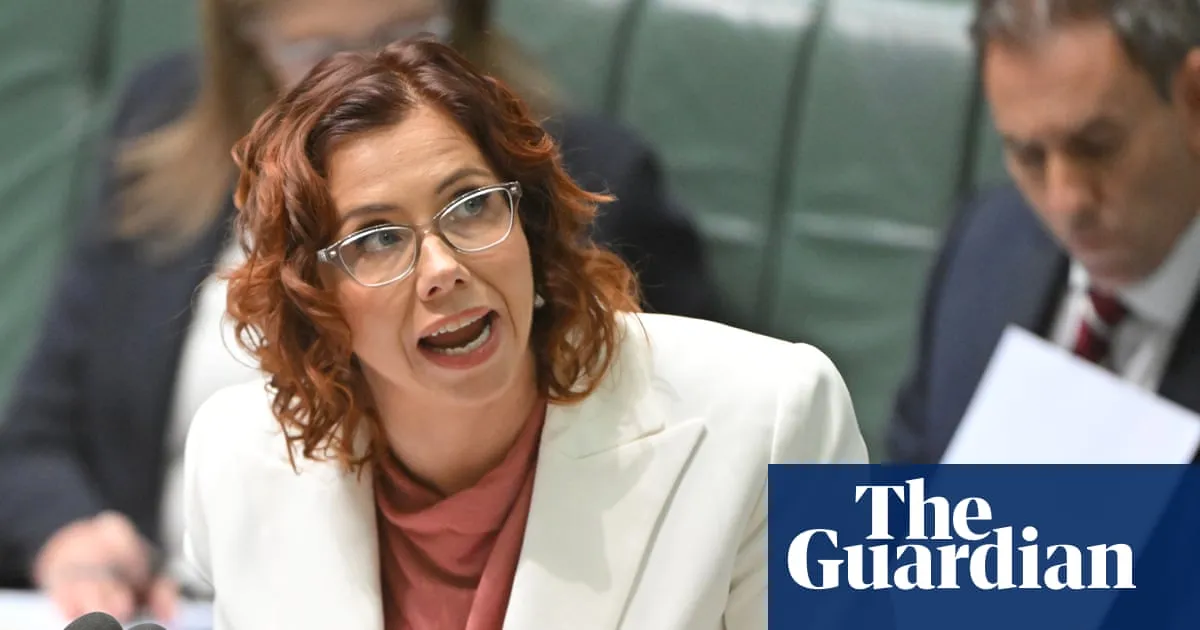
The employment minister, Amanda Rishworth, during question time on Wednesday after outlining the government’s plans to change the mutual obligations requirements for welfare recipients. Photograph: Mick Tsikas/AAP View image in fullscreen The employment minister, Amanda Rishworth, during question time on Wednesday after outlining the government’s plans to change the mutual obligations requirements for welfare recipients. Photograph: Mick Tsikas/AAP Amanda Rishworth says jobseekers will no longer be forced to submit ‘endless’ pointless job applications Welfare advocates say that while the reforms are a step in the right direction, the privatised employment services model has failed and should be torn up Get our breaking news email, free app or daily news podcast Mutual obligations will be different for every welfare recipient, the employment minister says, signalling an end to jobseekers being forced to submit “endless” applications for roles they may not be qualified for. But welfare advocates and a key trade union have said Labor’s employment system changes don’t go far enough and fall short of the reform needed in the failure-plagued sector. They have called for an end to the privatised job services model, which Amanda Rishworth admits is not providing enough help. Rishworth’s address to the National Press Club on Wednesday outlined an overhaul of the employment services system, with the current “one-size fits all” model to be split into three separate streams, depending on a jobseeker’s level of skills and work readiness: At the lower level, a digital service with “individualised resources and brief interventions” for people who are work-ready but need help finding the right job. A “targeted provider-led” stream to help people build skills and confidence. And at the upper end, more intensive services for people with complex requirements, who will be given more time, flexibility and support. Rishworth said unemployed people were “languishing” with insufficient help, due in part to the current system incentivising job providers to ignore people with more complex needs in favour of people who are easier to place. The employment minister was critical that one in five people using the Australia" class="entity-link entity-organization" data-entity-id="134898" data-entity-type="organization">Workforce Australia program – about 140,000 people – had been in that stream for five years or more, a figure which was getting worse. But the privatised model will continue, which the Greens senator Penny Allman-Payne said would see jobseekers “herded into a failed system”. “These reforms aren’t a shake-up, they’re a screw-up,” she said. “Labor’s own inquiry into employment services in 2023 concluded that privatisation had failed and that ‘fundamental change is needed’. The reforms suggest that Labor hasn’t read its own report.” And despite a 2025 commonwealth ombudsman report finding nearly 1,000 people had their welfare payments unlawfully terminated, Allman-Payne was also critical the government hadn’t announced plans to reform that system. The exact details of the new system were not announced on Wednesday and will be developed over the next year in consultation with employers, jobseekers and providers. But Rishworth did signal changes to mutual obligations activities, which she said were wasting the time of people who use welfare. Guardian Australia has reported numerous examples of the mutual obligations system being unfair or cruel to users, or forcing people to complete menial tasks. These included people having Centrelink payments suspended while in hospital recovering from brain surgery or recovering from psychosis, and job training courses described as “condescending”. While mutual obligations will remain, Rishworth said the activities must be “meaningful” and would differ depending on an individual’s circumstances. “If you are close to the labour market, then putting in job applications in jobs that you’re interested in and that are in your goal plan are clearly an appropriate activity,” the minister said. “If you are very far from the labour market and do not have work ready skills, there is no point in that participant putting in endless applications.” Rishworth gave the example of the disability job service Inclusive Employment Australia, which had changed compliance action to be a “last resort”. “I don’t believe that people are going into the system and deliberately looking [at] how not to engage and contribute, but we need to make those mutual obligations meaningful to actually getting a job,” she said. Opposition employment spokesperson Jane Hume said the Coalition backed the new three-stream model, agreeing the system needed reform, but said she would be “deeply concerned” at winding back the mutual obligations framework. The Australian Council of Social Services (Acoss) said the system needed reform, welcoming changes to mutual obligations, but calling for that system to be abolished entirely. The Community and Public Sector Union welcomed the changes, but the national secretary, Melissa Donnelly, was “disappointed it has not gone further to overhaul the privatised model that has failed jobseekers, employers and the government”. “Australian job seekers are sick of being lectured by flashy ‘entrepreneurs’ who are milking the government for hundreds of millions of dollars and providing a broken, profit-driven service in return,” she said. “This privatisation fantasy has caused untold damage, and while today’s announcement is very welcome, progress must not stop here.” Economic Justice Australia, part of the working group to consult on the changes, also said changes were needed to the privatised model. “Wherever privatised employment service providers are given the power to suspend people from essential payments, not only will there always be a power imbalance, there will be a direct threat to people’s ability to survive,” said its chief executive, Kate Allingham. Explore more on these topics Australian politics Unemployment Australian economy Labor party Welfare news Share Reuse this content
SRCThe Guardian - World News
LANGEN
LEANCenter-Left
WORDS913
ENT12
WED · 2026-05-27 · 06:32 GMTBRIEF NSR-2026-0527-79504
NSR-2026-0527-79504News Report·EN·Social Justice
Amanda Rishworth says jobseekers will no longer be forced to submit ‘endless’ pointless job applications
Employment Minister Amanda Rishworth announced reforms to Australia's employment services, aiming to end jobseekers being forced into "endless" applications for unsuitable roles. The current "one-size-fits-all" model will be replaced by three streams: a digital service for work-ready individuals, a targeted provider-led stream for skill-building, and intensive services for those with complex needs.
Josh ButlerThe Guardian - World NewsFiled 2026-05-27 · 06:32 GMTLean · Center-LeftRead · 4 min
The Guardian - World NewsFIG 01
Reading time
4min
Word count
913words
Sources cited
2cited
Entities identified
12entities
Quality score
100%
§ 01
Briefing Summary
AI-generatedNEWSAR · AI
Employment Minister Amanda Rishworth announced reforms to Australia's employment services, aiming to end jobseekers being forced into "endless" applications for unsuitable roles. The current "one-size-fits-all" model will be replaced by three streams: a digital service for work-ready individuals, a targeted provider-led stream for skill-building, and intensive services for those with complex needs. While Rishworth stated mutual obligations will become more individualized and meaningful, welfare advocates and unions argue the reforms don't go far enough and call for an end to the privatized job services model, which they believe has failed. The government acknowledges the current system isn't providing enough help, particularly for those with complex needs.
Confidence 0.90Sources 2Claims 5Entities 12
§ 02
Article analysis
Model · rule-basedFraming
Social Justice
Political Strategy
Tone
Measured
AI-assessed
CalmNeutralAlarmist
Factuality
0.60 / 1.00
Mixed
LowHigh
Sources cited
2
Limited
FewMany
§ 03
Key claims
5 extracted01
The current 'one-size fits all' employment services model will be split into three separate streams.
factualAmanda Rishworth
Confidence
0.95
02
The government plans to change the mutual obligations requirements for welfare recipients.
factualAmanda Rishworth
Confidence
0.95
03
Welfare advocates and a trade union believe the reforms do not go far enough and call for an end to the privatised job services model.
factualarticle
Confidence
0.90
04
Jobseekers will no longer be forced to submit 'endless' pointless job applications.
quoteAmanda Rishworth
Confidence
0.90
05
One in five people using the Workforce Australia program have been in that stream for five years or more.
statisticAmanda Rishworth
Confidence
0.85
§ 04
Full report
4 min read · 913 words§ 05
Entities
12 identifiedKey playerOppositionContextPositiveNeutralNegative
People3
Organizations5
Locations1
§ 06
Keywords & salience
9 termsemployment services reform
1.00
jobseeker obligations
1.00
mutual obligations
0.90
privatised employment services
0.80
welfare recipients
0.70
workforce australia
0.60
job application process
0.50
amanda rishworth
0.50
skills and work readiness
0.40
§ 07
Topic connections
Interactive graph No topic relationship data available yet. This graph will appear once topic relationships have been computed.