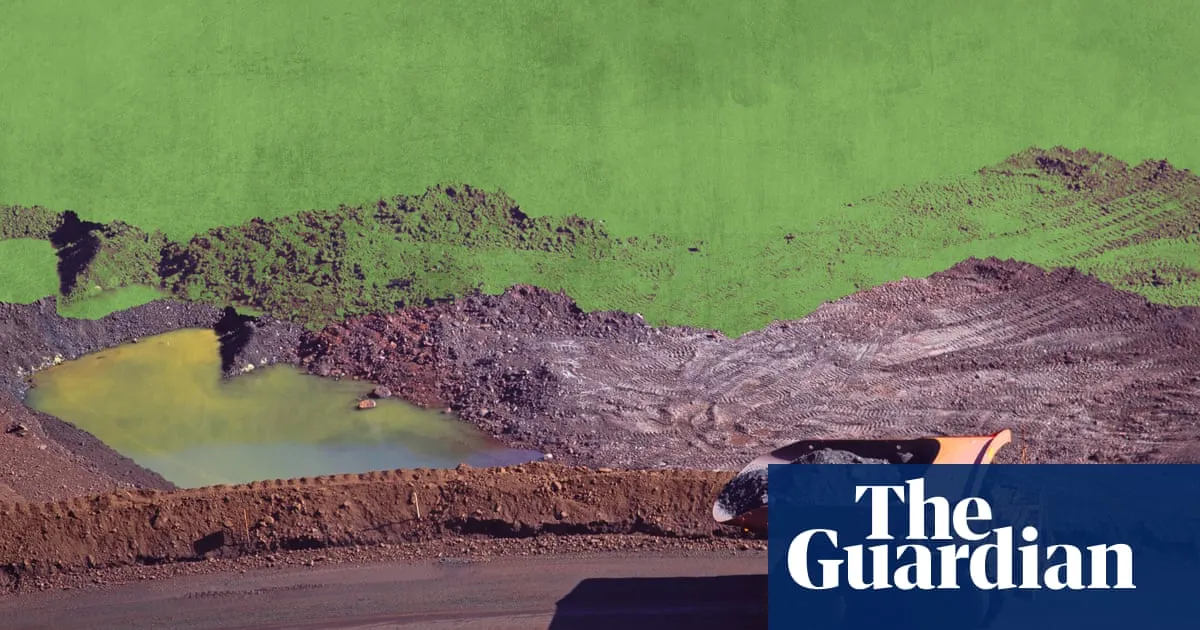
Tim Day blamed BHP’s decarbonisation delay on obstacles to replacing the use of diesel due to what he said were slow advancements in electric trucking and rail technology. Composite: Krystle Wright/Guardian Design/The Guardian View image in fullscreen Tim Day blamed BHP’s decarbonisation delay on obstacles to replacing the use of diesel due to what he said were slow advancements in electric trucking and rail technology. Composite: Krystle Wright/Guardian Design/The Guardian BHP admits to stalled emissions reductions as WA premier says miners have ‘moral obligation’ to decarbonise Head of BHP’s WA iron ore operations unable to give firm timeline for replacing diesel trucks as leaked documents reveal decarbonisation delay Get our breaking news email, free app or daily news podcast A senior BHP executive has admitted the Australian multinational’s push to reduce emissions has been delayed as the Western Australian premier, Roger Cook, said big miners had an “important moral obligation” to decarbonise. An exclusive investigation based on documents leaked to The Guardian and ABC revealed this week that the world’s biggest miner has hit the brakes on decarbonisation, something experts fear could put Australia’s national emissions reductions targets at risk. The leaked documents show it has scrapped an iron ore processing plant that would have prevented 1.7m tonnes of emissions each year, the equivalent of removing 350,000 cars, while pushing back vast renewables projects, buying new polluting diesel fleets and war-gaming options to push critical climate investments into the next two decades. It did so despite internal memos acknowledging that slow decarbonisation would have “reputational impacts” and that: “Urgent decarbonisation in line with BHP’s public commitments effectively underpins [WA iron ore’s] licence to operate, sustain and grow.” On Wednesday, Tim Day, the head of BHP’s WA iron ore operations, acknowledged that its decarbonisation program had been delayed. He blamed significant obstacles to replacing the use of diesel – the biggest source of its emissions – due to what he said were slow advancements in electric trucking and rail technology. He was unable to give any firm timeline for replacing diesel trucks. “The timeframe will take what it takes to get the diesel replacement, but we see it, we’re testing now, we’ll keep going through it,” Day said, speaking at the Australian Financial Review’s mining summit. “But it is delayed … we actually, we thought we’d be off diesel a little quicker, but that is delayed.” Internal documents show BHP has considered options to start the transition as late as 2035 or 2040, despite acknowledging the delays could cause reputational damage and put its net zero by 2050 goal at risk. Also speaking at the AFR’s conference, Cook, the WA premier, said decarbonisation by big miners was an “important moral obligation”. “It’s an important part of mining companies maintaining their social licence to operate, so we would expect all mining companies, particularly big players, to play their part,” he said. The leaked documents have prompted concern about the effectiveness of the government’s key climate policy, the safeguard mechanism, which forced BHP to pay less than $9m for excess emissions last year, according to analysis provided to The Guardian. At the same time, it was given $622m in diesel tax concessions by the federal government, something critics say is creating an unnecessary incentive for it to keep using highly polluting diesel haulage. Cook would not be drawn on whether he thought the federal government should do anything to change the rebate. “Strictly speaking, the diesel fuel rebate is to subsidise, is to return an excise to the companies that don’t use the roads that the excise is actually designed to help support and fund,” he said. “But I’ll leave that up to others to debate. But I acknowledge and I accept that we want to, as governments, create the best environment to incentivise mining companies to continue to decarbonise their operations.” The company has reduced its global emissions by 36% – largely due to the use of renewables in Chile and the closure of an uncompetitive nickel mine – but internal documents show its current plan to hit net zero has a “low probability of success”. Analysts say it has done little to reduce emissions from its Australian operations. Get in touch Contact Christopher Knaus about this story If you have something to share about this story, you can contact Chris using one of the following methods: The Guardian app has a tool to send tips about stories. Messages are end to end encrypted and concealed within the routine activity that every Guardian mobile app performs. This prevents an observer from knowing that you are communicating with us at all, let alone what is being said. If you don’t already have The Guardian app, download it (iOS/Android) and go to the menu. Select ‘Secure Messaging’. Once you've set yourself up, to send a message to Chris select ‘Investigations (Guardian Australia’. If you don’t need a high level of security or confidentiality you can email christopher.knaus@theguardian.com. You can contact Christopher Knaus using the Signal Messenger app on +61 422 283 681. If you can safely use the tor network without being observed or monitored you can send messages and documents to The Guardian via our SecureDrop platform. Finally, our guide at theguardian.com/tips lists several ways to contact us securely, and discusses the pros and cons of each. Show more Explore more on these topics Australia news The BHP files Mining (Business) Mining (Environment) BHP Australia" class="entity-link entity-location" data-entity-id="706" data-entity-type="location">Western Australia news Share Reuse this content
SRCThe Guardian - World News
LANGEN
LEANCenter-Left
WORDS908
ENT12
WED · 2026-05-27 · 06:23 GMTBRIEF NSR-2026-0527-79506
NSR-2026-0527-79506News Report·EN·Environmental
BHP admits to stalled emissions reductions as WA premier says miners have ‘moral obligation’ to decarbonise
BHP's head of WA iron ore operations, Tim Day, has admitted the company's emissions reduction efforts are delayed, citing slow advancements in electric trucking and rail technology as obstacles to replacing diesel use. Leaked documents reveal BHP has scrapped a processing plant that would have cut emissions and pushed back renewables projects, despite internal acknowledgments of reputational risks and the impact on its net zero goals.
Christopher Knaus and Adam MortonThe Guardian - World NewsFiled 2026-05-27 · 06:23 GMTLean · Center-LeftRead · 4 min
The Guardian - World NewsFIG 01
Reading time
4min
Word count
908words
Sources cited
3cited
Entities identified
12entities
Quality score
100%
§ 01
Briefing Summary
AI-generatedNEWSAR · AI
BHP's head of WA iron ore operations, Tim Day, has admitted the company's emissions reduction efforts are delayed, citing slow advancements in electric trucking and rail technology as obstacles to replacing diesel use. Leaked documents reveal BHP has scrapped a processing plant that would have cut emissions and pushed back renewables projects, despite internal acknowledgments of reputational risks and the impact on its net zero goals. Western Australian Premier Roger Cook stated that large mining companies have a "moral obligation" to decarbonize. Experts are concerned these delays could jeopardize Australia's national emissions reduction targets. BHP's global emissions have decreased, but its Australian operations have seen little reduction.
Confidence 0.90Sources 3Claims 5Entities 12
§ 02
Article analysis
Model · rule-basedFraming
Environmental
Economic Impact
Tone
Mixed Tone
AI-assessed
CalmNeutralAlarmist
Factuality
0.70 / 1.00
Factual
LowHigh
Sources cited
3
Well sourced
FewMany
§ 03
Key claims
5 extracted01
Internal BHP memos acknowledged that slow decarbonisation would have 'reputational impacts' and affect its 'licence to operate'.
factualInternal BHP memos
Confidence
0.95
02
Leaked documents reveal BHP scrapped an iron ore processing plant that would have prevented 1.7m tonnes of emissions annually.
factualThe Guardian and ABC (via leaked documents)
Confidence
0.95
03
Western Australian premier Roger Cook stated that big miners have an 'important moral obligation' to decarbonise.
quoteRoger Cook (WA Premier)
Confidence
0.90
04
BHP has admitted to stalled emissions reductions due to delays in replacing diesel technology.
quoteTim Day (BHP)
Confidence
0.90
05
Experts fear that BHP's decarbonisation delays could put Australia's national emissions reduction targets at risk.
predictionExperts (unnamed)
Confidence
0.70
§ 04
Full report
4 min read · 908 words§ 05
Entities
12 identifiedKey playerOppositionContextPositiveNeutralNegative
Organizations4
§ 06
Keywords & salience
9 termsdecarbonisation
1.00
emissions reductions
0.90
diesel technology
0.80
electric trucking
0.70
moral obligation
0.60
wa iron ore
0.50
bhp
0.50
climate investments
0.40
leaked documents
0.40
§ 07
Topic connections
Interactive graph No topic relationship data available yet. This graph will appear once topic relationships have been computed.