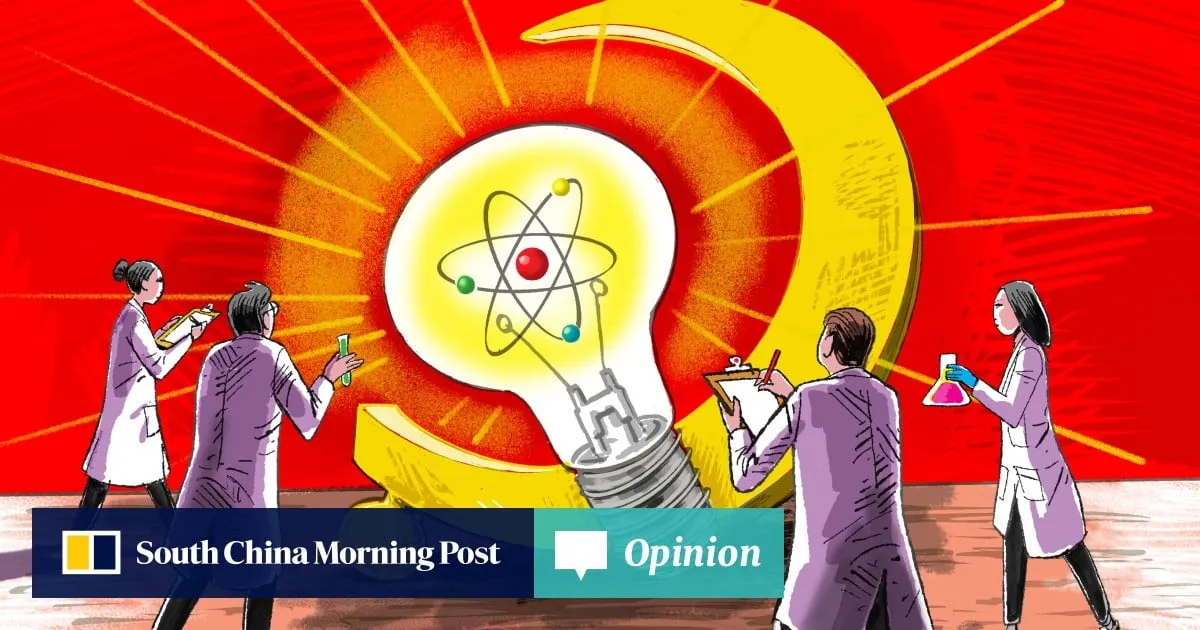
Singapore’s founding prime minister Lee Kuan Yew once offered a striking observation on the nature of American power, wrote Harvard professor Joseph Nye in 2011. China, Lee argued, could draw upon its massive population but the United States possessed a deeper structural advantage: the ability to attract and recombine global talent within an unusually open, diverse and creative ecosystem. America’s innovation system was not merely large. It was generative.Fifteen years later, on April 30, President Xi Jinping convened China’s top scientific leadership in Shanghai for a symposium on strengthening basic research. On the surface, it seemed another high-level science policy meeting. In reality, it was a strategic declaration that China intends to compete not merely in manufacturing, commercialisation or industrial deployment, but in foundational scientific discovery itself.Remarkably, this meeting received almost no coverage in Western media. Yet its significance may ultimately rival the “China-2025" class="entity-link entity-topic" data-entity-id="135421" data-entity-type="topic">Made in China 2025” plan and many widely discussed geopolitical events of the decade.
SRCSouth China Morning Post
LANGEN
LEANCenter-Right
WORDS157
ENT10
WED · 2026-05-27 · 21:30 GMTBRIEF NSR-2026-0527-79718
NSR-2026-0527-79718Analysis·EN·Technology
China’s next big leap: becoming a frontier science civilisation
In a strategic move, China's President Xi Jinping convened top scientific leadership in Shanghai on April 30 for a symposium on strengthening basic research. This meeting signaled China's ambition to compete in foundational scientific discovery, not just manufacturing or commercialization.
Tan Kong Yam,Clement CT ChanSouth China Morning PostFiled 2026-05-27 · 21:30 GMTLean · Center-RightRead · 1 min
South China Morning PostFIG 01
Reading time
1min
Word count
157words
Sources cited
2cited
Entities identified
10entities
Quality score
100%
§ 01
Briefing Summary
AI-generatedNEWSAR · AI
In a strategic move, China's President Xi Jinping convened top scientific leadership in Shanghai on April 30 for a symposium on strengthening basic research. This meeting signaled China's ambition to compete in foundational scientific discovery, not just manufacturing or commercialization. This initiative, largely unreported in Western media, is presented as potentially as significant as the "Made in China 2025" plan. The article references Lee Kuan Yew's observation that while China has a large population, the US has a structural advantage in attracting and recombining global talent within an open, diverse, and creative ecosystem, implying China aims to build a similar generative innovation system.
Confidence 0.90Sources 2Claims 4Entities 10
§ 02
Article analysis
Model · rule-basedFraming
Technology
Political Strategy
Tone
Measured
AI-assessed
CalmNeutralAlarmist
Factuality
0.40 / 1.00
Mixed
LowHigh
Sources cited
2
Limited
FewMany
§ 03
Key claims
4 extracted01
Lee Kuan Yew argued that the US had a structural advantage in attracting and recombining global talent.
quoteLee Kuan Yew (via Joseph Nye)
Confidence
1.00
02
China intends to compete in foundational scientific discovery, not just manufacturing or commercialization.
factualarticle's own claim
Confidence
0.90
03
A symposium on strengthening basic research convened by President Xi Jinping received almost no coverage in Western media.
factualarticle's own claim
Confidence
0.80
04
The significance of the Shanghai symposium may rival the 'Made in China 2025' plan.
predictionarticle's own claim
Confidence
0.60
§ 04
Full report
1 min read · 157 words§ 05
Entities
10 identifiedKey playerOppositionContextPositiveNeutralNegative
People3
Locations4
§ 06
Keywords & salience
8 termsfrontier science civilisation
1.00
basic research
0.90
scientific discovery
0.80
innovation system
0.70
talent attraction
0.60
china
0.50
xi jinping
0.40
made in china 2025
0.40
§ 07
Topic connections
Interactive graph No topic relationship data available yet. This graph will appear once topic relationships have been computed.