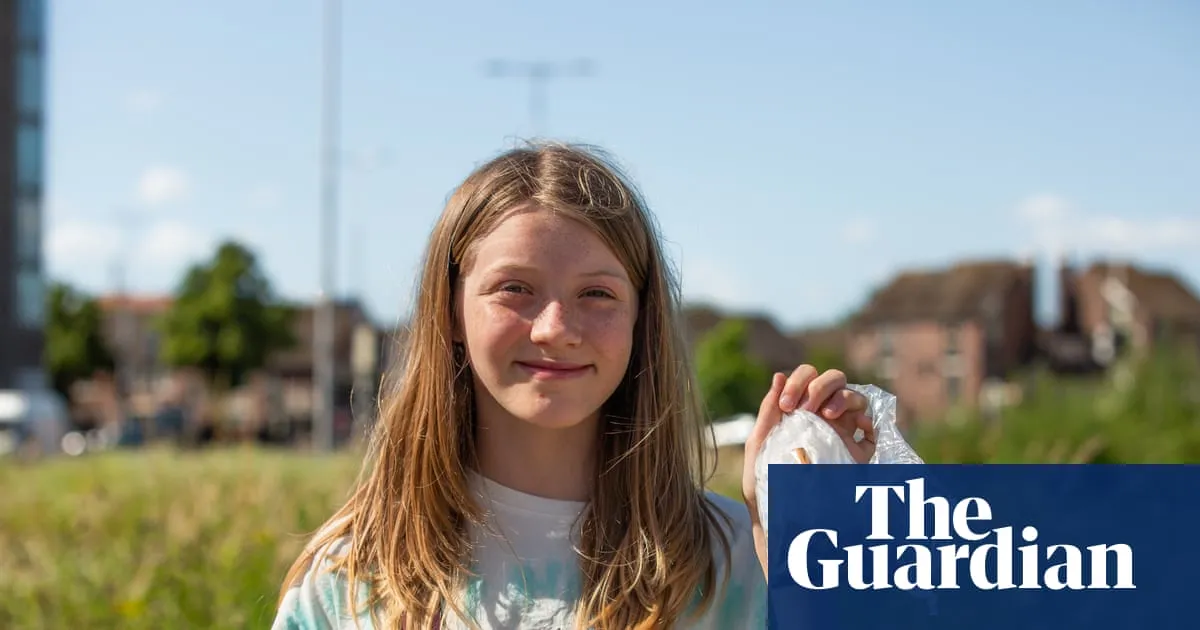
Using cigarette butts to buy buttery Dutch pancakes? That is the deal one food truck is offering at festivals in the Netherlands as a way to get people thinking about litter.Cigarette butts are the most common form of plastic waste in the world, with more than 4.5tn butts produced every year. In the Netherlands the estimated figure is in the hundreds of millions.To tackle the problem, one company is accepting them as payment for a plate of poffertjes – small Dutch pancakes usually eaten with mountains of butter and sugar.At the Het Vrije Westen liberation festival in Amsterdam’s Westerpark this month, the WasteBar yellow truck was adorned with catchy slogans such as “don’t waste waste!”. An adjacent sign read: “Betaal hier met zwerfafval” (pay here with litter).At the WasteBar, butts are bucks. Poffertjes can be bought for 20 cigarettes, drinks are 10, and fruits and candies are 15. It also accepts plastic: 15 pieces for a poffertje.The WasteBar pops up at festivals, children’s events and business gatherings in the NetherlandsCigarette butts contain plastic, heavy metals and other toxic substances, and they can be incredibly difficult to remove from the environment. Dutch municipalities spend a reported €36m (£31m) each year on cleaning them up.The problem has become so prevalent that on the first Saturday of July, thousands of people participate in No Butts Day, an annual event that began in the Netherlands but has grown internationally. Meanwhile, the WasteBar is out and about all year, popping up at festivals, children’s events and business gatherings to help reduce the burden.The creative concept originated in Goa, India, as part of a 2019 campaign by Noreen van Holstein, a Dutch entrepreneur, to tackle litter on the beaches.After spending 17 years in Goa, she moved back to the Netherlands in 2020 and realised it could benefit from a similar initiative. She integrated the bar into a foundation she runs with fellow entrepreneur Lalita van Lamsweerde, and launched the WasteBar food truck in 2022.“I wasn’t sure whether people would be apprehensive of picking up things from the ground,” Van Holstein said. “But immediately from the start, it was just positivity.”The team has collected more than 500,000 cigarette butts to date.Paid for with a combination of grants and municipality funds, the WasteBar has serviced more than 50 events, collecting in excess of 500,000 cigarette butts, some of which were used in an art exhibit last year.Others are waiting to be disposed of properly. “Right now I have about 100,000 in my garden in a drum,” said Van Holstein with a laugh. This year she hopes to find a partner to help with recycling.Reducing such a prevalent source of litter is a lofty goal, but Van Holstein is optimistic. “I do believe that littering can be tackled,” she said, pointing to Singapore and the Nordic countries as places that have been able to keep their cities clean.She has also seen how the Netherlands has made strides with reducing another form of litter: dog poo. But she acknowledges that her one truck cannot do it alone. “Even if we were at 500 events a year, we wouldn’t solve the problem,” she said.Through the WasteBar, she hopes to prompt a “mentality change” around litter and inspire an anti-littering attitude among children. “We want to get people in action mode, and [hope] that by picking up litter, they would not litter any more, because we believe that once seen, it cannot be unseen,” says Van Holstein.According to Reint Jan Renes, a behavioural scientist at the Amsterdam University of Applied Sciences, who is not involved with the initiative, the WasteBar uses several mechanisms that are known to be effective in reducing littering and increasing environmentally friendly behaviour. Its strength, he said, lay in the social dynamics and norms at play.“It turns something abstract like littering into a visible, collective social activity,” he said. “People see others participating, talking about waste, picking up cigarette butts together and contributing to something tangible.“If enough people begin to associate litter cleanup with civic pride, creativity or community participation rather than punishment or obligation, the initiative may help seed a wider cultural shift.”Van Holstein also sees the WasteBar as a creative way to promote omdenken: a Dutch word that best translates as “rethinking”.“People are always used to paying with money, but the moment they pay with something else, that triggers something in someone’s brain,” she said. “By giving something useless like litter value, that makes people look at things differently.”At the festival in Westerpark, the children inspecting the cigarette butts were doing just that. And by the end of the day, they had picked up 6,000 cigarette butts – equivalent to several hundred portions of pancakes.
SRCThe Guardian - World News
LANGEN
LEANCenter-Left
WORDS779
ENT10
THU · 2026-05-28 · 05:00 GMTBRIEF NSR-2026-0528-79804
NSR-2026-0528-79804News Report·EN·Environmental
Cigarette butts for free food? How one group is asking people to rethink litter
The WasteBar, a food truck operating at festivals and events in the Netherlands, is offering Dutch pancakes and other treats in exchange for cigarette butts and plastic litter. This initiative, founded by Dutch entrepreneur Noreen van Holstein, aims to address the significant problem of cigarette butt pollution, which costs Dutch municipalities millions annually.
Hannah Docter-LoebThe Guardian - World NewsFiled 2026-05-28 · 05:00 GMTLean · Center-LeftRead · 4 min
The Guardian - World NewsFIG 01
Reading time
4min
Word count
779words
Sources cited
2cited
Entities identified
10entities
Quality score
100%
§ 01
Briefing Summary
AI-generatedNEWSAR · AI
The WasteBar, a food truck operating at festivals and events in the Netherlands, is offering Dutch pancakes and other treats in exchange for cigarette butts and plastic litter. This initiative, founded by Dutch entrepreneur Noreen van Holstein, aims to address the significant problem of cigarette butt pollution, which costs Dutch municipalities millions annually. By giving discarded litter value, the WasteBar encourages people to rethink their waste habits and promotes a "mentality change" around littering. The concept, inspired by a similar campaign in Goa, India, has collected over 500,000 cigarette butts since its launch in 2022. Behavioral scientists suggest the initiative's success lies in its ability to make litter cleanup a visible, collective social activity, potentially fostering a broader cultural shift towards environmental responsibility.
Confidence 0.90Sources 2Claims 5Entities 10
§ 02
Article analysis
Model · rule-basedFraming
Environmental
Human Interest
Tone
Measured
AI-assessed
CalmNeutralAlarmist
Factuality
0.80 / 1.00
Factual
LowHigh
Sources cited
2
Limited
FewMany
§ 03
Key claims
5 extracted01
Noreen van Holstein, the entrepreneur behind WasteBar, believes littering can be tackled, citing Singapore and Nordic countries as examples.
quoteNoreen van Holstein
Confidence
1.00
02
The WasteBar has collected over 500,000 cigarette butts since its launch in 2022.
statistic
Confidence
1.00
03
Dutch municipalities spend an estimated €36 million annually on cleaning up cigarette butt litter.
statistic
Confidence
1.00
04
The WasteBar food truck accepts cigarette butts as payment for food, with 20 butts buying a plate of poffertjes.
factual
Confidence
1.00
05
Cigarette butts are the most common form of plastic waste globally, with over 4.5 trillion produced annually.
statistic
Confidence
1.00
§ 04
Full report
4 min read · 779 words§ 05
Entities
10 identifiedKey playerOppositionContextPositiveNeutralNegative
Organizations1
Locations4
§ 06
Keywords & salience
10 termscigarette butt litter
1.00
wastebar
0.90
plastic waste
0.80
litter cleanup
0.70
food truck initiative
0.70
environmental awareness
0.60
poffertjes
0.50
netherlands
0.50
no butts day
0.40
toxic substances
0.40
§ 07
Topic connections
Interactive graph Network visualization showing 51 related topics
View Full Graph Person Organization Location Event|Click node to navigate|Edge numbers = shared articles