When a heatwave struck the UK this week, Jon Connorton, a software developer, began monitoring temperatures inside his East Hampshire terrace house. With some rooms reaching close to 40C, it was time to deploy the air conditioner. “We just wheel it out in emergencies,” he said. “We were having trouble sleeping.”Connorton and his wife have a portable air conditioner. These plug-in devices cool interior air by removing heat from it and blowing that heat outside, typically via a large hose slung from a window or door.Connorton only runs the unit occasionally, and when the solar panels on his roof can cover its power needs. But he still questions his use of the technology. “You feel it’s a luxury and that you’re being bad for the environment,” he said.Do I need air conditioning in the UK?Most British homes are not built for extreme heat. Photograph: demaerre/GettyBritish homeowners are rapidly acquiring air conditioners as the Climate Crisis superheats our summers. An estimated 4m homes have an air conditioner, double the figure from three years ago.Portable units with power ratings of about 1kW are slightly more common than the more powerful built-in versions that can guzzle 2.7kW of power – more than an electric oven.About 22% of British homes would require active cooling, such as air conditioners, with 2C of global heating, the government’s climate advisers said in a report last week. But this brings risks. Air conditioners are energy-hungry and some researchers say they could threaten progress towards net zero.Nicole Miranda, a sustainable cooling researcher and carbon reduction manager for the University of Oxford, agrees. But she said Connorton’s approach of pairing air conditioning with solar electricity was “good thinking”, adding: “That’s really considerate.”Can air conditioning be green?Green roofs can help to keep buildings cool – and you can power your air conditioner using solar. Photograph: Pat Tuson/AlamyBecause air-conditioning units use more energy than other cooling devices, this results in more carbon emissions, according to the Energy Saving Trust. Using a portable unit for an average of eight hours a day during the summer would result in about 4.87kg of CO2 Emissions, roughly equivalent to driving 18 miles.If you don’t have solar panels but still feel an air conditioner is essential, one approach could be running it only when there is a high level of renewable energy on the grid – for example during the sunniest part of the day.You may choose to pre-cool rooms before the evening peak in electricity demand. Or you could power the air conditioner with a home battery that charges up during renewable energy surpluses, helping you make the most of renewables without owning them yourself.Andrew Sissons, the sustainable future director at the charity Nesta said people should not feel guilty for using air conditioning – even the less efficient portable devices were probably used only as a “last resort” by many. Miranda noted that air conditioners could help to keep people safe, especially children, older and vulnerable individuals, during potentially deadly hot weather.Natalie Mathie, an energy expert at Uswitch, said: “Air conditioning that runs purely on grid electricity won’t be truly ‘green’ until the entire grid runs on renewable energy. “Heat pumps move heat around rather than generating it and can produce about three units of cooling output for every unit of electricity they use.”What kind of air conditioning could I get?Built-in air conditioners are nearly three times more expensive to run than portable versions. Photograph: David Taljat/GettyIt’s important to note that not all air conditioners are alike. Richard Lowes, the global lead for heat and buildings at the Regulatory Assistance Project, an energy thinktank, said portable versions were relatively inefficient. By blowing air out, they lower air pressure indoors, so some warm air is inevitably drawn back inside via the window or door left slightly ajar for the exhaust hose.If you invest in built-in air conditioning, make sure you get the right size unit for the room you’ll be cooling (think about it in the same way as you do a radiator). A wall-mounted unit powerful enough (12,000 BTU) to cool the average British bedroom costs about £750, plus £1,150 for installation, according to Checkatrade. The equivalent portable unit costs £350. Given their power ratings, it is likely that running costs of built-in conditioners would be nearly three times those of a portable version.Air conditioners work using the same principle as heat pumps – they move heat from one place to another with the help of a refrigerant fluid. But the devices generally referred to as “air-to-air heat pumps” are reversible and can provide heating as well as cooling.An air-to-air heat pump, where the external and internal units are connected by well-sealed pipes through the property’s outer walls, is perhaps the best option for the environment.Homeowners who switched from oil or gas heating to an electric-powered air-to-air heat pump, and used it for winter heating and summer cooling, were decarbonising their homes, added Sissons. “That is a big climate win, we shouldn’t discourage that at all.”The government is to offer a £2,500 grant to homeowners in England and Wales for replacing a fossil fuel-based heating system with an air-to-air heat pump, which are at present rarely installed.What about other ways of keeping cool?Shutters to block out the sun are another option. Photograph: Kevin Britland/AlamyConsider also passive cooling steps such as shading windows, naturally ventilating your home when temperatures fall at night and adding green roofs or additional insulation to reduce how much heat gets in. Such measures may be enough on their own and would lower an air conditioner’s energy demand.“I’ve been getting wet towels and putting them up like curtains with a fan,” said Miranda. There was a danger, she added, that people who had air conditioners would end up using them more often than necessary, which would raise their energy consumption impact.How do fans compare with air conditioning?Fans are cheaper than air conditioning, with minimal carbon emissions. Photograph: MementoJpeg/GettyThe typical cost of running a fan continuously for 24 hours in Great Britain is 15p-31p*, according to the Energy Saving Trust. Because of their low energy use, a fan results in minimal carbon emissions.Round-the-clock use of a portable air conditioning unit cost £5 on the same basis, it said. They are more expensive to buy than most fans and using one solidly for 24 hours costs more than 20 times as much as a typical freestanding fan.A 2021 study found that using an electric fan alone would have been comparable to an air conditioner, in terms of preventing heat stress, during hot weather days between 2007 and 2019.Connorton is considering getting a more efficient air conditioner because he expects he and his wife will rely on cooling more frequently. “We’ve all noticed how the climate has changed in the UK, and how different summers are,” he said. “It’s a worry.”* Energy Saving Trust figures for Great Britain correct as of May 2026, based on an electricity price of 24.7p/kWh and a gas price of 5.7/kWh, calculated from a weighted average of projected, current and recent energy price caps
SRCThe Guardian - World News
LANGEN
LEANCenter-Left
WORDS1 174
ENT10
THU · 2026-05-28 · 15:12 GMTBRIEF NSR-2026-0528-79961
NSR-2026-0528-79961News Report·EN·Environmental
Should I get air conditioning in the UK – and can it be green?
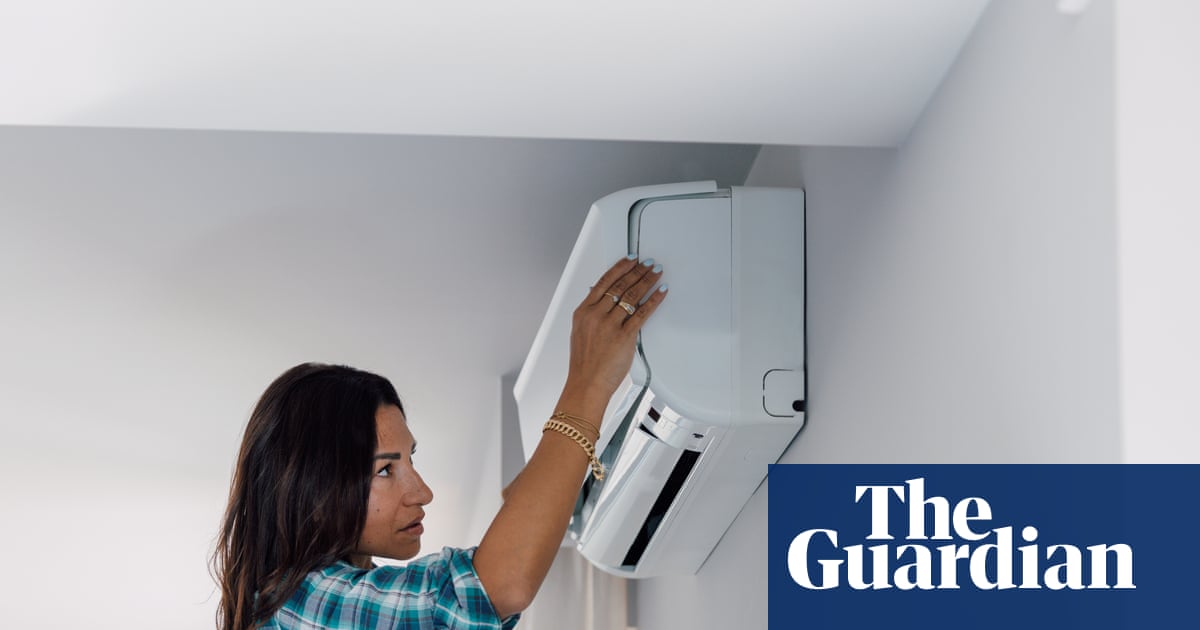
As UK summers grow hotter, air conditioner sales are increasing, with an estimated 4 million homes now owning one. While portable units are more common, built-in systems consume more power.
Chris Baraniuk and Zoe WoodThe Guardian - World NewsFiled 2026-05-28 · 15:12 GMTLean · Center-LeftRead · 5 min
The Guardian - World NewsFIG 01
Reading time
5min
Word count
1 174words
Sources cited
3cited
Entities identified
10entities
Quality score
100%
§ 01
Briefing Summary
AI-generatedNEWSAR · AI
As UK summers grow hotter, air conditioner sales are increasing, with an estimated 4 million homes now owning one. While portable units are more common, built-in systems consume more power. Experts suggest that around 22% of British homes may require active cooling with a 2C global temperature rise. To mitigate environmental impact, users can power units with solar panels, utilize grid electricity during high renewable energy periods, or use home batteries. Heat pumps, which move heat rather than generate it, are presented as a more environmentally friendly cooling option, with air-to-air heat pumps being a potentially optimal choice.
Confidence 0.90Sources 3Claims 5Entities 10
§ 02
Article analysis
Model · rule-basedFraming
Environmental
Human Interest
Tone
Measured
AI-assessed
CalmNeutralAlarmist
Factuality
0.70 / 1.00
Factual
LowHigh
Sources cited
3
Well sourced
FewMany
§ 03
Key claims
5 extracted01
Pairing air conditioning with solar electricity is 'good thinking' and 'really considerate'.
quoteNicole Miranda
Confidence
1.00
02
An estimated 4 million homes in the UK have an air conditioner, double the figure from three years ago.
statisticarticle
Confidence
1.00
03
Portable air conditioner units with power ratings of about 1kW are slightly more common than built-in versions that can guzzle 2.7kW of power.
statisticarticle
Confidence
0.90
04
Using a portable air conditioner for an average of 8 hours a day during summer results in about 4.87kg of CO2 emissions.
statisticEnergy Saving Trust
Confidence
0.90
05
About 22% of British homes would require active cooling with 2C of global heating.
statisticgovernment's climate advisers
Confidence
0.90
§ 04
Full report
5 min read · 1 174 words§ 05
Entities
10 identifiedKey playerOppositionContextPositiveNeutralNegative
§ 06
Keywords & salience
8 termsair conditioning
1.00
uk heatwaves
0.90
climate crisis
0.80
energy consumption
0.70
net zero
0.60
sustainable cooling
0.50
solar panels
0.50
carbon emissions
0.40
§ 07
Topic connections
Interactive graph Network visualization showing 51 related topics
View Full Graph Person Organization Location Event|Click node to navigate|Edge numbers = shared articles