The US supreme court on Thursday ruled in favor of Terry Pitchford, a Black man convicted of capital murder and on death row in Mississippi, who claimed that his conviction was due to the jury having racial bias.The justices sided with Pitchford in a 5-4 vote.Pitchford, now 40, was just 18 when he and another teen robbed a grocery store in 2004. The other teen, who fired fatal shots, was still a minor and ineligible for the death penalty, but Pitchford was convicted of capital murder and sentenced to death.The focus of the supreme court ruling was on jury selection in Pitchford’s case, when state prosecutors removed four out of five Black jurors. A jury composed of 11 white jurors and one Black juror would later convict Pitchford and sentence him to death.The now retired prosecutor Doug Evans, who the Associated Press notes had a history of dismissing Black jurors for discriminatory reasons, had excused the four other Black jurors. Pitchford’s attorney objected to the strikes during the trial, but the judge, Joseph Loper, allowed them.“The trial court did not afford Pitchford’s counsel a sufficient opportunity to rebut the prosecutor’s proffered race-neutral reasons for striking the four Black jurors and never determined whether the prosecutor’s stated reasons were pretextual,” Justice Brett Kavanaugh wrote in the court’s majority opinion.During oral arguments in March, several supreme court justices appeared skeptical of whether Loper had sufficiently applied a Batson challenge, which refers to a 1986 ruling in Batson v Kentucky, in which the court reaffirmed that it is unconstitutional to keep Black people off juries due to their race.A Batson challenge triggers a three-step process in which the objecting party must first show that there is an inference of discrimination. The striking party must then show reasonable, race-neutral explanations for striking certain jurors. The judge later determines whether there was purposeful discrimination.Much of the oral arguments focused on Loper’s actions in the third step of the challenge.Seven years ago, in a case that also involved Loper, Mississippi’s highest court and Evans, the supreme court overturned the death sentence and conviction of Curtis Flowers, a Black man who had been tried six times dating back more than 20 years. At that time, the supreme court had seven of the nine current justices. Brett Kavanaugh, a conservative justice, wrote that Evans showed a “relentless, determined effort to rid the jury of Black individuals”.
SRCThe Guardian - World News
LANGEN
LEANCenter-Left
WORDS398
ENT10
THU · 2026-05-28 · 15:38 GMTBRIEF NSR-2026-0528-79963
NSR-2026-0528-79963News Report·EN·Social Justice
Supreme court sides with Mississippi man on death row in racial bias case
The Supreme Court ruled 5-4 in favor of Terry Pitchford, a Black man on death row in Mississippi, who argued his capital murder conviction was the result of racial bias in jury selection. Pitchford, convicted at age 18 in 2004, claimed state prosecutors improperly removed four out of five Black potential jurors.
Adria R WalkerThe Guardian - World NewsFiled 2026-05-28 · 15:38 GMTLean · Center-LeftRead · 2 min
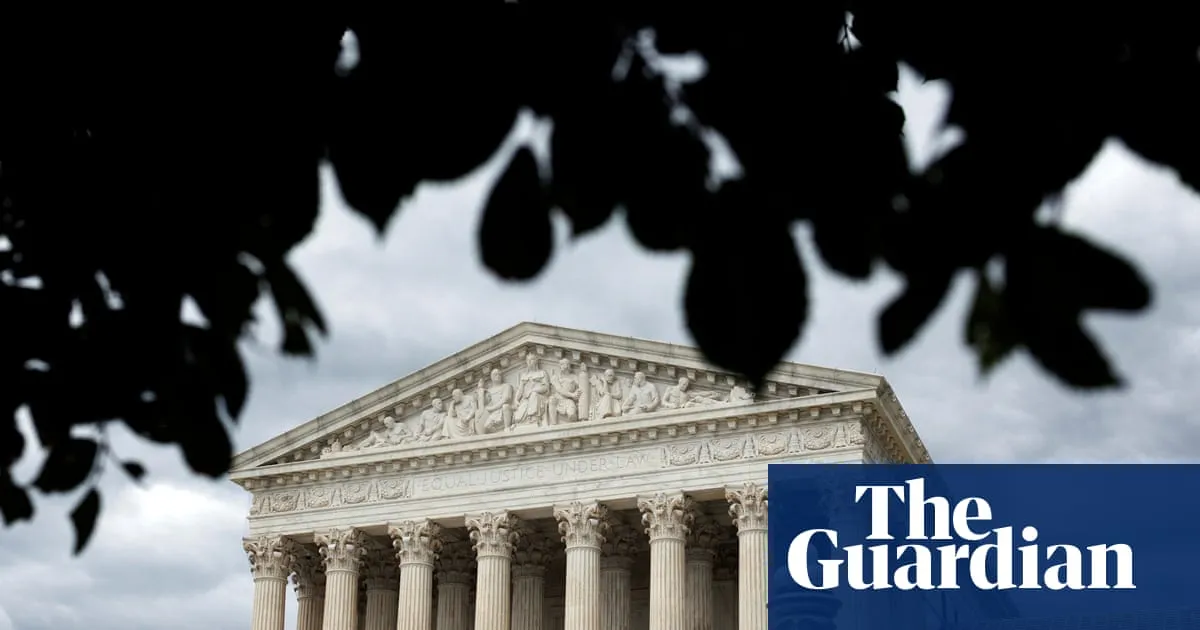
The Guardian - World NewsFIG 01
Reading time
2min
Word count
398words
Sources cited
3cited
Entities identified
10entities
Quality score
100%
§ 01
Briefing Summary
AI-generatedNEWSAR · AI
The Supreme Court ruled 5-4 in favor of Terry Pitchford, a Black man on death row in Mississippi, who argued his capital murder conviction was the result of racial bias in jury selection. Pitchford, convicted at age 18 in 2004, claimed state prosecutors improperly removed four out of five Black potential jurors. The Court found that the trial judge did not give Pitchford's attorney adequate opportunity to rebut the prosecutor's race-neutral reasons for striking the jurors and did not determine if those reasons were pretextual. Justice Brett Kavanaugh wrote the majority opinion, highlighting the judge's failure to properly apply the Batson challenge standard. This ruling echoes a previous Supreme Court decision involving the same prosecutor and judge that overturned another Black man's conviction due to jury discrimination.
Confidence 0.90Sources 3Claims 4Entities 10
§ 02
Article analysis
Model · rule-basedFraming
Social Justice
Legal & Judicial
Tone
Measured
AI-assessed
CalmNeutralAlarmist
Factuality
0.90 / 1.00
Factual
LowHigh
Sources cited
3
Well sourced
FewMany
§ 03
Key claims
4 extracted01
In a previous case involving the same prosecutor, the Supreme Court overturned a conviction due to a 'relentless, determined effort to rid the jury of Black individuals'.
quoteJustice Brett Kavanaugh
Confidence
1.00
02
The trial court did not give Pitchford's counsel enough opportunity to rebut the prosecutor's race-neutral reasons for striking Black jurors.
quoteJustice Brett Kavanaugh
Confidence
1.00
03
The Supreme Court's ruling focused on jury selection, where state prosecutors removed four out of five Black jurors.
factual
Confidence
1.00
04
US Supreme Court ruled in favor of Terry Pitchford, a Black man on death row, in a racial bias case.
factualAssociated Press
Confidence
1.00
§ 04
Full report
2 min read · 398 words§ 05
Entities
10 identifiedKey playerOppositionContextPositiveNeutralNegative
People5
Organizations1
Locations1
§ 06
Keywords & salience
9 termsracial bias
1.00
jury selection
0.90
batson challenge
0.80
death penalty
0.70
supreme court
0.60
capital murder
0.50
conviction
0.40
prosecutor
0.40
mississippi
0.40
§ 07
Topic connections
Interactive graph Network visualization showing 48 related topics
View Full Graph Person Organization Location Event|Click node to navigate|Edge numbers = shared articles