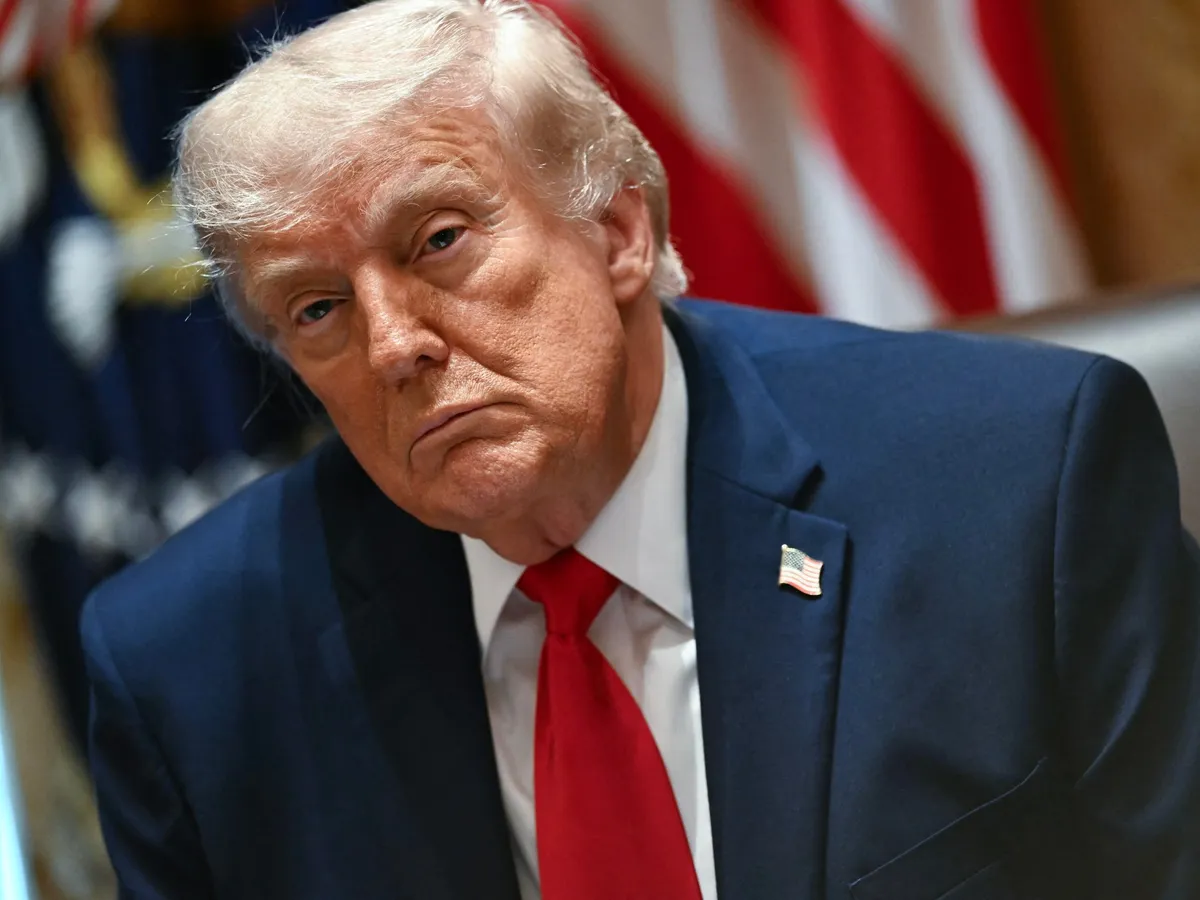
Judge Carl Nichols says the Democrats’ legal challenge is premature as the administration moves to implement the measure.President Donald Trump has pledged reforms to the US voting system after his defeat in the 2020 presidential race [File: Kent Nishimura/AFP]Published On 28 May 2026A United States judge has declined to immediately block President Donald Trump’s executive order tightening rules on mail-in voting.But the judge — Carl Nichols in the District of Columbia — has left open the possibility for Democrats to challenge the measure again as the administration moves to implement it.Recommended Stories list of 3 itemslist 1 of 3Trump-backed Paxton topples Senator Cornyn in Texas primary run-offlist 2 of 3Two dozen Democrat-led states sue Trump over mail-in ballot limitslist 3 of 3Could Trump curb voters’ rights before 2026 US midterms?end of listNichols, a Trump appointee, ruled on Thursday against a request by Democrats and civil rights groups seeking to halt the executive order. The challengers argued the measure would likely be unconstitutional because the authority to set election rules rests with states and Congress, not the president.In his ruling, Nichols, however, agreed with the Trump administration’s argument that the case was premature because the order has not yet been enforced.He added that the administration is still developing the rules and procedures needed to enforce the measure, making any potential harms too speculative for immediate court intervention.While the judge acknowledged that future actions by federal agencies could still face legal challenges, he concluded that the case was not yet ready for judicial review.“The Court recognizes that the Postal Service may ultimately issue a final rule that directly affects Plaintiffs or their members, or that the Government may develop State Citizenship Lists that omit specific individuals due to particularized flaws,” Nichols wrote.“Plaintiffs may, of course, renew their motions if and when those future actions occur. Until then, however, Plaintiffs cannot show that preliminary injunctive relief is warranted.”The ruling comes as Trump’s Republican Party faces a tight battle to maintain control of both chambers of Congress in the November midterm elections.Trump’s executive order calls on the Department of Homeland Security (DHS) to compile and transmit lists of confirmed US citizens eligible to vote in each state. It also requires the United States Postal Service (USPS) to send mail-in ballots only to voters included on state-specific absentee and mail-in voting lists.Voting rights groups have warned that the measures could rely on outdated or inaccurate federal citizenship databases and place excessive responsibility on the USPS, which does not directly administer elections.Democrats challenge Trump’s voting orderMail-in voting has expanded across the US, in states that lean both Republican and Democratic.The adoption of vote-by-mail services has grown since the COVID-19 pandemic, when many US voters isolated to avoid spreading the virus, and it remains a popular form of voting.In the 2024 election, roughly one-third of all ballots were cast by mail. Eight states currently conduct elections almost entirely by post and report some of the country’s strongest election-integrity metrics.Trump, however, has sought to frame mail-in voting as a system that perpetuates electoral fraud, though there is little evidence to back up this assertion.By issuing an executive order to restrict mail-in ballots, Democrats and civil rights groups argued that Trump violated the US Constitution, which gives states the authority to determine the “times, places and manner” of elections.They also maintain that only Congress can impose new federal restrictions on how elections are conducted.Their lawsuit, filed in the Washington, DC, district court system, has also raised questions about Trump’s motives for issuing the executive order.Changes so close to the November elections could create confusion and disruption, they warn.The directive to use DHS and Social Security Administration data to create “state citizenship lists” could also improperly exclude legally registered voters because the databases may contain errors or outdated information, according to the lawsuit.Separately, a coalition of Democratic-led states has filed a similar complaint in a federal court in Boston, Massachusetts. US District Judge Indira Talwani, an appointee of former President Barack Obama, is scheduled to hear arguments in that case on June 2.Another executive order issued by Trump last year required voters to prove US citizenship and barred states from counting mail-in ballots received after Election Day.That order has already been blocked by three federal judges. The administration is appealing those rulings.For years, Trump has repeatedly claimed, without evidence, that his 2020 election defeat was the result of widespread voter fraud.He has pledged sweeping reforms to the US voting system, spurring fears among critics that democratic rights might be curtailed.
SRCAl Jazeera
LANGEN
LEANCenter
WORDS750
ENT12
THU · 2026-05-28 · 21:24 GMTBRIEF NSR-2026-0528-80014
NSR-2026-0528-80014News Report·EN·Legal & Judicial
US judge rejects immediate block on Trump’s mail-in voting executive order
A US judge, Carl Nichols, has refused to immediately block President Trump's executive order on mail-in voting. Democrats and civil rights groups argued the order, which aims to tighten rules on mail-in ballots by requiring the Department of Homeland Security to compile citizen lists and the USPS to only send ballots to voters on state lists, was unconstitutional and premature.
Elizabeth MelimopoulosAl JazeeraFiled 2026-05-28 · 21:24 GMTLean · CenterRead · 3 min
Al JazeeraFIG 01
Reading time
3min
Word count
750words
Sources cited
2cited
Entities identified
12entities
Quality score
100%
§ 01
Briefing Summary
AI-generatedNEWSAR · AI
A US judge, Carl Nichols, has refused to immediately block President Trump's executive order on mail-in voting. Democrats and civil rights groups argued the order, which aims to tighten rules on mail-in ballots by requiring the Department of Homeland Security to compile citizen lists and the USPS to only send ballots to voters on state lists, was unconstitutional and premature. Judge Nichols agreed with the administration that the case was premature as the order has not yet been enforced and the administration is still developing implementation procedures. He indicated that future challenges could be brought if and when the order is enforced and harms become apparent. A separate lawsuit by Democratic-led states is scheduled for arguments in June.
Confidence 0.90Sources 2Claims 5Entities 12
§ 02
Article analysis
Model · rule-basedFraming
Legal & Judicial
Political Strategy
Tone
Measured
AI-assessed
CalmNeutralAlarmist
Factuality
0.80 / 1.00
Factual
LowHigh
Sources cited
2
Limited
FewMany
§ 03
Key claims
5 extracted01
Voting rights groups warned the measures could rely on inaccurate databases and place excessive responsibility on the USPS.
factualVoting rights groups
Confidence
1.00
02
Trump's executive order requires DHS to compile lists of eligible US citizens and USPS to send mail-in ballots only to voters on state-specific lists.
factualDonald Trump
Confidence
1.00
03
Judge Nichols ruled the case was premature because the order has not yet been enforced and potential harms are too speculative for immediate court intervention.
factualJudge Carl Nichols
Confidence
1.00
04
Democrats and civil rights groups argued the measure would likely be unconstitutional as election rules authority rests with states and Congress, not the president.
factualDemocrats and civil rights groups
Confidence
1.00
05
US judge Carl Nichols declined to immediately block President Trump's executive order on mail-in voting.
factualJudge Carl Nichols
Confidence
1.00
§ 04
Full report
3 min read · 750 words§ 05
Entities
12 identifiedKey playerOppositionContextPositiveNeutralNegative
Organizations5
§ 06
Keywords & salience
10 termsmail-in voting
1.00
executive order
0.90
legal challenge
0.80
voting system
0.70
election rules
0.70
judicial review
0.60
democrats
0.50
trump administration
0.50
midterm elections
0.40
postal service
0.40
§ 07
Topic connections
Interactive graph Network visualization showing 51 related topics
View Full Graph Person Organization Location Event|Click node to navigate|Edge numbers = shared articles