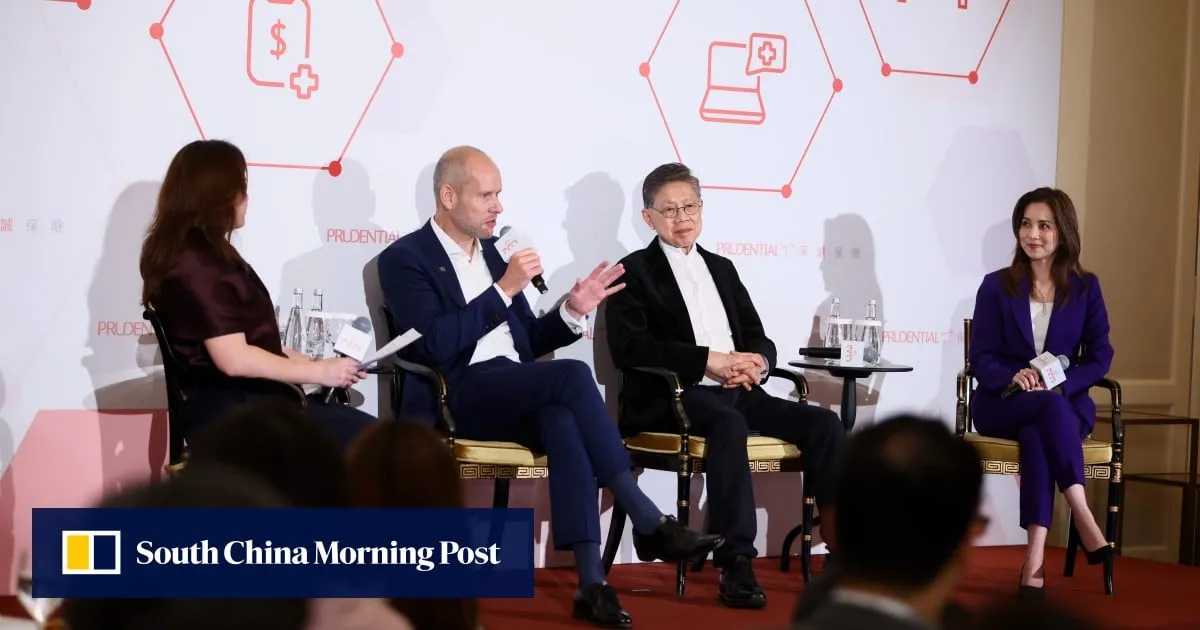
[The content of this article has been produced by our advertising partner.]Greater clarity on costs, stronger co-ordination between public and private sectors, and more comprehensive support for patients emerged as the central themes at the Prudential Health Summit held on March 27. Prudential Hong Kong convened the event to bring together healthcare experts, providers, regulators and patient advocates from Hong Kong and the rest of the Greater Bay Area to explore ways to deliver better care in an increasingly complex healthcare landscape.In his welcome remarks, Lawrence Lam, CEO of Prudential Hong Kong Limited, said that patient experience is at the heart of what Prudential does. “As the population ages and healthcare needs become more complex, the way patients experience care, how supported they feel and how clearly they can navigate the system is becoming increasingly important for all of us,” he said. He added that insurers, providers and partners each play distinct but interconnected roles within the health ecosystem and that when they work closely together, they can help make healthcare more seamless, transparent and reassuring for patients.Patient experience lies at the heart of Prudential’s approach, says Lawrence Lam, CEO of Prudential Hong Kong, who calls for closer collaboration across the health ecosystem to deliver more seamless and reassuring care for patients.His remarks reflected broader patient concerns captured in the Patient Voices Hong Kong survey, an independent report by Economist Impact supported by Prudential. The study found that 53 per cent of Hong Kong respondents are concerned about their ability to afford the care they need.“Healthcare services is one of the few areas where consumers begin treatment without knowing the final cost,” he said, while pointing out that separate charges from different providers add to the confusion and calling for greater transparency so that patients can make informed choices. The report further reveals that almost three in five Hong Kong respondents admitted they had postponed medical care in the past year. Dr Yannie Soo, Assistant Chief Hospital Manager at Union Hospital, explained the risks of delaying care.“If someone is diagnosed at a very early stage of breast cancer, a curative surgery and hormonal therapy would be enough to control the disease and the patient can get back to work in just a few weeks’ time,” she explained.Dr Yannie Soo, Assistant Chief Hospital Manager at Union Hospital, illustrates the risks of delaying care using the example of breast cancer and stresses that early diagnosis reduces both costs and impact on patients’ lives.“But then, for those who are diagnosed at a later stage, they would need additional radiotherapy, chemotherapy, which brings up the cost to several times higher.” Soo described how private hospitals are publishing fee schedules and developing packaged pricing for standardised procedures, noting that such measures help patients understand the overall financial commitment they will need to make.Prof Eng-kiong Yeoh from the JC School of Public Health and Primary Care at The Chinese University of Hong Kong spoke about the need for coordination in a primary care-led integrated healthcare system.Prof Eng-kiong Yeoh, JC School of Public Health and Primary Care, The Chinese University of Hong Kong, believes that a more co-ordinated primary care system is important, which includes greater roles for pharmacists and other professionals, so that patients can navigate care more effectively. He emphasized that primary care healthcare professionals include not only doctors but also nurses, pharmacists and allied health practitioners who can play complementary roles as the first point of contact. He observed that better information tools, referral protocols and streamlined processes would enable patients to be better informed and to move through a coordinated system without unnecessary delay. “At Prudential, our goal is to take away the stress and uncertainty that often comes with getting medical treatment – by guiding them through what’s covered, what to expect and how to get the right support,” said Candy Au Yeung, Chief Customer Operations and Health Officer at Prudential Hong Kong, during another panel.From left: Dicky Chow (moderator), Candy Au Yeung (Chief Customer Operations and Health Officer, Prudential Hong Kong), Alex Lam (Chairman, Hong Kong Patients’ Voices), and Dr Chung Kin Lai (CEO, CUHK Medical Centre). The panel explores how better guidance and system integration can reduce confusion for patients and families.The value of clear information on coverage and timely assistance that allows policyholders to concentrate on recovery rather than administrative matters, she added. Alex Lam, Chairman of Hong Kong Patients’ Voices, noted that decisions about care often take into account the impact on family and relatives, including financial burdens and time away from work or childcare. Transport difficulties and uncertainty over the right provider add further barriers, particularly for non-urgent needs.Dr Chung Kin Lai, Chief Executive Officer of CUHK Medical Centre, said: “Seamless links between different parts of the system are needed so patients experience fewer disruptions when moving from initial assessment to specialist treatment.” He further spoke about operational measures that can improve co-ordination between public and private providers.The common themes from both panels included the need for clearer patient pathways, better integration between public and private sectors, and comprehensive support that reduces stress during treatment.Participants recognised that sustainable progress depends on collective effort involving government, providers, pharmaceutical companies, patient groups and insurers.In his closing remarks, Toor said: “Listening to patients is essential to improving how care is experienced. Collaboration across prevention, diagnosis, treatment and recovery enables different industry players to bring their strengths together, providing patients with greater clarity and support at critical health moments, when reassurance and peace of mind matter most.” He noted that the Summit represented one step in a longer process of dialogue and invited continued collaboration.Prudential Hong Kong organised the Summit as part of its ongoing commitment to engage with the health ecosystem. The discussions were informed by insights from the Patient Voices Hong Kong survey and reinforced the need for clearer pathways and stronger collaboration across the sector.
SRCSouth China Morning Post
LANGEN
LEANCenter-Right
WORDS977
ENT11
FRI · 2026-05-29 · 02:00 GMTBRIEF NSR-2026-0529-80074
NSR-2026-0529-80074Press Release·EN·Public Health
Health leaders call for closer collaboration to improve patient experience and outcomes
At the Prudential Health Summit on March 27, healthcare leaders from Hong Kong and the Greater Bay Area discussed improving patient experience and outcomes. Key themes included the need for greater cost transparency, enhanced coordination between public and private healthcare sectors, and more comprehensive patient support.
Advertising partnerSouth China Morning PostFiled 2026-05-29 · 02:00 GMTLean · Center-RightRead · 4 min
South China Morning PostFIG 01
Reading time
4min
Word count
977words
Sources cited
2cited
Entities identified
11entities
Quality score
100%
§ 01
Briefing Summary
AI-generatedNEWSAR · AI
At the Prudential Health Summit on March 27, healthcare leaders from Hong Kong and the Greater Bay Area discussed improving patient experience and outcomes. Key themes included the need for greater cost transparency, enhanced coordination between public and private healthcare sectors, and more comprehensive patient support. Prudential Hong Kong convened the event, emphasizing that patient experience is central to their mission. Concerns about affording care and delaying treatment were highlighted, with experts stressing the risks of delayed diagnosis and the benefits of integrated primary care systems. The summit aimed to foster collaboration among insurers, providers, regulators, and patient advocates to create a more seamless, transparent, and reassuring healthcare system for patients.
Confidence 0.90Sources 2Claims 5Entities 11
§ 02
Article analysis
Model · rule-basedFraming
Public Health
Economic Impact
Tone
Measured
AI-assessed
CalmNeutralAlarmist
Factuality
0.60 / 1.00
Mixed
LowHigh
Sources cited
2
Limited
FewMany
§ 03
Key claims
5 extracted01
Delaying care for later-stage diagnoses significantly increases treatment costs compared to early-stage detection.
quoteDr Yannie Soo
Confidence
0.90
02
Almost three in five Hong Kong respondents admitted they had postponed medical care in the past year.
statisticPatient Voices Hong Kong survey
Confidence
0.90
03
Healthcare services is one of the few areas where consumers begin treatment without knowing the final cost.
quoteLawrence Lam
Confidence
0.90
04
53% of Hong Kong respondents are concerned about their ability to afford the care they need.
statisticPatient Voices Hong Kong survey
Confidence
0.90
05
Closer collaboration between public and private healthcare sectors can improve patient experience and outcomes.
factualPrudential Health Summit
Confidence
0.80
§ 04
Full report
4 min read · 977 words§ 05
Entities
11 identifiedKey playerOppositionContextPositiveNeutralNegative
Organizations4
§ 06
Keywords & salience
8 termspatient experience
1.00
healthcare collaboration
0.90
healthcare costs
0.80
patient outcomes
0.70
healthcare system
0.60
public and private sectors
0.50
prudential health summit
0.50
patient voices hong kong survey
0.40
§ 07
Topic connections
Interactive graph Network visualization showing 3 related topics
View Full Graph Person Organization Location Event|Click node to navigate|Edge numbers = shared articles