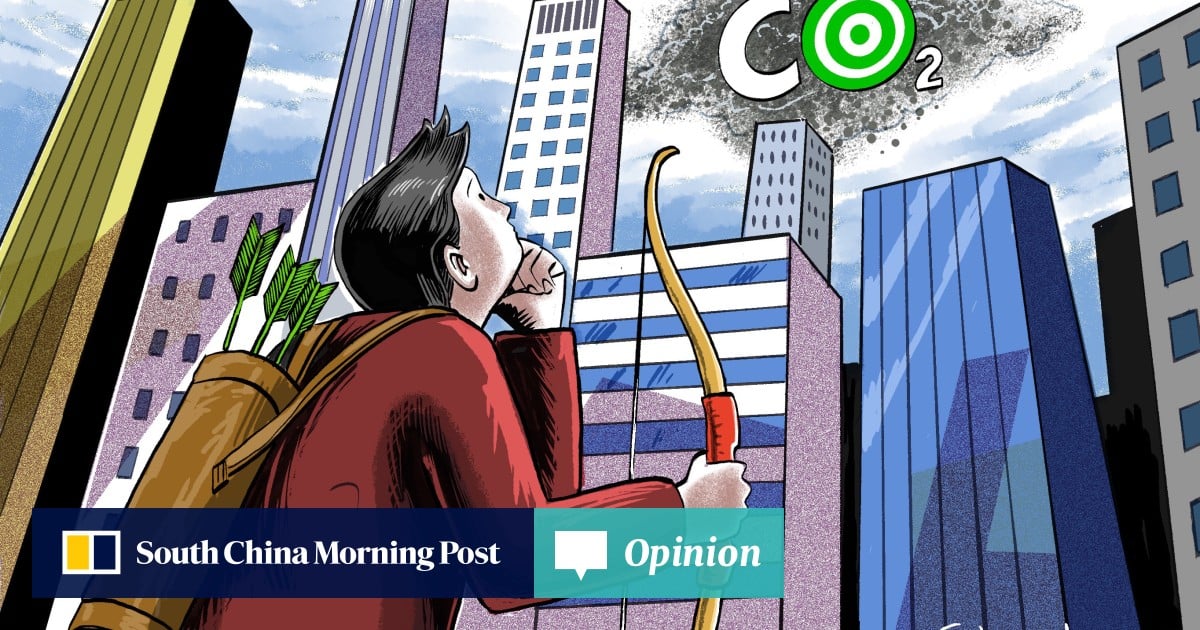
Net-zero commitments are now commonplace across Hong Kong’s property sector. Many major developers have announced targets for 2030 and 2050, often framed around energy efficiency, renewable energy and greener buildings.This is welcome. However, as climate ambition becomes the norm, a more uncomfortable question comes into focus: how many of these commitments are grounded in a serious understanding of what decarbonisation actually entails?What remains largely missing from Hong Kong’s climate conversation is analytical depth. Targets are plentiful; pathways are not. We talk often about goals, technologies and timelines, but far less about trade-offs, constraints and the hard arithmetic of emissions reduction.In this respect, a recently published report by Hang Lung Properties, “Our Journey to Net Zero”, stands out. This is not because it has all the answers, but rather because it is willing to ask the difficult questions.What makes the report notable is its honesty. Rather than presenting net zero as a smooth or inevitable journey, it applies a bottom-up decarbonisation model to examine how emissions evolve under different scenarios, assumptions and growth trajectories through to 2050.It tests possibilities rather than promising outcomes. In doing so, it surfaces several uncomfortable truths that the property sector should not ignore. Other sectors should also take note.
SRCSouth China Morning Post
LANGEN
LEANCenter-Right
WORDS203
ENT2
FRI · 2026-01-16 · 21:30 GMTBRIEF NSR-2026-0116-8025
NSR-2026-0116-8025Analysis·EN·Environmental
Hong Kong needs to ask the hard questions about its net-zero challenge
Hong Kong's property sector has widely adopted net-zero targets for 2030 and 2050, focusing on energy efficiency and renewable energy. However, the article highlights a lack of detailed planning and analysis regarding the practical challenges of achieving these goals.
Christine LohSouth China Morning PostFiled 2026-01-16 · 21:30 GMTLean · Center-RightRead · 1 min
South China Morning PostFIG 01
Reading time
1min
Word count
203words
Sources cited
1cited
Entities identified
2entities
Quality score
100%
§ 01
Briefing Summary
AI-generatedNEWSAR · AI
Hong Kong's property sector has widely adopted net-zero targets for 2030 and 2050, focusing on energy efficiency and renewable energy. However, the article highlights a lack of detailed planning and analysis regarding the practical challenges of achieving these goals. While many companies announce targets, few address the trade-offs and constraints involved in emissions reduction. A recent report by Hang Lung Properties, "Our Journey to Net Zero," is praised for its honest, bottom-up approach, examining various scenarios and acknowledging the difficulties in decarbonization. The report's willingness to ask difficult questions serves as an example for the property sector and other industries in Hong Kong.
Confidence 0.90Sources 1Claims 5Entities 2
§ 02
Article analysis
Model · rule-basedFraming
Environmental
Economic Impact
Tone
Measured
AI-assessed
CalmNeutralAlarmist
Factuality
0.40 / 1.00
Mixed
LowHigh
Sources cited
1
Limited
FewMany
§ 03
Key claims
5 extracted01
The Hang Lung Properties report applies a bottom-up decarbonisation model to examine how emissions evolve.
factualnull
Confidence
0.90
02
Many major developers have announced targets for 2030 and 2050.
factualnull
Confidence
0.90
03
Net-zero commitments are now commonplace across Hong Kong’s property sector.
factualnull
Confidence
0.90
04
A recently published report by Hang Lung Properties, “Our Journey to Net Zero”, stands out.
factualnull
Confidence
0.80
05
What remains largely missing from Hong Kong’s climate conversation is analytical depth.
factualnull
Confidence
0.70
§ 04
Full report
1 min read · 203 words§ 05
Entities
2 identifiedKey playerOppositionContextPositiveNeutralNegative
Organizations1
Locations1
§ 06
Keywords & salience
9 termsnet-zero
1.00
decarbonisation
0.90
hong kong
0.80
property sector
0.70
emissions reduction
0.60
renewable energy
0.50
climate ambition
0.50
energy efficiency
0.40
climate conversation
0.40
§ 07
Topic connections
Interactive graph Network visualization showing 51 related topics
View Full Graph Person Organization Location Event|Click node to navigate|Edge numbers = shared articles