Advocates have argued that Brazil’s government has dragged its feat over Fordlandia’s fate, leaving the historic site to decay.A truck drives past residences in Fordlandia, a failed 1920s rubber plantation in the Brazilian state of Para, on December 6, 2021 [Ianara Duarte/Brazilian Federal Justice via AP Photo]Published On 29 May 2026Federal prosecutors in Brazil have celebrated a court decision mandating the preservation of Fordlandia, a 1928 city built by the United States industrialist Henry Ford in the middle of the Amazon rainforest.The court ruling was the result of decades of advocacy, as historians, activists and residents pushed for the crumbling site to be protected.Recommended Stories list of 3 itemslist 1 of 3Brazil’s Fordlandia: Tracing the roots of Amazon deforestationlist 2 of 3Neymar set to miss Brazil World Cup opener due to calf injurylist 3 of 3US to designate two Brazilian gangs as ‘terrorist’ organisationsend of listSome hope the site can ultimately be restored and used to anchor the local tourism industry in the Brazilian state of Para.In a statement on Friday, the Federal Public Prosecutor’s Office called the court ruling a “landmark” decision that will rectify a gap in Brazil’s cultural preservation efforts.“The complex has suffered from neglect for decades,” the office wrote.“The ruling acknowledges the arguments presented by the Federal Public Prosecutor’s Office in the case, highlighting the historical omission by public authorities.”The decision requires the federal government, the state of Para, the local government in Aveiro and the National Institute of Historical and Artistic Heritage (IPHAN) to collaborate to protect the site.“They must all act together to save the property, which is in an advanced state of decay,” the prosecutor’s office said.Since the 1990s, an administrative process has been under way to determine whether Fordlandia should be preserved.But prosecutors — on both the federal and state level — have pointed out that the “inertia” of the government towards the site has “put its conservation at risk”.In Friday’s statement, the federal office argued that Fordlandia’s historical significance is clear.“Fordlandia is a landmark chapter in the history of Brazil and world industry,” it wrote. “The project represented the American attempt to break the British monopoly on rubber, bringing cutting-edge infrastructure – like a hospital, running water, electricity and a cinema – to the heart of the Amazon in the 1920s.”Construction on Fordlandia began in 1928, as Ford tried to corner the market on rubber production.The founder of the Ford Motor Company, Ford was one of the wealthiest men of his time, and he invested nearly $20m in flattening a stretch of the Amazon and erecting his dream city, where he could enforce his vision for healthy living and efficient work.The Fordlandia experiment ultimately failed. Workers rioted over the strict rules governing their behaviour, including a imposed diet composed of food items like oatmeal and canned peaches. Alcohol and tobacco were banned.Ford, too, struggled, losing control over his company as competitors in the car industry started to dominate the US market.But one of the key problems was the rubber itself. Ford’s plans for a vast plantation to supply his company with rubber for tyres failed, as the crops suffered from fungus and pests. By 1945, Fordlandia was sold to the Brazilian government for a meagre $244,200.Still, in the decades since, thousands of residents have continued to live at Fordlandia. Without maintenance, though, the infrastructure has started to rot, and running water is unreliable.Speaking to Al Jazeera in 2024, residents recalled how the city’s hospital burned down in 2012, and looters have ravaged the city.“There was a good healthcare system. We could go to the hospital, and we were given medicine,” resident Raimunda Maria Silva Santos told journalist Eleonore Hughes.Santos added that she had gone 30 days without water. “That golden age is behind us.”Poverty remains high in the Brazilian Amazon. In the heavily forested state of Para, for instance, the poverty rate was 39.3 percent in 2023.In Friday’s statement, federal prosecutors emphasised that, under the court decision, locals have a right to see Fordlandia restored.“The district remains a fundamental site of memory for Brazilian society, which now has the legal right to demand its recovery and preservation for future generations,” they said.
SRCAl Jazeera
LANGEN
LEANCenter
WORDS691
ENT9
FRI · 2026-05-29 · 18:14 GMTBRIEF NSR-2026-0529-80285
NSR-2026-0529-80285News Report·EN·Legal & Judicial
‘A landmark’: Brazil’s prosecutors hail court ruling to preserve Fordlandia
Federal prosecutors in Brazil are celebrating a court ruling mandating the preservation of Fordlandia, a historic 1928 city built by Henry Ford in the Amazon rainforest. This decision comes after decades of advocacy from historians, activists, and residents who argued the site had been neglected and was decaying.
Al Jazeera StaffAl JazeeraFiled 2026-05-29 · 18:14 GMTLean · CenterRead · 3 min
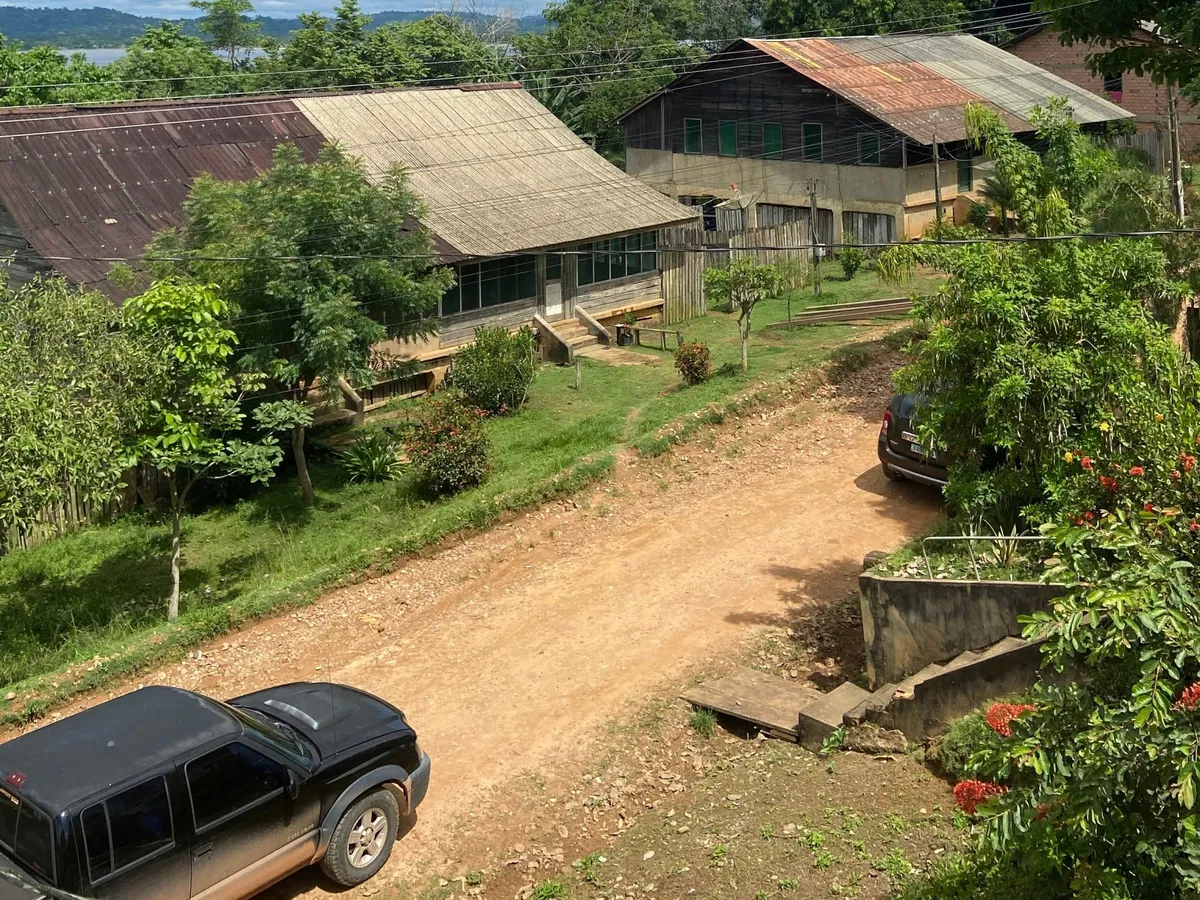
Al JazeeraFIG 01
Reading time
3min
Word count
691words
Sources cited
1cited
Entities identified
9entities
Quality score
100%
§ 01
Briefing Summary
AI-generatedNEWSAR · AI
Federal prosecutors in Brazil are celebrating a court ruling mandating the preservation of Fordlandia, a historic 1928 city built by Henry Ford in the Amazon rainforest. This decision comes after decades of advocacy from historians, activists, and residents who argued the site had been neglected and was decaying. The ruling requires the federal government, the state of Para, the local government in Aveiro, and the National Institute of Historical and Artistic Heritage to collaborate on protecting the property. Fordlandia, once an ambitious attempt by Ford to control rubber production, failed due to worker revolts and agricultural issues, eventually being sold to the Brazilian government in 1945. Despite its decline, thousands of residents continue to live there, and prosecutors emphasize the ruling ensures their right to demand its restoration and preservation for future generations.
Confidence 0.90Sources 1Claims 5Entities 9
§ 02
Article analysis
Model · rule-basedFraming
Legal & Judicial
Human Interest
Tone
Measured
AI-assessed
CalmNeutralAlarmist
Factuality
0.80 / 1.00
Factual
LowHigh
Sources cited
1
Limited
FewMany
§ 03
Key claims
5 extracted01
Fordlandia was a 1920s rubber plantation and a failed experiment by Henry Ford to build a city in the Amazon.
factual
Confidence
1.00
02
The decision requires the federal government, the state of Para, the local government in Aveiro, and IPHAN to collaborate to protect the site.
factual
Confidence
1.00
03
The Federal Public Prosecutor’s Office called the ruling a 'landmark' decision that will rectify a gap in Brazil’s cultural preservation efforts.
quoteFederal Public Prosecutor’s Office
Confidence
1.00
04
The court ruling was the result of decades of advocacy by historians, activists, and residents pushing for the site's protection.
factual
Confidence
1.00
05
Federal prosecutors in Brazil celebrated a court decision mandating the preservation of Fordlandia, a 1928 city built by Henry Ford in the Amazon.
factualFederal Public Prosecutor’s Office
Confidence
1.00
§ 04
Full report
3 min read · 691 words§ 05
Entities
9 identifiedKey playerOppositionContextPositiveNeutralNegative
Organizations2
§ 06
Keywords & salience
9 termsfordlandia
1.00
court ruling
0.90
preservation
0.80
brazil
0.70
cultural preservation
0.60
amazon rainforest
0.60
historical site
0.50
henry ford
0.40
rubber plantation
0.40
§ 07
Topic connections
Interactive graph Network visualization showing 51 related topics
View Full Graph Person Organization Location Event|Click node to navigate|Edge numbers = shared articles