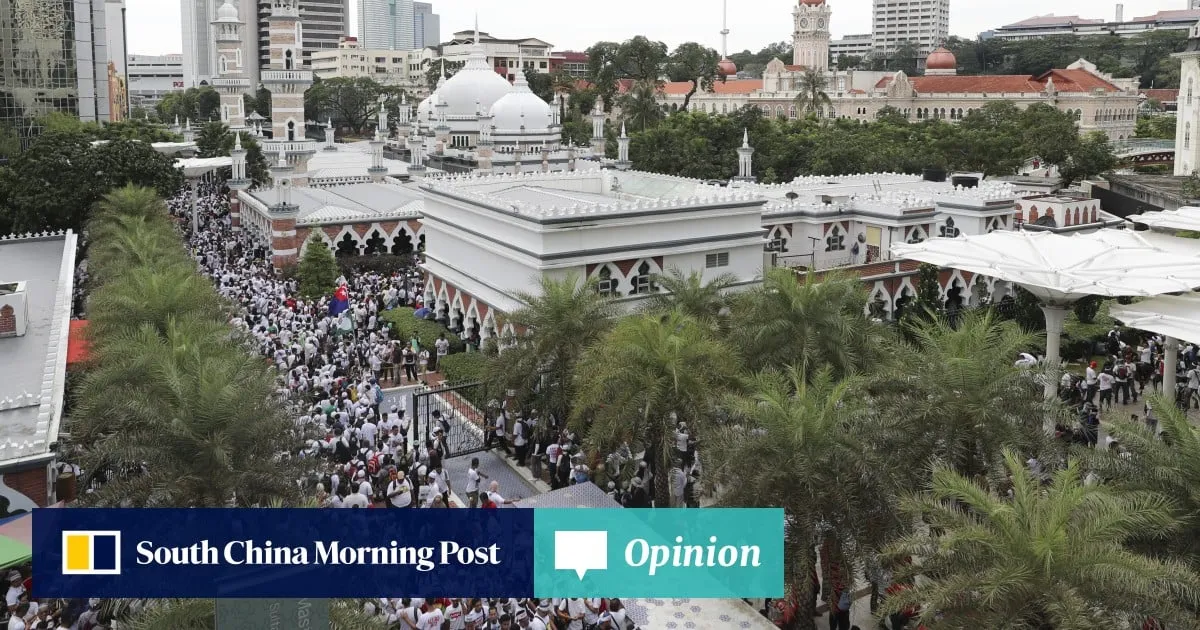
A recent controversy surrounding a surau (prayer hall) in Malaysia appeared straightforward at first. A resident of Taman Seraya, Selangor state, raised concerns about the noise and congestion, particularly during prayer times. Police subsequently investigated the complaint as an attempt to incite provocation and disrupt social harmony.The surau management’s escalation of the complaint to alleged harassment – and the subsequent Police report – reflects the persistent challenge of managing communal disagreement in Malaysia. This is despite the Selangor state authority having already clarified that loudspeakers should be used only inside mosques and surau buildings, except for the azan (call to prayer).Muslims recite the Quran during the holy fasting month of Ramadan at Putra Mosque in Putrajaya, Malaysia, on February 18. Photo: ReutersGiven that the surau complied with the rules, the complaint lacked legal merit. But the Taman Seraya incident shows how disputes can be absorbed into wider narratives of racial and religious tension related to the sensitive “3R” issues of race, religion and royalty. While Police offered no clarification, the case allegedly involves complaints about Islamic practices and disobedience towards the Selangor" class="entity-link entity-person" data-entity-id="136926" data-entity-type="person">sultan of Selangor. This illustrates how technical disagreements can escalate into emotionally charged questions of identity. The 3R framework is increasingly deployed as a catch-all for almost any perceived racial or religious slight, regardless of its nature or severity.
SRCSouth China Morning Post
LANGEN
LEANCenter-Right
WORDS220
ENT12
SAT · 2026-05-30 · 02:00 GMTBRIEF NSR-2026-0530-80337
NSR-2026-0530-80337Analysis·EN·Social Justice
Malaysia’s 3R catch-all risks turning every grievance into a threat
In Taman Seraya, Selangor, Malaysia, a resident's complaint about noise and congestion from a surau was investigated by police as an attempt to incite provocation and disrupt social harmony. The surau management then alleged harassment, leading to a police report.
Syaza ShukriSouth China Morning PostFiled 2026-05-30 · 02:00 GMTLean · Center-RightRead · 1 min
South China Morning PostFIG 01
Reading time
1min
Word count
220words
Sources cited
1cited
Entities identified
12entities
Quality score
100%
§ 01
Briefing Summary
AI-generatedNEWSAR · AI
In Taman Seraya, Selangor, Malaysia, a resident's complaint about noise and congestion from a surau was investigated by police as an attempt to incite provocation and disrupt social harmony. The surau management then alleged harassment, leading to a police report. This incident highlights the difficulty of managing communal disagreements in Malaysia, as the complaint lacked legal merit given the surau's compliance with regulations on loudspeaker use. The case illustrates how technical disagreements can escalate into emotionally charged issues of identity, becoming absorbed into broader narratives of racial and religious tension, often framed around the sensitive "3R" issues of race, religion, and royalty. The article suggests the 3R framework is increasingly used as a catch-all for perceived slights, regardless of their actual nature.
Confidence 0.90Sources 1Claims 4Entities 12
§ 02
Article analysis
Model · rule-basedFraming
Social Justice
Political Strategy
Tone
Measured
AI-assessed
CalmNeutralAlarmist
Factuality
0.40 / 1.00
Mixed
LowHigh
Sources cited
1
Limited
FewMany
§ 03
Key claims
4 extracted01
The Selangor state authority clarified that loudspeakers should be used only inside mosques and surau buildings, except for the azan.
factualarticle
Confidence
1.00
02
A resident raised concerns about noise and congestion from a surau in Taman Seraya, Selangor.
factualarticle
Confidence
1.00
03
Police investigated the complaint as an attempt to incite provocation and disrupt social harmony.
factualarticle
Confidence
0.90
04
The 3R framework is increasingly deployed as a catch-all for almost any perceived racial or religious slight.
factualarticle
Confidence
0.80
§ 04
Full report
1 min read · 220 words§ 05
Entities
12 identifiedKey playerOppositionContextPositiveNeutralNegative
Organizations1
Locations5
Events1
§ 06
Keywords & salience
9 terms3r issues
1.00
racial and religious tension
0.90
communal disagreement
0.80
social harmony
0.70
religious practices
0.60
selangor state
0.50
malaysia
0.50
police investigation
0.40
identity
0.40
§ 07
Topic connections
Interactive graph No topic relationship data available yet. This graph will appear once topic relationships have been computed.