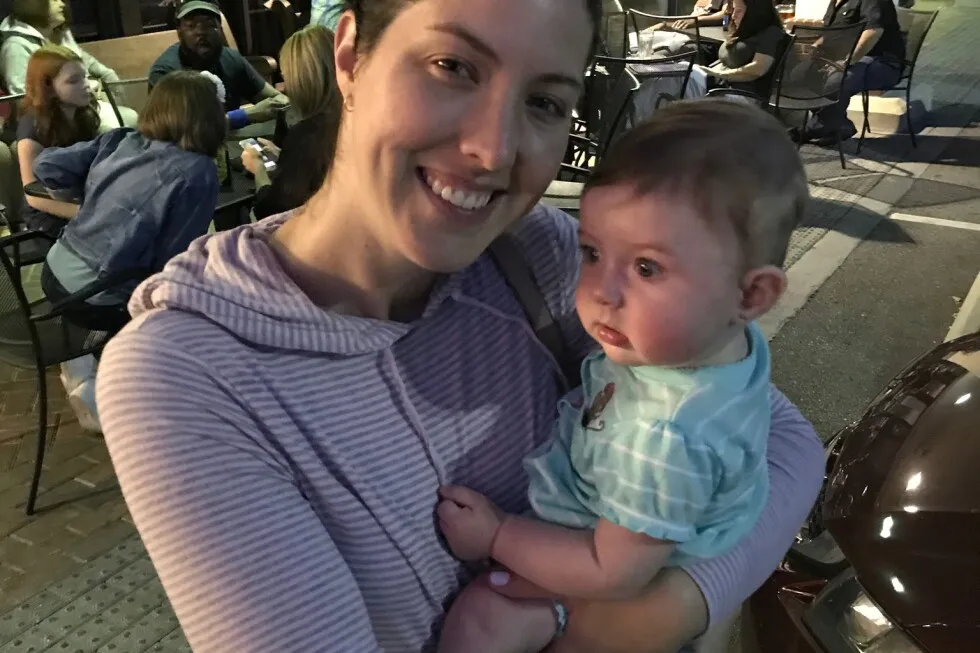
Most new moms get the baby blues. But it could be something more serious: postpartum depression 1 of 2 | This image provided by Chris Carberg shows Jenna Carberg holding Elsie on April 30, 2017, in Winter Park, Fla. (Chris Carberg via AP) 2 of 2 | This image provided by Chris Carberg shows Jenna Carberg at home in Oviedo, Fla., on Dec. 17, 2016. (Chris Carberg via AP) By LAURA UNGAR Updated 2:17 PM MESZ, May 30, 2026 Add AP News on Google Add AP News as your preferred source to see more of our stories on Google. Share Share Facebook Copy Link copied Print Email X LinkedIn Bluesky Flipboard Pinterest Reddit Moments after Jenna Carberg gave birth to her daughter, doctors put the baby on her chest. At home, the Orlando, Florida, mom was exhausted and anxious and cried every day. She was eventually diagnosed with postpartum depression — a potentially dangerous condition that can fill a typically joyous time with deep despair. The mood disorder has been on the rise. A 2024 study in the journal JAMA Network Open found that U.S. rates more than doubled in just over a decade, climbing from 9.4% in 2010 to 19% in 2021, partly due to improved screening and diagnosis. It can be hard to differentiate the disorder from the much milder and more common “baby blues” brought on by plummeting hormone levels. But recognizing and treating postpartum depression is crucial, said OB-GYN Dr. Tiffany Moore Simas at the University of Massachusetts Chan Medical School. Moms who go untreated may have problems bonding with and caring for their babies. And they’re at increased risk of suicide. “A healthy you will ultimately be important for a healthy baby,” Moore Simas said. More from Be Well Autoimmune diseases can strike any part of the body, and mostly affect women. Here’s what to know 11 Calisthenics are making a comeback. Is body weight enough to get a good workout? 21 Gut microbiome tests are everywhere. Should you get one? EDITOR’S NOTE: This story includes discussion of suicide. If you or someone you know needs help, the national suicide and crisis lifeline in the U.S. is available by calling or texting 988. baby blues affects about 8 in 10 new moms, striking shortly after delivery. “Moms will feel kind of more emotional than normal,” said Dr. Jennifer Payne, an expert in reproductive psychiatry at the University of Virginia. But the crying jags and feelings of sadness aren’t severe enough to interfere with normal life. Moms should still be able to care for themselves and their babies. Screening tools can help discern if the problem is more serious. A commonly used 10-item questionnaire, often given at a postpartum checkup, asks how often a mom has experienced feelings such as sadness, panic or worry. A high score points toward the need for further evaluation. Experts say there’s no single cause of postpartum depression. Genetics, physical changes and emotional issues may contribute to it. “We’re pretty sure that having a case of the baby blues doesn’t increase your risk of postpartum depression,” Payne said. “But it does seem that both conditions can develop in the same person.” If sadness lingers for more than two weeks, that’s one sign. Others include intense feelings of despair, anxiety, loss of interest, feelings of guilt and worthlessness, low energy and decreased concentration and appetite. Moms may worry constantly about their babies, be unable to sleep, or stop showering for days. They “feel negatively and badly about themselves. They’ll feel that they’re a bad mother. They might not feel attached to the baby very much,” Payne said. They may even have thoughts of harming themselves. Carberg, who gave birth to her daughter in 2016, had such thoughts a couple of times — once while driving with her daughter. She went to a psychiatric facility for a few days and did better for a while. But she later had a severe breakdown. She sent text messages to her husband, Chris, saying she was sorry, then turned her phone off. Chris desperately tried to reach her, worried she’d hurt herself. Ultimately, finding the right medication was the key to Jenna Carberg’s recovery. “I felt like myself again,” she said after taking the stimulant Vyvanse. Other medications include antidepressants such as Zoloft or Prozac, or Zurzuvae, the first pill approved for postpartum depression. Talk therapy is another common treatment, and experts also stress the importance of getting enough sleep and support from family and friends. To help others, the Carbergs started an online information resource — postpartumdepression.org — to provide support and connect patients with professional help. Doctors advise anyone who thinks they or a loved one may have postpartum depression to reach out to their OB-GYN, primary care doctor or mental health provider. If necessary, be persistent, said Dr. Kerry Hudson, an OB-GYN at Newport Women’s Health Services in Rhode Island. When she suffered postpartum depression two decades ago, she said, her doctor told her she was just an overstressed medical resident. She finally got help after breaking down in front of colleagues during a presentation. After therapy and medications, Hudson went on to have a second child. So did the Carbergs. All are doing well. “When we get people help, I think they can have a good future ahead of them,” Hudson said. “You don’t have to suffer in silence.” The Associated Press Health and Science Department receives support from the Howard Hughes Medical Institute’s Department of Science Education and the Robert Wood Johnson Foundation. The AP is solely responsible for all content. LAURA UNGAR Ungar covers medicine and science on the AP’s Global Health and Science team. She has been a health journalist for more than two decades. twitter mailto
SRCAssociated Press (AP)
LANGEN
LEANCenter
WORDS958
ENT12
SAT · 2026-05-30 · 12:23 GMTBRIEF NSR-2026-0530-80439
NSR-2026-0530-80439News Report·EN·Public Health
Most new moms get the baby blues. But it could be something more serious: postpartum depression
Postpartum depression (PPD) is a serious mood disorder affecting new mothers, with U.S. rates doubling between 2010 and 2021.
Associated Press (AP)Filed 2026-05-30 · 12:23 GMTLean · CenterRead · 4 min
Associated Press (AP)FIG 01
Reading time
4min
Word count
958words
Sources cited
3cited
Entities identified
12entities
Quality score
100%
§ 01
Briefing Summary
AI-generatedNEWSAR · AI
Postpartum depression (PPD) is a serious mood disorder affecting new mothers, with U.S. rates doubling between 2010 and 2021. While distinct from the milder "baby blues," PPD can lead to difficulties bonding with infants, maternal suicide risk, and significant despair. Symptoms include persistent sadness beyond two weeks, intense anxiety, guilt, and thoughts of self-harm. Experts attribute PPD to a combination of genetic, physical, and emotional factors. Treatment options include medication, talk therapy, adequate sleep, and social support. Early recognition and intervention are crucial for the well-being of both mother and child.
Confidence 0.90Sources 3Claims 5Entities 12
§ 02
Article analysis
Model · rule-basedFraming
Public Health
Human Interest
Tone
Measured
AI-assessed
CalmNeutralAlarmist
Factuality
0.80 / 1.00
Factual
LowHigh
Sources cited
3
Well sourced
FewMany
§ 03
Key claims
5 extracted01
U.S. rates of postpartum depression more than doubled from 9.4% in 2010 to 19% in 2021.
statisticJAMA Network Open study
Confidence
1.00
02
Moms who go untreated for postpartum depression may have problems bonding with and caring for their babies and are at increased risk of suicide.
factualDr. Tiffany Moore Simas
Confidence
0.90
03
Baby blues affects about 8 in 10 new moms, striking shortly after delivery.
factual
Confidence
0.90
04
Postpartum depression is a potentially dangerous condition that can fill a typically joyous time with deep despair.
factual
Confidence
0.90
05
Genetics, physical changes, and emotional issues may contribute to postpartum depression.
factual
Confidence
0.80
§ 04
Full report
4 min read · 958 words§ 05
Entities
12 identifiedKey playerOppositionContextPositiveNeutralNegative
Organizations2
Locations5
§ 06
Keywords & salience
9 termspostpartum depression
1.00
maternal mental health
0.90
baby blues
0.80
new moms
0.70
mood disorder
0.60
mental health
0.50
postpartum care
0.50
suicide risk
0.40
hormone levels
0.40
§ 07
Topic connections
Interactive graph Network visualization showing 7 related topics
View Full Graph Person Organization Location Event|Click node to navigate|Edge numbers = shared articles