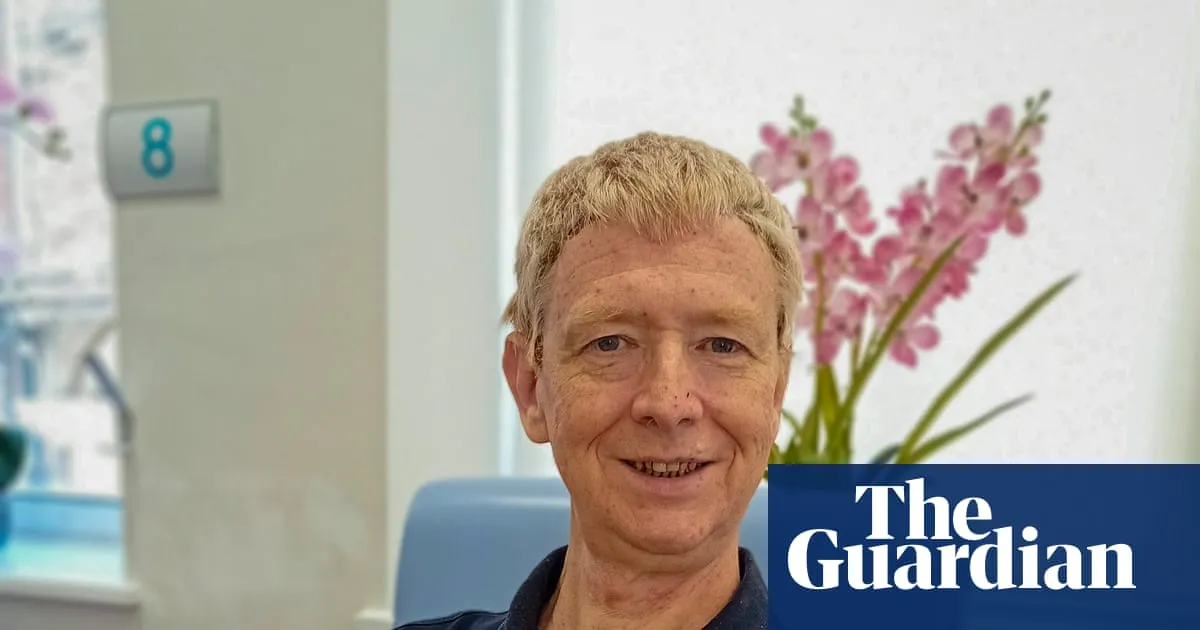
Doctors have hailed “unprecedented” trial results that show a triple-action cancer jab can eradicate entire tumours in patients.In an international trial spanning 11 countries, the injection was offered to patients whose cancer had spread or come back and whose disease had failed to respond to other treatments.The jab, called amivantamab, shrank the tumours of more than a third of patients, with dramatic changes seen within weeks. In 15 of them, doctors found the drug had melted away their tumours altogether.Kevin Harrington, professor in biological cancer therapies at the Institute of Cancer Research, London (ICR), said: “These are unprecedentedly strong responses in patients whose disease has become resistant to both chemotherapy and immunotherapy.“This is a group of patients for whom treatment options are extremely limited, so seeing this level of benefit is very striking.”Harrington, also a consultant oncologist at the Royal Marsden NHS foundation trust, added: “This treatment has the potential to benefit many thousands of patients each year.”The results will be presented on Sunday in Chicago at the world’s largest cancer conference, the annual meeting of the American Society of Clinical Oncology (Asco).In the trial, 102 patients with head and neck cancer, the world’s sixth most common cancer, were given the jab. Tumours shrank or disappeared completely in 43 patients, including 28 whose tumours shrank significantly and 15 who saw them eradicated entirely.Researchers said the injection had also shown similar results in patients with lung cancer. amivantamab, developed by Johnson & Johnson, is now being evaluated in about 60 clinical trials, primarily for lung cancer, but also for colorectal, brain and gastric cancers.The smart jab targets cancer in three ways. It blocks both EGFR (epidermal growth factor receptor), a protein that helps tumours grow, and MET, a pathway that cancer cells often use to escape treatment. It also helps activate the immune system to attack the tumour.One of the first patients to benefit was Carl Walsh, 56, who was diagnosed with tongue cancer in May 2024 and joined the OrigAMI-4 trial at the Royal Marsden in July 2025.“I was initially treated with both chemotherapy and immunotherapy, which unfortunately were not successful,” he said. “At that point, I was recommended for the OrigAMI-4 trial. I’m now on my 17th cycle of treatment and I’m very pleased with the progress so far.”Unlike many cancer treatments, amivantamab is given as a tiny jab under the skin rather than via an intravenous drip, making treatment quicker and more convenient for patients and much easier to deliver in outpatient clinics.Most side-effects of the treatment, given once every three weeks, were mild to moderate, with fewer than one in 10 patients forced to stop their treatment.Walsh, from Birmingham, said: “I now feel able to live a normal life. Before starting the trial, I struggled to speak properly and found eating difficult because of the swelling and pain.“Since beginning treatment, the swelling has reduced significantly, and my pain levels have improved considerably. I’m also no longer experiencing the same life-impacting side-effects that I had during chemotherapy.”He added: “When things were at their worst I was eating soup, rice pudding, tins of ravioli and spaghetti and many, many omelettes, all augmented by three prescribed nutritional milk drinks a day. I lost quite a bit of weight.“After only two cycles of the treatment my diet started to return to normal and I was eating a full diet after six months. The thing I enjoyed most was the first big steak. My speech is completely back to normal and at work I speak regularly on headsets without problems.”Researchers also highlighted that the trial focused on people with head and neck cancers that did not include those with human papillomavirus (HPV) positive oropharyngeal squamous cell carcinoma. That is particularly significant, they said, since head and neck cancers not caused by HPV are usually harder to treat, making progress in this group hugely important.Patients receiving amivantamab lived for a median of 12.5 months overall after starting treatment, despite having a form of cancer with very poor outcomes, once standard treatments stop working.Prof Kristian Helin, the chief executive of the ICR, said: “This study demonstrates how the development of new treatments through rigorous cancer research may lead to meaningful advances, even for patients with very limited treatment options.“Achieving this level of tumour response and encouraging survival outcomes in such a challenging‑to‑treat group represents a significant step forward.”
SRCThe Guardian - World News
LANGEN
LEANCenter-Left
WORDS724
ENT11
SAT · 2026-05-30 · 17:00 GMTBRIEF NSR-2026-0530-80472
NSR-2026-0530-80472News Report·EN·Public Health
Cancer jab can eradicate entire tumours in patients, trial shows
An international trial involving 102 patients with advanced head and neck cancer, whose disease was resistant to chemotherapy and immunotherapy, has shown promising results for a triple-action cancer jab called amivantamab. Developed by Johnson & Johnson, the injection targets cancer by blocking growth-promoting proteins and activating the immune system.
Andrew Gregory Health editor, in ChicagoThe Guardian - World NewsFiled 2026-05-30 · 17:00 GMTLean · Center-LeftRead · 3 min
The Guardian - World NewsFIG 01
Reading time
3min
Word count
724words
Sources cited
3cited
Entities identified
11entities
Quality score
100%
§ 01
Briefing Summary
AI-generatedNEWSAR · AI
An international trial involving 102 patients with advanced head and neck cancer, whose disease was resistant to chemotherapy and immunotherapy, has shown promising results for a triple-action cancer jab called amivantamab. Developed by Johnson & Johnson, the injection targets cancer by blocking growth-promoting proteins and activating the immune system. In the trial, over a third of patients experienced tumor shrinkage, with 15 seeing their tumors completely eradicated. Researchers noted similar positive outcomes in lung cancer patients and are evaluating amivantamab for other cancer types. The jab is administered subcutaneously, offering a more convenient treatment option with generally mild to moderate side effects. These results are considered unprecedented for patients with limited treatment options and will be presented at the American Society of Clinical Oncology annual meeting.
Confidence 0.90Sources 3Claims 5Entities 11
§ 02
Article analysis
Model · rule-basedFraming
Public Health
Human Interest
Tone
Mixed Tone
AI-assessed
CalmNeutralAlarmist
Factuality
0.80 / 1.00
Factual
LowHigh
Sources cited
3
Well sourced
FewMany
§ 03
Key claims
5 extracted01
Responses seen are unprecedented in patients resistant to chemotherapy and immunotherapy.
quoteKevin Harrington
Confidence
1.00
02
Amivantamab targets cancer by blocking EGFR and MET pathways and activating the immune system.
factual
Confidence
0.90
03
The jab shrank tumours in over a third of patients, with 15 seeing them melt away completely.
statistic
Confidence
0.90
04
A triple-action cancer jab, amivantamab, eradicated entire tumours in some patients in a trial.
factual
Confidence
0.90
05
The treatment has the potential to benefit many thousands of patients each year.
predictionKevin Harrington
Confidence
0.80
§ 04
Full report
3 min read · 724 words§ 05
Entities
11 identifiedKey playerOppositionContextPositiveNeutralNegative
Organizations4
Locations1
Events1
§ 06
Keywords & salience
10 termstumour eradication
1.00
cancer jab
1.00
amivantamab
0.90
clinical trial
0.80
head and neck cancer
0.70
lung cancer
0.60
egfr
0.50
met pathway
0.50
immune system activation
0.50
chemotherapy resistance
0.40
§ 07
Topic connections
Interactive graph No topic relationship data available yet. This graph will appear once topic relationships have been computed.