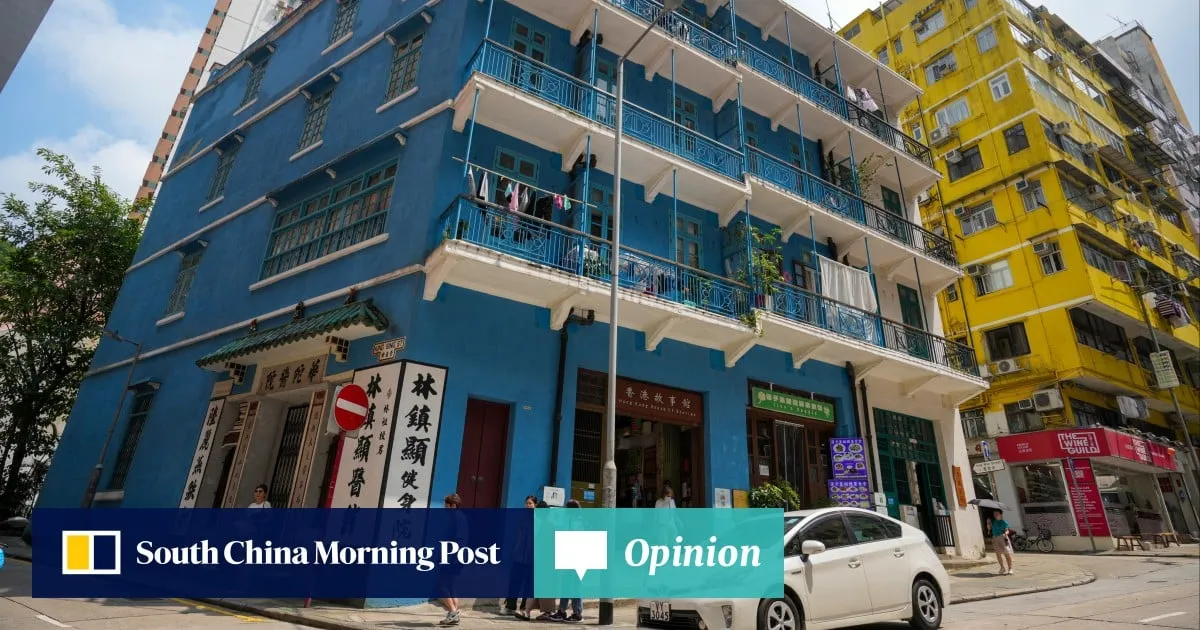
Think of Hong Kong as a living dictionary. Every old arcade, footbridge and mixed-use tong lau, or tenement building, is an entry worth studying. As the city embarks on another redevelopment cycle, we should be leafing more carefully – not erasing the dictionary’s words but learning how to write new ones in the same spirit. Here are five key words that should be at the centre of any sensitive, forward-looking renewal blueprint.One, shelter. Tong lau arcades were an original climate adaptation. Deep, shaded walkways kept pedestrians out of the subtropical sun and sudden downpours while sheltering the life of the street – the shops, hawkers and casual encounters that make it feel like a neighbourhood. With global warming, the argument for covered walkways is no longer nostalgic; it is about basic pedestrian resilience.Tsuen Wan has a network of footbridges linking the MTR station to shopping malls and housing estates, but the network remains patchy. The Urban Renewal Authority’s district planning study on Tsuen Wan is a chance to move from ad hoc bridge-building to a deliberate, all-weather pedestrian grid. Imagine walking from your flat to the wet market, clinic and MTR station without having to open an umbrella.
SRCSouth China Morning Post
LANGEN
LEANCenter-Right
WORDS198
ENT7
SAT · 2026-05-30 · 21:30 GMTBRIEF NSR-2026-0530-80484
NSR-2026-0530-80484Analysis·EN·Human Interest
Hong Kong’s old buildings: 5 lessons for urban renewal
Hong Kong's urban renewal efforts should learn from its existing old buildings, viewing them as valuable entries in a "living dictionary" rather than erasing them. The article proposes five key principles for sensitive and forward-looking renewal blueprints.
Mathias WooSouth China Morning PostFiled 2026-05-30 · 21:30 GMTLean · Center-RightRead · 1 min
South China Morning PostFIG 01
Reading time
1min
Word count
198words
Sources cited
0cited
Entities identified
7entities
Quality score
100%
§ 01
Briefing Summary
AI-generatedNEWSAR · AI
Hong Kong's urban renewal efforts should learn from its existing old buildings, viewing them as valuable entries in a "living dictionary" rather than erasing them. The article proposes five key principles for sensitive and forward-looking renewal blueprints. The first principle, "shelter," highlights the historical function of tong lau arcades as climate adaptation, providing shade and protection from rain for pedestrians and street life. This concept is presented as crucial for modern pedestrian resilience, especially with global warming. The article uses Tsuen Wan as an example, suggesting its Urban Renewal Authority can develop a comprehensive, all-weather pedestrian grid by improving its network of footbridges, enabling residents to access amenities without weather disruption.
Confidence 0.90Claims 4Entities 7
§ 02
Article analysis
Model · rule-basedFraming
Human Interest
Environmental
Tone
Measured
AI-assessed
CalmNeutralAlarmist
Factuality
0.40 / 1.00
Mixed
LowHigh
Sources cited
0
No named sources
FewMany
§ 03
Key claims
4 extracted01
Tsuen Wan's footbridge network is currently patchy.
factual
Confidence
0.90
02
Tong lau arcades provided original climate adaptation by offering shaded walkways.
factual
Confidence
0.90
03
Covered walkways are necessary for pedestrian resilience due to global warming.
factual
Confidence
0.80
04
The Urban Renewal Authority's study on Tsuen Wan is an opportunity to create a comprehensive pedestrian grid.
prediction
Confidence
0.70
§ 04
Full report
1 min read · 198 words§ 05
Entities
7 identifiedKey playerOppositionContextPositiveNeutralNegative
Organizations1
§ 06
Keywords & salience
8 termsurban renewal
1.00
tong lau
0.90
climate adaptation
0.80
pedestrian resilience
0.70
covered walkways
0.60
urban planning
0.50
mixed-use buildings
0.40
global warming
0.40
§ 07
Topic connections
Interactive graph Network visualization showing 51 related topics
View Full Graph Person Organization Location Event|Click node to navigate|Edge numbers = shared articles