China and Canada have agreed to remove the triple-digit tariffs imposed on each other’s imports – a major thaw in relations after years of icy diplomatic and trade ties – as Canadian Prime Minister Mark Carney wrapped up his state visit in Beijing.Canada will remove the additional 100 per cent in tariffs it had levied on Chinese electric vehicle (EV) imports – imposed in 2024 following a similar move from the United States – while China will lower its tariffs on Canadian canola, Carney said on Friday.In place of the higher duties on EVs, Carney said, Canada will cap import volume and retain a preferential tariff rate of 6.1 per cent for shipments below the 49,000-unit ceiling.“In order for Canada to build our own competitive EV sector, we need to learn from innovative partners, access their supply chains and increase local demand,” Carney said at a press briefing after talks with President Xi Jinping.He added that by replacing the high tariffs with an import quota, it would help deliver the “full potential” of these partnerships and bring down costs for Canadians.“It’s expected that, within three years, this agreement will drive considerable Chinese investment in Canada’s auto sector, creating good careers in Canada and accelerating our progress towards a net-zero future,” Carney said.While a time frame for the 49,000-unit limit on EV imports was not disclosed, the amount roughly corresponds to shipments made from China to Canada in the year before the tariff increases, according to an official statement from the prime minister’s office.
SRCSouth China Morning Post
LANGEN
LEANCenter-Right
WORDS253
ENT6
FRI · 2026-01-16 · 09:08 GMTBRIEF NSR-2026-0116-8062
NSR-2026-0116-8062News Report·EN·Economic Impact
Canada, China hit reset button on relations with tariff agreement
Canada and China have agreed to ease trade tensions by removing recently imposed tariffs on key imports. The agreement, reached during Canadian Prime Minister Mark Carney's visit to Beijing, involves Canada removing its 100% tariff on Chinese electric vehicles (EVs) implemented in 2024.
Ji Siqi,Sylvia Ma,Dewey SimSouth China Morning PostFiled 2026-01-16 · 09:08 GMTLean · Center-RightRead · 2 min
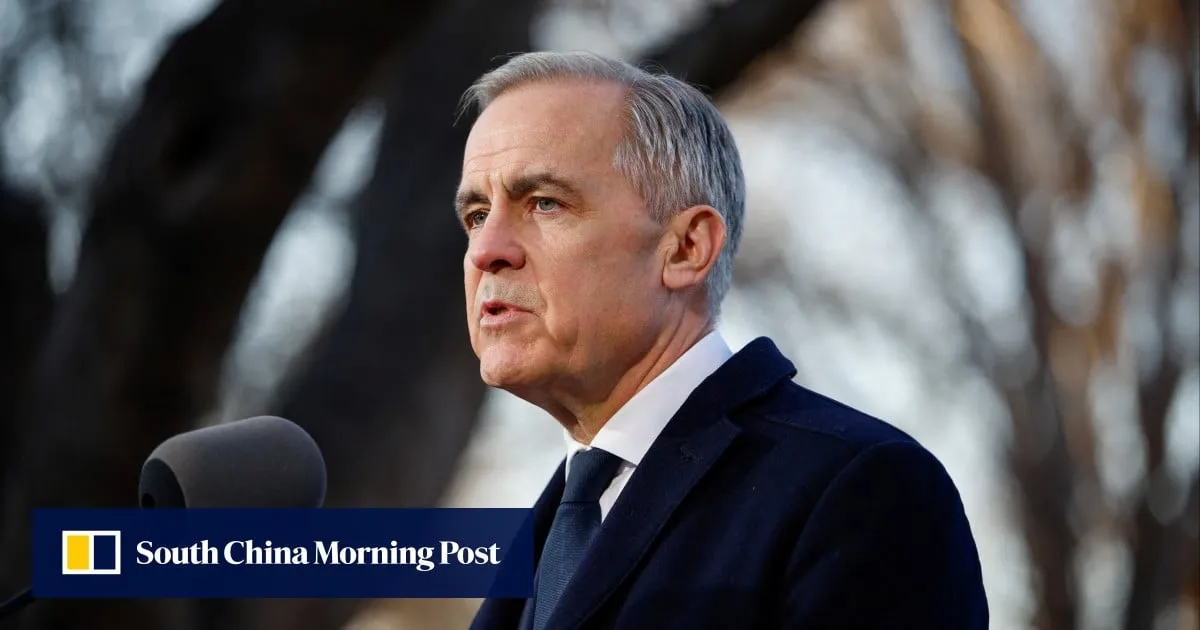
South China Morning PostFIG 01
Reading time
2min
Word count
253words
Sources cited
1cited
Entities identified
6entities
Quality score
100%
§ 01
Briefing Summary
AI-generatedNEWSAR · AI
Canada and China have agreed to ease trade tensions by removing recently imposed tariffs on key imports. The agreement, reached during Canadian Prime Minister Mark Carney's visit to Beijing, involves Canada removing its 100% tariff on Chinese electric vehicles (EVs) implemented in 2024. In return, China will lower tariffs on Canadian canola. Instead of high tariffs, Canada will implement a quota of 49,000 EV imports annually, subject to a preferential tariff rate of 6.1%. The goal is to foster partnerships, attract Chinese investment in Canada's auto sector, and lower EV costs for Canadians while protecting Canada's developing EV industry. The quota roughly corresponds to pre-tariff EV import levels.
Confidence 0.90Sources 1Claims 5Entities 6
§ 02
Article analysis
Model · rule-basedFraming
Economic Impact
Diplomatic
Tone
Measured
AI-assessed
CalmNeutralAlarmist
Factuality
0.80 / 1.00
Factual
LowHigh
Sources cited
1
Limited
FewMany
§ 03
Key claims
5 extracted01
The 49,000-unit limit on EV imports roughly corresponds to shipments made from China to Canada in the year before the tariff increases.
factualprime minister’s office
Confidence
1.00
02
Canada will cap import volume of EVs and retain a preferential tariff rate of 6.1 per cent for shipments below the 49,000-unit ceiling.
factualCarney
Confidence
1.00
03
China will lower its tariffs on Canadian canola.
factualCarney
Confidence
1.00
04
Canada will remove the additional 100 per cent in tariffs it had levied on Chinese electric vehicle (EV) imports.
factualCarney
Confidence
1.00
05
It’s expected that, within three years, this agreement will drive considerable Chinese investment in Canada’s auto sector.
predictionCarney
Confidence
0.80
§ 04
Full report
2 min read · 253 words§ 05
Entities
6 identifiedKey playerOppositionContextPositiveNeutralNegative
§ 06
Keywords & salience
8 termscanada-china relations
1.00
tariffs
0.90
electric vehicles
0.80
trade agreement
0.70
import quota
0.60
investment
0.50
supply chains
0.40
net-zero future
0.40
§ 07
Topic connections
Interactive graph Network visualization showing 51 related topics
View Full Graph Person Organization Location Event|Click node to navigate|Edge numbers = shared articles